Key Points
- Pakistan signals intent to join the INSTC to strengthen regional trade connectivity
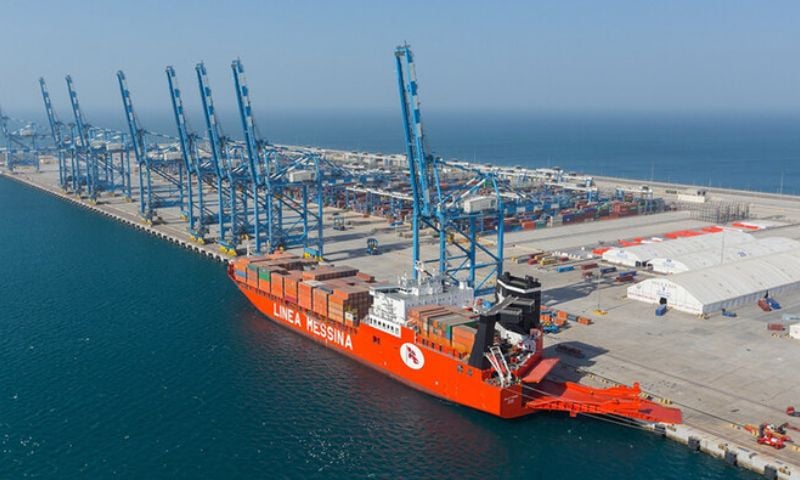
- Russia backs potential linkage of INSTC with Gwadar Port as part of broader Eurasian integration
- Cooperation expands across energy, trade, defence and multilateral diplomatic platforms
ISLAMABAD: Pakistan is moving to join the International North-South Transport Corridor (INSTC), with Russia supporting the idea of linking the route to Gwadar Port as both countries advance efforts to expand economic and strategic cooperation under a new framework 2030.
Pakistan’s Federal Minister for Energy Sardar Awais Ahmed Khan Leghari disclosed Pakistan’s intent to join the INSTC during a keynote address at Webinar-1 titled “Pakistan-Russia bilateral relationship at the cusp of shifting global order.”
According to the Minister, Pakistan-Russia relations have been fast-moving on a steadily strengthening pragmatic trajectory over the past two decades.
The INSTC is a 7,200-kilometre multimodal trade corridor designed to connect India, Iran, Azerbaijan, the Russian Federation, Central Asia and Northern Europe through an integrated network of sea, rail and road links. The corridor primarily aims to reduce transit time and logistics costs across Eurasia.
During the webinar, the minister welcomed remarks by Russian Deputy Prime Minister Alexey Overchuk on linking the INSTC with Gwadar Port.
He described the move as a potential strategic bridge between major regional connectivity frameworks, including China’s Belt and Road Initiative.
He noted that recent diplomatic engagement has gained momentum through repeated high-level interactions. Four meetings between Prime Minister Shehbaz Sharif and Russian President Vladimir Putin in recent times reflect growing political trust and institutional continuity, he added.
Leghari, who serves as Co-Chairman of the Russia-Pakistan Intergovernmental Commission, highlighted regular consultations with Russian Energy Minister Sergey Tsivilev.
The platform is the core mechanism driving cooperation across energy, trade and investment sectors, he added.
Both countries are also expanding coordination through structured frameworks on security, strategic stability and counter-terrorism.
They have aligned positions in multilateral forums such as the Shanghai Cooperation Organisation, supporting what the minister termed an emerging multipolar global order.
The minister said Russia has also acknowledged Pakistan’s diplomatic role in easing regional tensions, particularly in contexts involving Iran and the United States, reinforcing Islamabad’s positioning as a relevant regional stakeholder.
To address long-standing trade barriers, both sides have agreed to move forward on the Programme of Economic Cooperation for the period up to 2030, aimed at improving payment mechanisms and expanding bilateral trade flows.
Separately, the signing of a readmission agreement in Bishkek is expected to facilitate visa processing, ease mobility for business communities and strengthen people-to-people exchanges.
Pakistan-Russia relations are increasingly becoming a key pillar of Eurasian economic integration and regional stability, driven by institutional dialogue and evolving strategic convergence, he maintained.