
Key Points
- Brent crude plunged nearly 20% in May, its steepest monthly decline since March 2020.
- WTI crude fell about 17%, ending a four-month winning streak.
- Markets increasingly priced in a potential U.S.-Iran ceasefire and reopening of key Gulf shipping routes.
- Analysts warn oil could still surge sharply if diplomatic efforts fail and disruptions persist.
ISLAMABAD: Global oil prices recorded their sharpest monthly decline since the onset of the COVID-19 pandemic in 2020 as investors increasingly bet on a potential end to the conflict between the United States and Iran.
The growing hope of a peace deal and easing fears of prolonged disruptions to energy supplies from the Middle East saw Brent crude, the international benchmark, fall nearly 20 per cent during May.
The front-month July contract of the top brand settled at $92.05 per barrel on the final trading day of the month.
US benchmark West Texas Intermediate (WTI) declined almost 17 per cent to close at $87.36 per barrel, marking its worst monthly performance in more than six years.
The selloff reflected growing expectations that Pakistan-led diplomatic efforts could bring an end to the war.
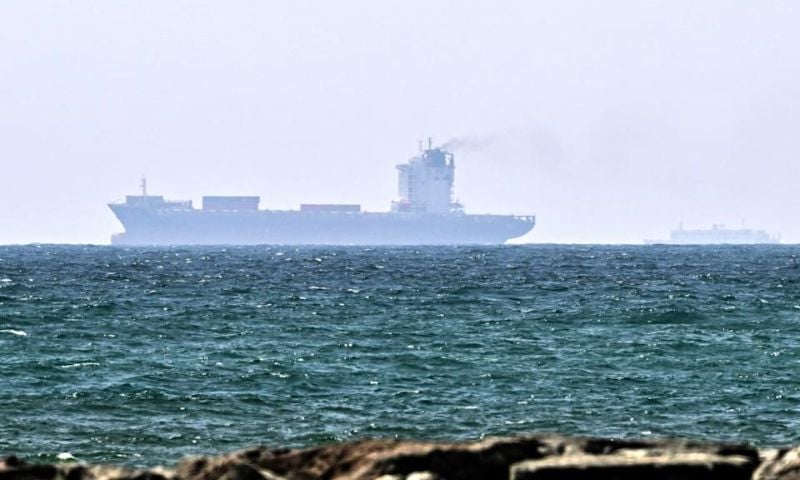
The US-Iran war has rattled global energy markets and threatened crude shipments through the strategically vital Strait of Hormuz, which is a narrow waterway that handles a significant share of the world’s seaborne oil trade.
Reports indicating that US and Iranian negotiators had reached a tentative framework for a long-term ceasefire, if not a peace deal, encouraged traders to reduce risk premiums.
The conflict had previously pushed oil prices sharply higher. Any agreement, however, still requires approval from both Washington and Tehran.
Market analysts said investors had begun pricing in a pathway toward de-escalation as early as April, when an initial temporary ceasefire was announced.
“The market has increasingly shifted toward the view that the conflict is closer to its conclusion than its escalation,” energy analysts noted.
They underlined the expectations that shipping activity through the Strait of Hormuz could resume more normally if a lasting agreement is secured.
The prospect of reduced tensions has also influenced sentiment across the energy industry. Executives and traders alike have signalled greater confidence that supply disruptions may prove temporary rather than structural.
Despite the sharp monthly retreat, oil prices remain well above pre-conflict levels of around $60 per barrel.
The elevated prices indicate still persistent uncertainty over the region’s stability and the future security of energy transportation routes.
Commodity strategists caution that markets may be underestimating the risks of renewed escalation.
Ongoing disagreements over Iran’s nuclear programme, control of maritime routes and sporadic military flare-ups continue to pose significant threats to energy supplies.
Analysts at several energy consultancies warned that the global market’s ability to absorb prolonged disruptions is weakening.
Strategic petroleum reserves and additional supplies from sanctioned producers have helped contain prices so far. However, a prolonged closure or instability in the Strait of Hormuz could trigger another sharp surge.
Some experts maintain that oil prices could still climb toward $200 per barrel in a worst-case scenario if maritime traffic remains severely constrained and global inventories continue to decline.
Market participants say oil is currently being pulled between two competing narratives: one centred on a negotiated settlement that gradually restores normal crude flows, and another involving deeper disruptions and tightening supplies.
As a result, every diplomatic development or military headline has the potential to trigger significant price swings.
The volatility underscores the central role of Middle East geopolitics in shaping global energy markets.
Investors are closely watching negotiations that could determine whether the recent decline marks the beginning of a sustained easing in prices or merely a temporary pause before further turbulence.