Key Points
- Gwadar Port records increased vessel traffic as Middle East maritime disruptions redirect shipping flows
- Pakistan cuts port tariffs by up to 40pc to attract transhipment and transit cargo
- China reaffirms support for Gwadar under CPEC as regional partners explore its trade potential
ISLAMABAD: Pakistan’s Gwadar Port is fast emerging as a regional trade hub, a better alternative to traditional centres in the Middle East, presently facing disruptions since the eruption of the Iran-US war.
The government of Pakistan has, well in time, offered an incentive package of up to 60 percent reduction in charges to attract transhipment and deep-sea shipping to its ports, nearest to the Middle East, with China-backed Gwadar, on top of them.
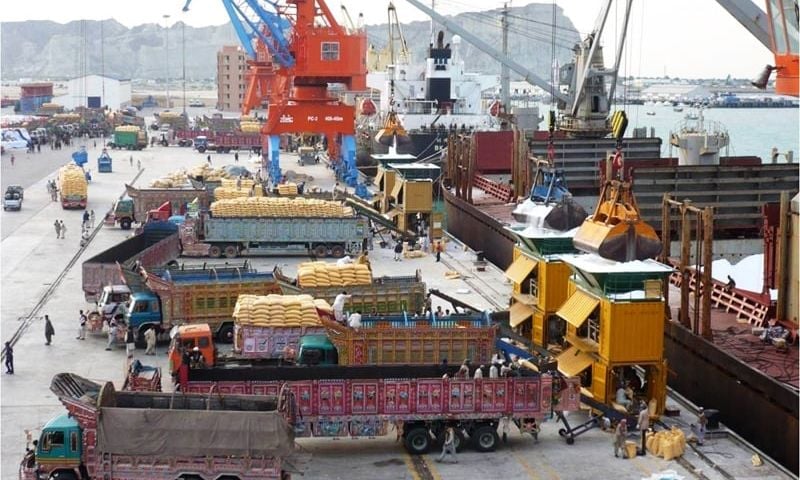
According to the Ministry of Maritime Affairs, the port has handled multiple large vessels in recent weeks, reflecting growing operational confidence and expanding commercial activity.
The uptick comes as Pakistan and China accelerate efforts to position Gwadar, besides other ports, as a strategic transhipment hub linking Central Asia, the Gulf, Africa and South Asia, with cargo flows showing signs of gradual redirection to Pakistani ports.
The recent instability in Middle Eastern shipping lanes has contributed to a shift in regional trade movement, with Gwadar emerging as an alternative route for transhipment operations.
The trend has been reinforced by Pakistan’s initiative of significantly reducing port charges to attract commercial traffic.
The revised tariff structure includes a 25 per cent reduction in berthing fees for transhipment container vessels, a 40 per cent cut in charges on international transhipment cargo, and a 31 per cent reduction in transit container cargo charges.
Pakistan’s drive to attract shipping is witnessing renewed momentum in maritime activity.
On May 11, MV Yuan Hang Wei Ye berthed at Gwadar carrying approximately 34,000 tonnes of cargo, including approximately 20,000 pieces, with transhipment consignments destined for Abu Dhabi and Kuwait.
On May 24, another deep-draft vessel carrying more than 53,000 tonnes of steel billets docked at the port.
Officials described it as a key milestone in Gwadar’s evolving role as a regional logistics node.
Earlier, on April 6, MV Riva Glory also arrived with 14,629 tonnes of cargo.
According to the port authorities, efficient handling of large vessels reflects improved infrastructure and operational readiness. They termed it the increasing confidence from international shipping lines in Gwadar’s capacity.
At the same time, Pakistan is expanding outreach to Central Asia, inviting Kazakhstan to invest in Gwadar and related infrastructure as part of efforts to diversify trade connectivity routes.
Officials said landlocked Central Asian economies are actively seeking alternative access to global markets, with Gwadar offering a southern maritime corridor toward the Gulf and beyond.
Federal Minister for Maritime Affairs Junaid Akbar Chaudhary, during a meeting with a Kazakh delegation led by Timur Turlov of Freedom Holding Corp, highlighted Gwadar’s role as a bridge between Central Asia and global trade networks.
Kazakhstan and Pakistan have already signed a strategic framework, including 37 understandings, with a bilateral trade target of $1 billion.
China has reaffirmed its commitment to Gwadar’s development under China-Pakistan Economic Corridor (CPEC) 2.0, focusing on logistics expansion, industrial cooperation and improved land-sea connectivity.
A recent joint understanding between Islamabad and Beijing emphasised unlocking Gwadar’s commercial potential and strengthening regional transport corridors. It also covers enhanced use of the Khunjerab Pass linking China to Pakistani ports.
The convergence of China-backed infrastructure development, tariff incentives and regional shipping disruptions could gradually elevate Gwadar’s role in shifting global trade patterns.