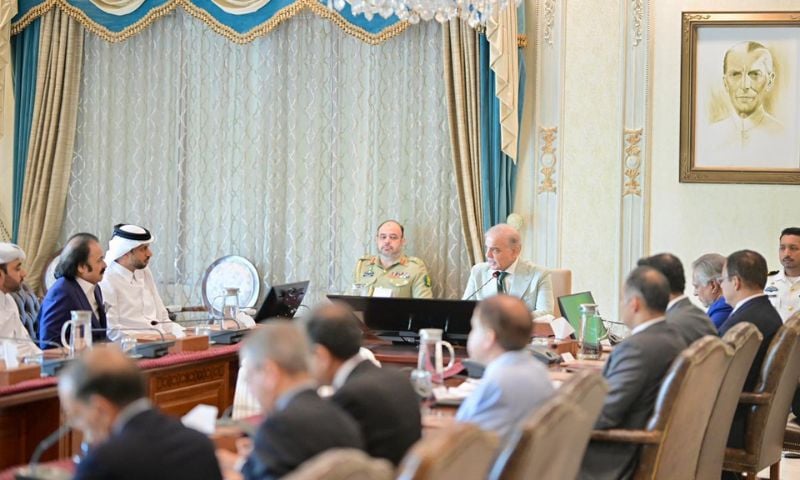
ISLAMABAD: Pakistan’s Prime Minister Shehbaz Sharif on Friday met a delegation from Qatar-based Taameer Group, led by its founder Muhammad Hussein Al Ali, to explore investment opportunities in Pakistan’s tourism, hospitality, real estate and construction sectors, according to the Prime Minister’s Office.
Speaking at the meeting, the Prime Minister described Qatar as a longstanding friend of Pakistan that has consistently supported the country in difficult times. He said the government is prioritising efforts to boost foreign investment and has removed key obstacles through the Special Investment Facilitation Council.
He added that Pakistan offers significant investment potential in the tourism, hospitality, real estate and construction sectors, and directed relevant authorities to extend full facilitation and support to the visiting group.
The founder of the Taameer Group briefed the Prime Minister on the company’s existing investments and ongoing projects in Pakistan. He expressed strong interest in further investment in the hospitality, hotel, real estate and construction sectors, noting that work on several projects is already underway.
اسلام آباد، 22 مئی 2026.
وزیراعظم محمد شہباز شریف سے قطر کے تعمیر گروپ کے بانی محمد حسین آل علی کی قیادت میں وفد کی ملاقات ہوئی.
ملاقات میں نائب وزیرِ اعظم و وزیرِ خارجہ سینیٹر محمد اسحاق ڈار، وفاقی وزراء احد خان چیمہ، عطاء اللہ تارڑ، وزیر مملکت بلال اظہر کیانی اور متعلقہ اعلی… pic.twitter.com/femdIp5e6K
— Prime Minister’s Office (@PakPMO) May 22, 2026
Muhammad Hussain Al Ali expressed deep interest in increasing the group’s investment in Pakistan.
The meeting was also attended by Deputy Prime Minister and Foreign Minister Ishaq Dar, Planning Minister Ahsan Iqbal, Information Minister Attaullah Tarar, Minister of State Bilal Azhar Kayani, and other senior government officials.
Pakistan set up the Special Investment Facilitation Council (SIFC) in 2023 as a single-window platform to streamline investment and privatisation processes, improve inter-agency coordination, and accelerate project approvals. The initiative was introduced following concerns from Gulf investors over fragmented decision-making and delays caused by coordination gaps among government institutions.
While the SIFC has helped improve coordination and remove several procedural bottlenecks, broader structural challenges such as high taxation, elevated energy costs, external sector pressures, and limited fiscal space continue to pose constraints to investment inflows.