Key Points
- Pakistan is being projected as the fifth-largest medical manufacturing hub in the region
- New agreements focus on production, biotechnology and medical equipment
- Islamabad seeks to reduce reliance on imported pharmaceutical raw materials
- Industry leaders see export potential to Central Asia, the Middle East and Africa
ISLAMABAD: Pakistan is emerging as a key destination for Chinese pharmaceutical investment as both countries deepen industrial cooperation aimed at transforming the South Asian nation into a regional manufacturing hub.
Areas identified for fresh investment include medicines, medical devices and healthcare technology.
Industry representatives of the Pakistan-China Joint Chamber of Commerce and Industry (PCJCCI) say the growing collaboration under the China-Pakistan Health Corridor (CPHC) is opening new opportunities in pharmaceutical manufacturing, biotechnology, telemedicine and medical infrastructure development.
The renewed investment momentum coincides with Pakistan’s endeavour to strengthen domestic pharmaceutical production. Pakistan also plans to reduce dependence on imported raw materials and expand exports to regional markets, including Central Asia, the Gulf region and parts of Africa.
Adeel Munawar, Commercial Ambassador of PCJCCI and Managing Partner of M & M Pharma, said Pakistan possesses major advantages for foreign pharmaceutical investors, including low production costs, skilled manpower and strategic geographic connectivity.
The country’s healthcare manufacturing sector was gaining increasing attention from Chinese companies seeking alternative regional production bases, amid shifting global supply chains and rising costs in other manufacturing destinations.
Industry officials project Pakistan could become the fifth-largest medical manufacturing hub in the region if current investment momentum continues and local industrial capacity expands further.
The pharmaceutical cooperation between Islamabad and Beijing has accelerated through a series of agreements covering active pharmaceutical ingredient (API) manufacturing, vaccine collaboration, healthcare technology transfer and medical equipment production.
Pakistani and Chinese companies recently signed multiple memoranda of understanding aimed at localising API production. API is a critical step for Pakistan’s pharmaceutical sector, which remains heavily dependent on imported raw materials, particularly from China and India.
The localisation drive is viewed as strategically important for Pakistan’s healthcare security. Global supply chain disruptions during the COVID-19 pandemic exposed vulnerabilities in pharmaceutical imports and availability.
Officials say Chinese investors are also exploring opportunities in vaccine manufacturing, diagnostic technologies, biotechnology research and plasma-derived medicines.
One of the largest recent investments in the sector involved a partnership between AsiaPak Investments and China Resources Boya Bio-Pharmaceutical Group to establish plasma collection centres and Pakistan’s first plasma fractionation facility. The initiative is estimated to bring in investment exceeding $200 million.
The facility is expected to support local production of plasma-derived medicines currently imported at high cost, including treatments used for immune deficiencies, bleeding disorders and critical care medicine.
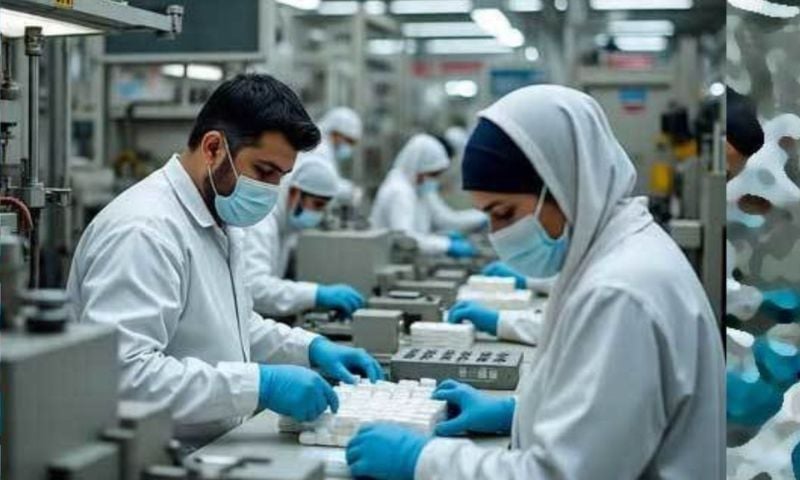
Chinese pharmaceutical machinery manufacturers are additionally expanding their footprint in Pakistan by supplying automated production systems and sterile injectable medicine technologies to local companies.
Industry sources say the adoption of Chinese automation technologies is helping Pakistani pharmaceutical manufacturers improve production efficiency, reduce wastage and enhance compliance with international manufacturing standards.
Analysts say Pakistan’s medical manufacturing ecosystem also offers long-term potential, with the country’s established surgical instruments industry in Sialkot, one of the world’s major exporters of surgical and medical tools.
The city supplies instruments and medical consumables to markets in Europe, North America and the Middle East. It gives Pakistan an existing industrial foundation that investors believe can be integrated into wider healthcare manufacturing expansion.
The China-Pakistan Health Corridor, launched in 2017, has become an increasingly important component of bilateral economic cooperation, particularly after the pandemic strengthened healthcare coordination between the two countries.
Chinese support during the pandemic included vaccine cooperation, testing kits, protective equipment and medical logistics, helping deepen institutional ties between healthcare authorities and private stakeholders.
Pakistan’s government is now encouraging Chinese firms to expand investment into specialised pharmaceutical manufacturing, biotechnology, medical devices, digital healthcare systems and research partnerships with local institutions.
Economic planners view the pharmaceutical sector as a potential export growth engine capable of generating foreign exchange earnings and supporting industrial diversification.
However, industry experts caution that Pakistan still faces structural weaknesses, including regulatory bottlenecks, energy costs, inconsistent policy implementation and continued dependence on imported APIs.