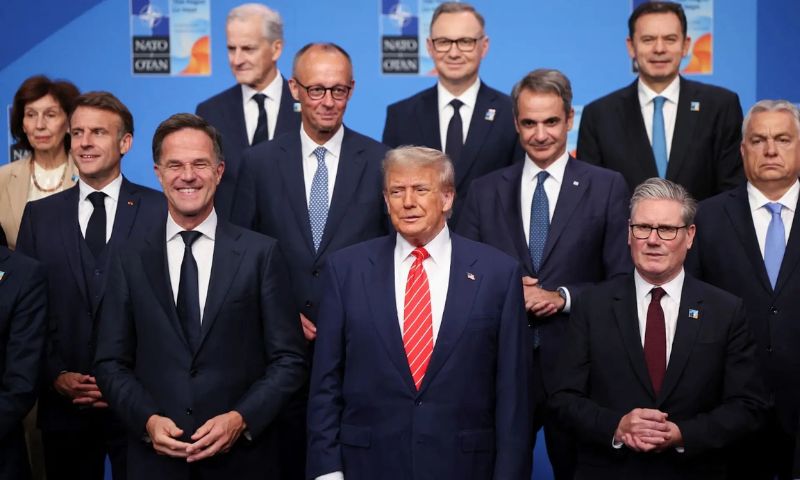
HELSINGBORG, Sweden: NATO’s European members will seek assurances from US Secretary of State Marco Rubio on Friday over possible American troop reductions in Europe, as allies attempt to contain growing tensions with President Donald Trump ahead of a key alliance summit in July.
The meeting of NATO foreign ministers in the Swedish city of Helsingborg comes after Trump criticised Europe over its response to his war on Iran and threatened that he could consider withdrawing from the alliance.
The 77-year-old alliance was shaken earlier this month when Washington abruptly announced it was withdrawing 5,000 troops from Germany following a dispute between Trump and German Chancellor Friedrich Merz.
Although the Trump administration had long signalled plans to reduce forces in Europe to focus on other global threats, the lack of coordination surrounding the withdrawal has fuelled concerns over Washington’s reliability in the face of Russia.
One European diplomat said the aim of the Helsingborg meeting was “to see whether we’ve turned the page or not ahead of the Ankara summit, ” reports AFP.
Rubio criticises allies
Rubio’s remarks before departing for the talks suggested divisions remain deep.
The US president is “not asking them to send their fighter jets in. But they refuse to do anything,” Rubio told reporters in reference to NATO allies’ reluctance to support US operations linked to Iran.
“We were very upset about that.”
Although Rubio has long supported NATO, he has warned that Washington may need to “re-examine” its relationship with the alliance after several European countries restricted access to military bases for US operations connected to Iran.
In response, some allies have deployed naval vessels closer to the region in preparation for potential operations in the Strait of Hormuz once the conflict concludes.
Diplomats said informal discussions had taken place about a possible NATO role in the region, although no formal planning has yet begun.
The United States could also deliver further unwelcome news to NATO allies amid expectations that Washington may reduce the number of troops committed to the alliance during future crises.
NATO Secretary-General Mark Rutte sought to downplay the significance of the US troop withdrawal, describing it as “business as normal” as European countries increase their own defence spending.
“We support that, but it has to be done in a way where the overall deterrence and defence stays strong,” Rutte said.
Trump said on Thursday that the United States would instead send 5,000 troops to Poland, reversing an earlier decision to cancel the deployment of 4,000 troops.
The US president said the move reflected his close relationship with Polish President Karol Nawrocki, whom he said he was “proud to endorse” during last year’s election campaign.
Summit overshadowed by tensions
Since Trump returned to power last year, NATO has faced repeated tensions, including disputes over Greenland and disagreements on defence commitments.
Now, fallout from the Iran war threatens to overshadow the upcoming NATO summit in Ankara.
Alliance officials had hoped the gathering would focus on demonstrating to Trump that European members were fulfilling pledges made at last year’s summit to increase defence-related spending to five percent of gross domestic product.
Diplomats said several arms deals are being prepared in an effort to show Washington that European allies are increasing military investment.
At the same time, European governments increasingly acknowledge that they may need to take greater responsibility for their own security.
Led by Germany, several countries have accelerated defence spending and military planning, though discussions remain focused on strengthening Europe’s role within NATO rather than creating an alternative structure.
Ukraine support remains divisive
One area where European countries are already taking a larger role is support for Ukraine.
Rutte is pushing for additional commitments from alliance members to purchase US weapons for Kyiv.
He also proposed that European countries and Canada dedicate 0.25 percent of GDP specifically to military assistance for Ukraine.
However, Rutte acknowledged the idea was swiftly rejected by several members.
Major economies including France, Spain and Italy have faced criticism for not contributing enough.
“There are also many not spending enough when it comes to the support for Ukraine,” Rutte said.