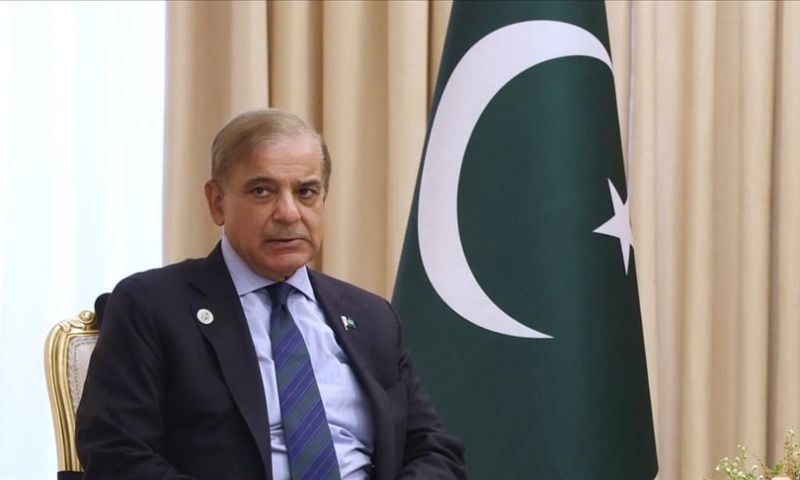
ISLAMABAD: Pakistan has expanded the composition of its apex economic decision-making body, the Economic Coordination Committee, by adding the education minister to its ranks, according to an official statement on Thursday.
The Economic Coordination Committee (ECC) now includes the Federal Minister for Education and Professional Training, Dr Khalid Maqbool Siddiqui, as well.
Prime Minister Shehbaz Sharif approved the decision, as part of an administrative adjustment to the structure of the federal cabinet committee, the PM Office statement added.
The ECC plays a central role in urgent economic, financial, and policy approval at the federal level.
“The ECC membership has been extended to include Dr Khalid Maqbool Siddiqui, who currently serves as Federal Minister for Education and Professional Training and is also a senior coalition partner in the federal government,” it stated.
The ECC is one of the most powerful cabinet committees in Pakistan’s economic architecture.
It is responsible for immediate decisions on matters such as subsidies, commodity pricing, energy adjustments, trade measures, and emergency fiscal interventions.
Its decisions are typically implemented on an urgent basis and later placed before the federal cabinet for formal ratification.
Prime Minister Shehbaz Sharif expressed confidence that Dr Siddiqui would play an active role in the committee and contribute effectively to national economic and development priorities through informed participation in its deliberations, according to the statement.
Dr Khalid Maqbool Siddiqui, a senior political figure associated with the Muttahida Qaumi Movement-Pakistan (MQM-P), holds the education portfolio in the federal cabinet.
His inclusion brings an additional sectoral perspective—particularly from education and human capital development—into a body traditionally dominated by finance, planning, energy, and commerce ministries.
The statement described the move as part of routine adjustments aimed at improving policy coordination across ministries and enhancing the efficiency of decision-making.
The Economic Coordination Committee remains a key instrument of Pakistan’s economic governance framework, particularly during periods of economic stabilisation and implementation of reforms.