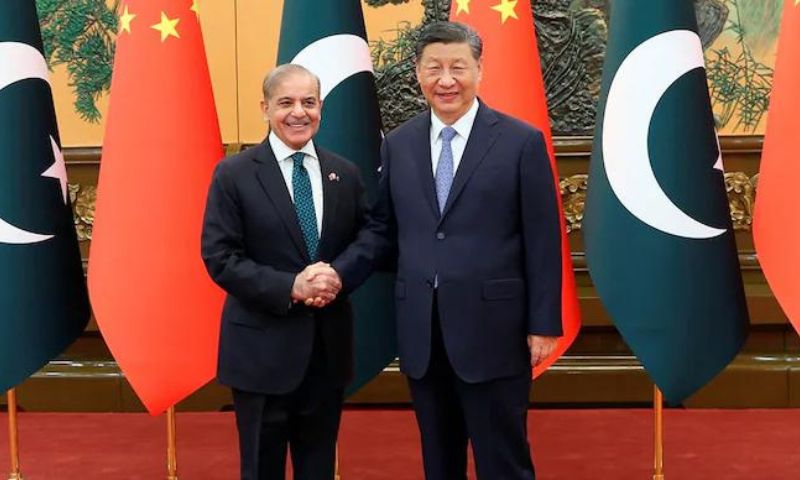



ISLAMABAD: As Pakistan and China prepare to celebrate the 75th anniversary of diplomatic relations in 2026, both countries are using the milestone not only to commemorate decades of close cooperation but also to outline an ambitious vision for the future of their strategic partnership.
Over the past seven and a half decades, relations between Islamabad and Beijing have evolved into one of the most stable and enduring bilateral partnerships in international politics, spanning diplomacy, economic development, defence cooperation, infrastructure, technology, education and people-to-people exchanges.
At a time of growing geopolitical competition, economic uncertainty and shifting global alliances, officials and analysts in both countries increasingly describe the Pakistan-China relationship as a model of long-term strategic trust and policy continuity.
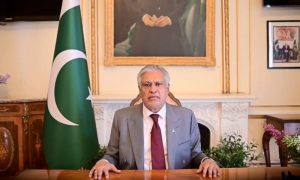
DPM / FM Senator Mohammad Ishaq Dar @MIshaqDar50 Presents Resolution in Senate of Pakistan on ‘Re-affirming China-Pakistan Friendship and Brotherhood’ marking 75th Anniversary of Pakistan–China Diplomatic Relations; The Resolution was Subsequently Adopted Unanimously pic.twitter.com/M8kFSLroOR
— Ministry of Foreign Affairs – Pakistan (@ForeignOfficePk) May 20, 2026
The anniversary year carries particular symbolic importance, as every major milestone in bilateral relations has historically been celebrated on a large scale.
This year’s commemorations have been further reinforced by sustained high-level engagement between the two governments, including the recent official visit of Pakistani President Asif Ali Zardari to China and the upcoming visit of Prime Minister Shehbaz Sharif to Beijing from May 23 to 26.
Diplomatic observers say the visits reflect the consistent political coordination that has characterised Pakistan-China relations for decades.
Leaders from both countries frequently describe the friendship as “higher than the Himalayas, deeper than the oceans, sweeter than honey and stronger than steel” — a phrase that has become synonymous with the bilateral relationship.
CPEC Remains Central To Cooperation
One of the most significant pillars of Pakistan-China cooperation remains the China–Pakistan Economic Corridor, the flagship component of China’s Belt and Road Initiative.
Since its launch, CPEC has transformed Pakistan’s infrastructure and energy sectors through major investments in highways, transport networks, energy generation projects and the development of Gwadar Port.
During the first phase of the corridor, cooperation focused heavily on addressing Pakistan’s infrastructure deficits and chronic electricity shortages, which had long constrained industrial productivity and economic growth.
Chinese-backed energy projects and transmission systems helped improve Pakistan’s power generation capacity, while new roads and transport links enhanced regional connectivity and logistics.
Officials in both countries now increasingly refer to the next stage of cooperation as “CPEC 2.0,” a broader phase aimed at industrial modernisation, technological innovation, agriculture, digital connectivity, green development and scientific collaboration.
Recent statements from Islamabad and Beijing indicate that future cooperation will place greater emphasis on information technology, artificial intelligence, digital economy partnerships, sustainable development and industrial innovation.
Pakistani policymakers increasingly view China not only as a development partner but also as a key collaborator in the country’s technological and digital transformation.
Trade, Agriculture And Technology Cooperation Expanding
China remains Pakistan’s largest trading partner and one of its most important sources of foreign investment.
The second phase of the China-Pakistan Free Trade Agreement has created expanded opportunities for Pakistani exports, particularly in sectors including agriculture, textiles, food processing, minerals and light manufacturing.
Analysts say there is still substantial untapped potential in bilateral trade that both countries are seeking to explore further.
Agriculture has emerged as another promising area of future cooperation. Chinese advancements in irrigation systems, seed technology, mechanised farming and food processing are expected to contribute significantly to Pakistan’s agricultural modernisation and food security goals.
Joint agricultural research initiatives and technology transfer programs are also expected to strengthen regional supply chains and support rural economic development.
Beyond economic cooperation, educational and cultural exchanges between the two countries have expanded rapidly in recent years.
Academic partnerships, research collaborations, scholarship programs and Chinese language initiatives in Pakistan have helped deepen people-to-people connectivity and foster greater understanding between the two societies.
Strategic And Security Coordination
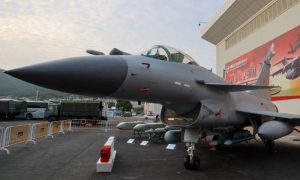
Defence and security cooperation continue to remain central components of the bilateral relationship.
Over the decades, Pakistan and China have developed close coordination in areas including defence technology, military modernisation, regional security and counterterrorism cooperation.
Both countries have consistently supported each other on core national interests in international and multilateral forums.
Regional stability, particularly in relation to Afghanistan, maritime security and regional connectivity, remains an important area of shared strategic interest for Islamabad and Beijing.
Beyond Traditional Diplomacy
The Pakistan-China partnership has increasingly expanded beyond traditional state-to-state engagement into broader cultural and societal cooperation.
Cultural festivals, tourism initiatives, media exchanges, think tank dialogues and sister-city partnerships have all contributed to growing public awareness and mutual understanding between the two nations.
One of the more symbolic recent developments has been growing cooperation in science and aerospace technology, including reports of Pakistani astronauts participating in training programs in China.
Analysts say such cooperation reflects the increasingly advanced and future-oriented nature of bilateral ties.
Looking Ahead
Despite the achievements of recent decades, officials and policy experts in both countries acknowledge that future cooperation will need to adapt to evolving global economic and geopolitical realities.
The next phase of Pakistan-China relations is expected to focus increasingly on economic sustainability, industrial competitiveness, climate resilience, innovation and regional integration.
Experts also emphasise the importance of domestic reforms and institutional improvements within Pakistan to maximise the long-term benefits of Chinese investment and economic cooperation.
Pakistan’s strategic geographic location continues to position it as a potential regional hub linking South Asia, Central Asia and the Middle East through trade, logistics and energy connectivity.
Chinese experience in infrastructure development, industrialization and poverty alleviation is also widely viewed in Pakistan as a valuable source of development lessons and economic opportunity.
As both countries mark 75 years of diplomatic relations, political trust between Islamabad and Beijing remains exceptionally strong, while economic, technological and cultural cooperation continues to broaden into new sectors.
For many observers, the anniversary represents not only a celebration of a longstanding partnership but also the beginning of a more modern, diversified and future-oriented phase in Pakistan-China relations.