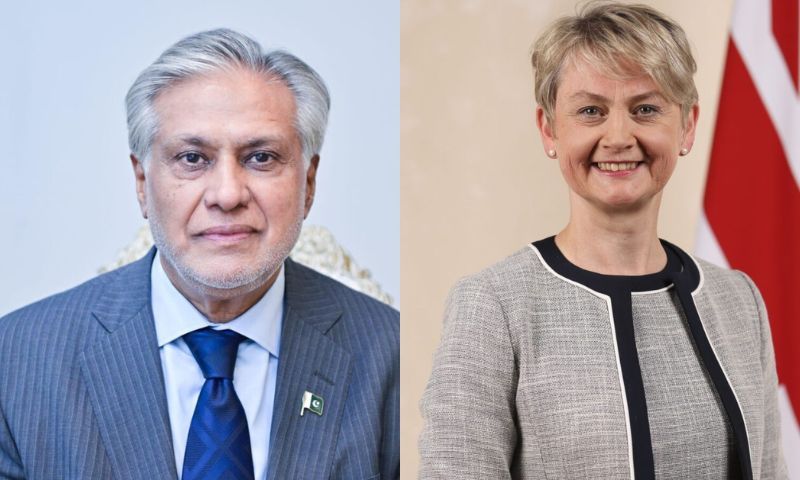
ISLAMABAD: UK Foreign Secretary Yvette Cooper has appreciated Pakistan’s constructive role in ending the US-Iran conflict.
Yvette was speaking with Pakistan’s Deputy Prime Minister and Foreign Minister Mohammad Ishaq Dar over the phone on Thursday, according to a statement issued by the Foreign Office.
“The two leaders reviewed the prevailing regional situation and exchanged views on ongoing efforts aimed at promoting peace and stability,” it said.
Foreign Secretary Cooper appreciated Pakistan’s constructive role in encouraging peaceful engagement among the concerned parties.
Deputy Prime Minister / Foreign Minister Senator Mohammad Ishaq Dar @MIshaqDar50 held a telephone conversation today with UK Foreign Secretary Yvette Cooper @YvetteCooperMP.
The two leaders reviewed the prevailing regional situation and exchanged views on ongoing efforts aimed… pic.twitter.com/U5W9147Lc5
— Ministry of Foreign Affairs – Pakistan (@ForeignOfficePk) May 14, 2026
Ishaq Dar reiterated Pakistan’s commitment to dialogue and diplomacy as the preferred path for addressing regional challenges.
The two leaders also discussed the wider implications of the situation for regional security and global trade. Both sides agreed on the need for continued engagement and close coordination.
Earlier, US President Donald Trump reaffirmed his support for Pakistan’s role as a mediator between Iran and the United States.
Speaking on Tuesday, Trump praised Pakistan’s Prime Minister Shehbaz Sharif and Chief of Defence Forces and Chief of Army Staff Field Marshal Syed Asim Munir for their role in helping secure a ceasefire in Iran that came into effect last month.
Trump said Islamabad had played a positive and constructive role in ongoing negotiations between Washington and Tehran.
Pakistan has continued diplomatic efforts to facilitate dialogue between Tehran and Washington and to de-escalate the ongoing conflict through diplomacy and dialogue.
Pakistan brokered a ceasefire between Tehran and Washington on April 8 that halted the war involving the United States, Israel, and Iran.
On April 11, Pakistan hosted high-stakes direct talks between the US and Iranian negotiators in Islamabad.
The Islamabad Talks concluded without a final agreement; however, they paved the way for further negotiations between Washington and Tehran to permanently resolve the conflict.
The war started after the US and Israel launched strikes on Iran on February 28, prompting retaliatory action from Tehran against Israel and the Gulf countries.
The confrontation also contributed to disruptions in maritime traffic around the Strait of Hormuz.