KEY POINTS
- Zardari to witness Hangor Class submarine handover to Pakistan Navy.
- Visit aims to accelerate CPEC cooperation and economic ties with China.
- Trip marks 75 years of Pak-China diplomatic relations.
- Hangor subs feature AIP, stealth sensors, torpedoes, and land-attack missiles.
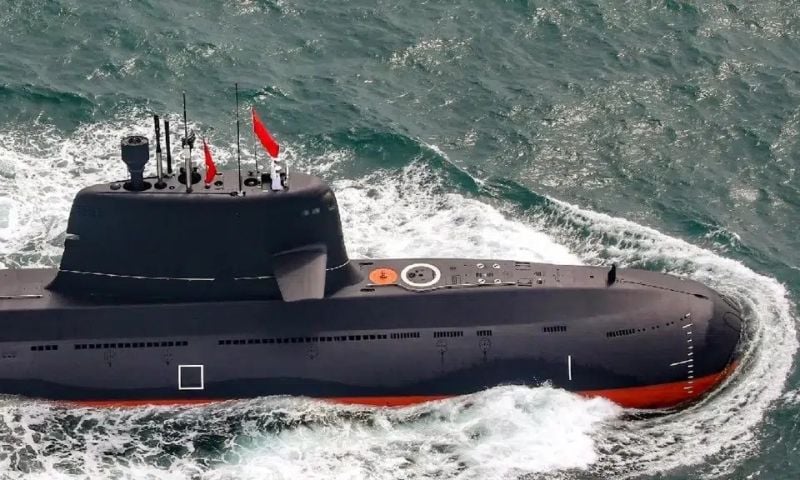
LAHORE: The handover of the first Hangor Class submarine to the Pakistan Navy will be the centerpiece of President Asif Ali Zardari’s five-day official visit to China, marking a historic milestone in Pak-China defence cooperation.
President Zardari departed on Saturday for a five-day official visit to China, where he is scheduled to meet Chinese leadership to advance economic and trade cooperation and accelerate the multibillion-dollar China-Pakistan Economic Corridor (CPEC).
The advanced AIP-equipped submarine features cutting-edge air-independent propulsion, stealth sensors, heavy-weight torpedoes, and land-attack cruise missiles. Its induction will significantly enhance Pakistan’s underwater warfare potential, stealth capabilities, and overall deterrence posture in the Arabian Sea regions.
THE HUNTER RETURNS….#PakNavy #HangorSubmarine #lethal #comingsoon #PakistanNavy pic.twitter.com/UbSjnGRAtg
— DGPR (Navy) (@dgprPaknavy) April 25, 2026
The handover also underscores China’s commitment to helping Pakistan achieve self-reliance in indigenous submarine construction through comprehensive technology transfer agreements.
The submarine is equipped with Optronic Scopes, Electronic Support Measures (ESM), advanced radars, and sophisticated sonars including hull-mounted, flank, towed array, and mine avoidance systems.
Its multi-role combat platform can deploy a wide array of munitions, including Heavy Weight Torpedoes (HWT), anti-torpedo decoys, and submarine-launched Anti-Ship Cruise Missiles with land-attack capability. Secure, encrypted communication systems and modern data links enable reliable connectivity with shore commanders while submerged.
Brief Overview: Hangor Class Submarine Project
The Hangor Class Submarine Project represents Pakistan Navy’s most ambitious maritime defence initiative, involving the construction of eight advanced AIP-equipped submarines in partnership with China. Four submarines are being built in China and four at Karachi Shipyard & Engineering Works through comprehensive technology transfer.
Historical Background: Pakistan’s submarine service began with US-supplied Tench Class submarines, followed by French Daphne and Agosta classes. Over four decades of experience in operations, maintenance, and local construction paved the way for this mega project.
Key Features: The Hangor Class submarines are derived from China’s Type 039B Yuan-class design and feature:
- Stealth: Hydro-dynamically optimized hull, sound-absorbing coatings, and advanced acoustic management systems
- AIP Technology: Extended submerged endurance without needing to snorkel
- Advanced Sensors: Optronic scopes, ESM, radars, and sophisticated sonars (hull-mounted, flank, towed array, mine avoidance)
- Weaponry: Heavy Weight Torpedoes, anti-torpedo decoys, and submarine-launched Anti-Ship Cruise Missiles with land-attack capability
- Secure Communications: Encrypted data links for network-centric operations while submerged
Strategic Significance: The induction of these submarines significantly enhances Pakistan’s underwater warfare potential, sea denial posture, and credible deterrence in the Arabian Ocean Region. The project also underscores the enduring strategic partnership between Pakistan and China in the maritime domain.
According to the Ministry of Foreign Affairs, President Zardari is traveling on the invitation of the Chinese government. He will visit Changsha in Hunan province from April 25 to 27, followed by Sanya in Hainan province from April 28 to May 1. During the trip, he will meet provincial leadership to discuss bilateral relations, with particular focus on strengthening economic and trade cooperation under CPEC.
The visit carries added significance as both nations commemorate the 75th anniversary of the establishment of diplomatic relations this year. The Foreign Office stated that the visit reflects both sides’ deep commitment to further strengthening the all-weather strategic cooperative partnership.
President Zardari previously visited China on a 10-day official trip last year, during which six MoUs were signed between the Sindh government and Chinese business partners in sectors including defence, energy, railway infrastructure, and agriculture.