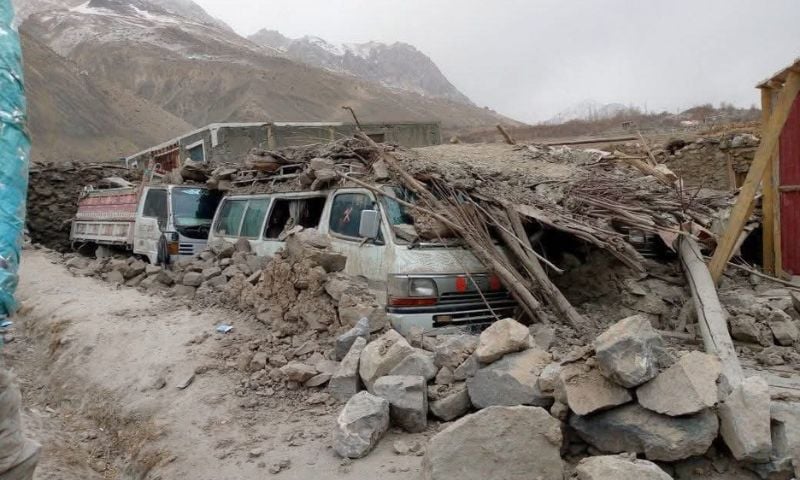
HUNZA, Pakistan: On January 19, 2026, what began as a routine winter day in the remote Chipurson Valley quickly spiralled into a nightmare when a 5.8-magnitude earthquake struck the region, injuring at least five people and damaging dozens of houses, cattle sheds, roads, and public and private infrastructure.
A valley known for its culture
Chipurson Valley is a high-altitude, remote valley in Gojal Tehsil of Hunza District in Gilgit-Baltistan (G-B), located near the Afghan border and the Wakhan Corridor.
Situated about 172 kilometres from Hunza in the far northwest of Pakistan, the valley comprises around 600 households with a population of over 4,000.
Chipurson Valley is also known for hosting the International Baba Ghundi Festival, held annually at the shrine of the Sufi saint Baba Ghundi.
Organised by the Chipursan Local Support Organisation (CLSO) in collaboration with the Gilgit-Baltistan government, the festival was included in the provincial annual calendar in 2010.
It features Sufi nights, Buzkashi competitions, polo matches, traditional sword dances, yak safaris and races, traditional food, and folk music.
Despite its breathtaking scenery and snow-covered peaks, Chipurson remains one of the least travelled and least developed regions of Pakistan, where life has always been an uphill battle.
Road cut off
Following the earthquake, the only road connecting Chipurson with the Karakoram Highway (KKH) at Sost — a border town and major hub of Pakistan-China economic activity — remained blocked for several hours due to landslides and rockfall.
Communication with the valley was also cut off, leaving authorities and families uncertain about the extent of damage.
The National Disaster Management Authority (NDMA) and the Gilgit-Baltistan Communication and Works (C&W) Department subsequently dispatched heavy machinery to clear multiple blockages to restore traffic.
The situation in Chipurson became dire as homeless residents were forced to spend freezing nights under the open sky. Elders, women, and children were the most vulnerable to the disaster and extreme winter conditions.
Life in tents
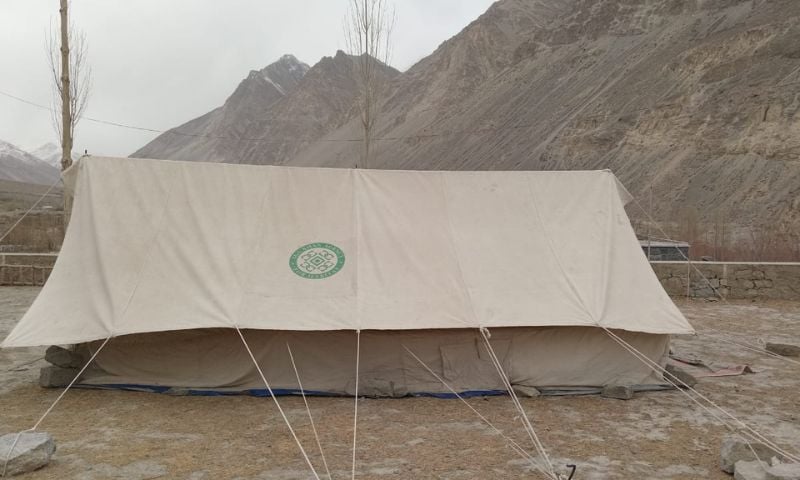
Even months after the earthquake, many residents continue to live in temporary tents, painting a grim picture of delayed rehabilitation efforts.
The main access road to the valley remains open; however, it is frequently disrupted by landslides at multiple points.
Despite these recurring blockages, the Gilgit-Baltistan C&W Department regularly dispatches machinery to clear debris and restore traffic, ensuring that basic connectivity is maintained.
But residents believe that reconstruction has yet to take off in any meaningful way, leaving families in a state of prolonged uncertainty.
According to the district administration’s initial assessment, the villages of Zoodkhun, Shetmerg, and Ispenj — among the valley’s 11 villages — were the worst affected.
The other villages are Yarzerech, Raminji, Kirmin, Kil, Reshit, Noorabad, Rahimabad, and Sher-e-Sabz.
Haider Badakhshani, a social activist, recalls that the earthquake was followed by loud underground explosions.
“The infrastructure in Zoodkhun, Shetmerg, and Ispenj stands completely destroyed. All houses in these villages are uninhabitable,” he tells WE News English.
He notes that around 90 per cent of houses in the remaining villages are partially damaged and could collapse at any time.
“People are living in tents under constant fear and sadness,” he remarks.
He cautions that many families are now living on the edge, unsure of what the next tremor may bring.
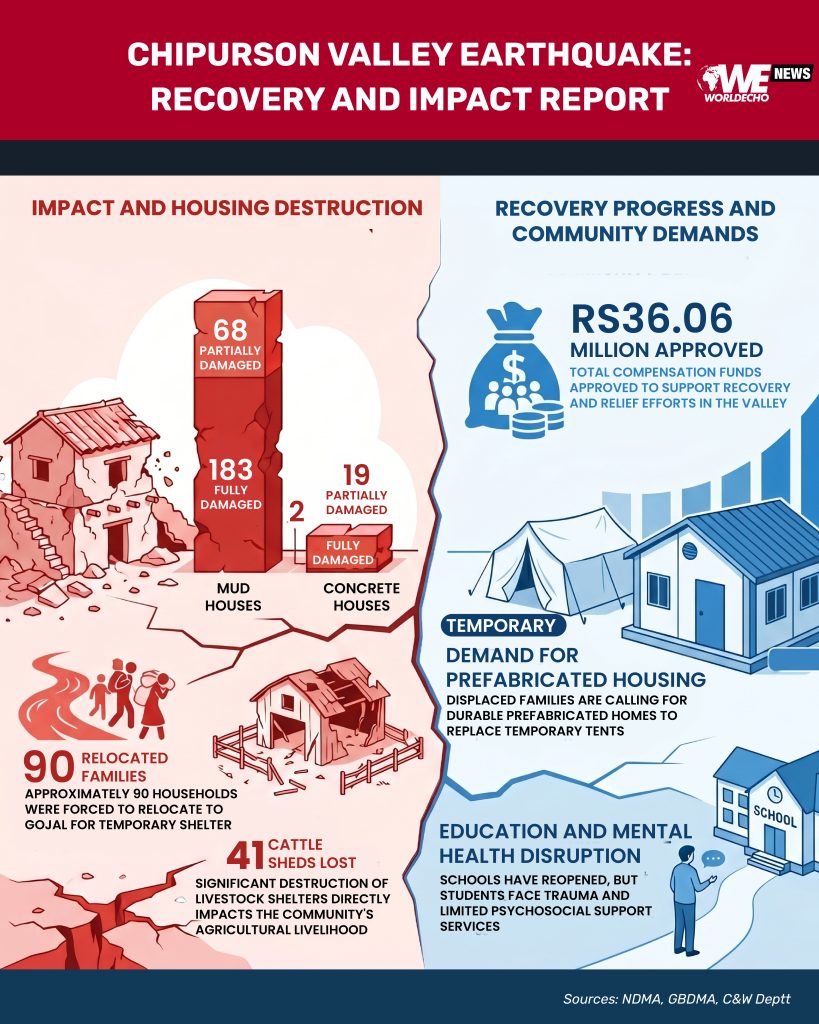
The government of Gilgit-Baltistan has approved the release of Rs36.06 million to compensate families affected by the earthquake as a technical supplementary grant from the GB Consolidated Fund (Emergencies).
Damage and relief
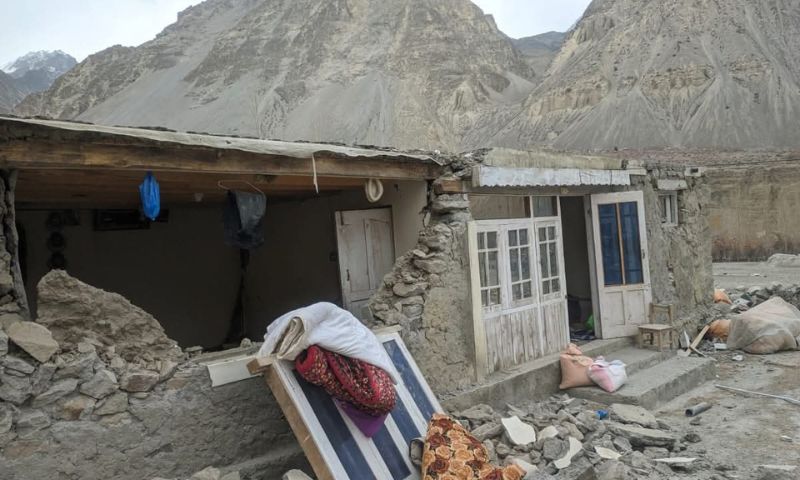
Badakhshani further explains that residents whose houses developed cracks are afraid to return due to continued aftershocks. “Underground explosions and tremors continued, and temperatures dropped to minus 25 degrees Celsius,” he recalls.
Authorities have since completed a detailed damage assessment report, which forms the basis for compensation and rehabilitation planning.
The compensation package covers damages to houses, cattle sheds, livestock, and shops in accordance with the policy of the Gilgit-Baltistan Disaster Management Authority (GBDMA).
The approved compensation includes assistance to 183 fully damaged mud houses and 68 partially damaged ones, along with two fully damaged and 19 partially damaged concrete houses.
Additionally, 41 fully damaged and nine partially damaged cattle sheds have been included in the package.
Compensation is also being extended for the loss of livestock, including goats and cows, while 18 affected shops will also receive support.
Basic needs struggle
Mujeebur Rahman, 60, points out that basic facilities are almost non-existent in the valley.
“There are no permanent doctors, no proper medication, and no emergency response system on normal days.”
In the aftermath of the earthquake, temporary health camps were established by the district health department in several affected villages to provide first aid, medical check-ups and basic treatment.
Mobile medical teams also visited remote localities where access remained difficult.
However, access to clean water and sanitation remains a significant challenge, particularly for families living in tents or makeshift shelters.
While some relief efforts included the provision of water and hygiene kits, these measures have only scratched the surface.
Heating conditions were slightly improved with the distribution of blankets and limited fuel support, but the harsh winter weather of the region continued to pose serious challenges for residents.
“People are suffering from psychological stress, anxiety, and trauma,” Rehman observes, adding that women, children, and breastfeeding mothers are facing hygiene and health challenges in their tent settlements.
“There is only one SCO [Special Communication Organization] — a telecom service provider operating in remote areas — a tower in the valley, and it barely covers two villages. Communication is a serious problem. There are no washrooms with the tents,” he laments.
Displacement continues
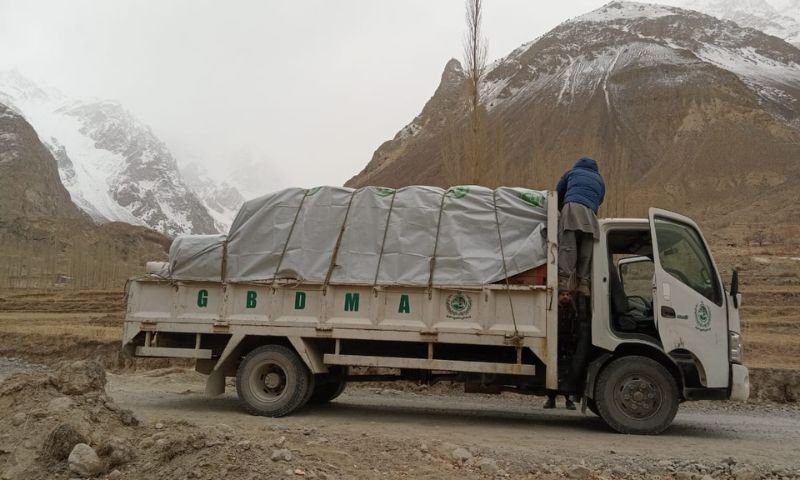
Amir Ali, 36, a local resident, says the road linking Chipurson with other areas frequently remains blocked due to snowfall, landslides, and rockfalls.
“There is an urgent need for a mechanism to keep the road open at all times to handle emergencies. Many women and children have been shifted to Gojal,” he explains.
Saima Khatoon, 40, a housewife, says life in Chipurson during winter is already harsh, but the earthquake has worsened their hardships.
“Water supply lines are frozen. We walk long distances to fetch water from the river. Two to three families are living in one tent,” she adds.
Hunza Deputy Commissioner Nizamuddin states that relief and rescue operations began immediately, and that medical camps are still operational.
Since then, the GBDMA has distributed tents, food, and other essentials, while also conducting damage assessments.
Nevertheless, residents say long-term rehabilitation remains a distant goal.
Manzoor Hussain, 47, a social activist from Ganish, Hunza, highlights that local communities are actively participating in relief efforts.
“We visited the affected areas and distributed firewood and blankets among the locals. However, people are still facing severe difficulties living in tents during harsh winter conditions,” he says.
He further notes that relief distribution is being monitored jointly by the district administration, GBDMA, and local community representatives to ensure transparency and equitable access.
The affected communities, however, demand that the entire Chipurson Valley be declared calamity-hit, along with the provision of prefabricated houses, student fee waivers, wheat quotas for displaced families, installation of additional SCO towers to improve communication, and a detailed geological survey.
Seismic risks persist
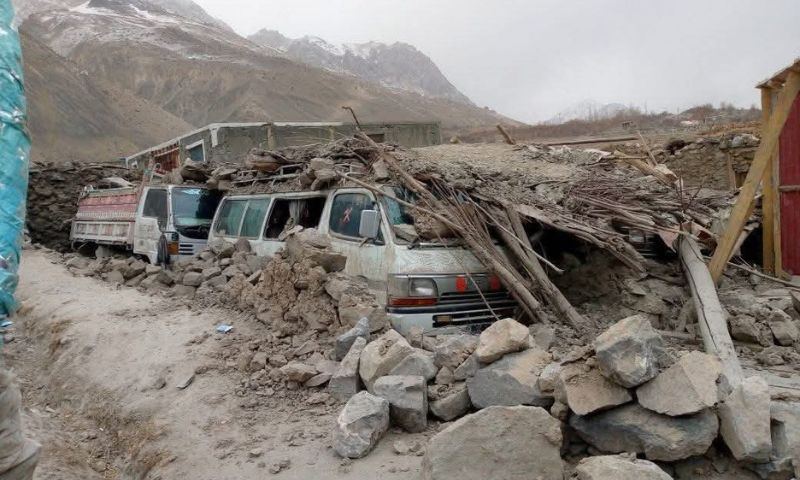
Sardar Karim, 28, says that the series of underground explosions has continued for months. “The underground explosions were followed by tremors. The people of Chipurson are living under constant fear of earthquakes and tremors.”
The district administration is assessing earthquake-related damages in the valley, though detailed findings have not yet been made public.
According to locals, around 90 families have been temporarily relocated to different villages in Gojal as a precautionary measure amid continued aftershocks and snowfall.
The Geological Survey of Pakistan recently issued a detailed technical explanation of the ongoing earthquake activity in Gilgit-Baltistan, confirming that the tremors recorded on 27 March 2026 are part of a natural phenomenon known as an “earthquake swarm.”
The Geological Survey stated that the epicentral zone of this seismic activity is located near Lupghar Pass, south of the Chipurson Valley.
Experts clarified that this pattern does not indicate a single major earthquake but rather a cluster of smaller earthquakes occurring in quick succession due to ongoing tectonic processes.
The Geological Survey emphasised the geological sensitivity of the Chipurson Valley, noting that its terrain, characterised by loose sediment layers and steep slopes, can amplify seismic effects and increase vulnerability even during moderate tremors.
No end in sight
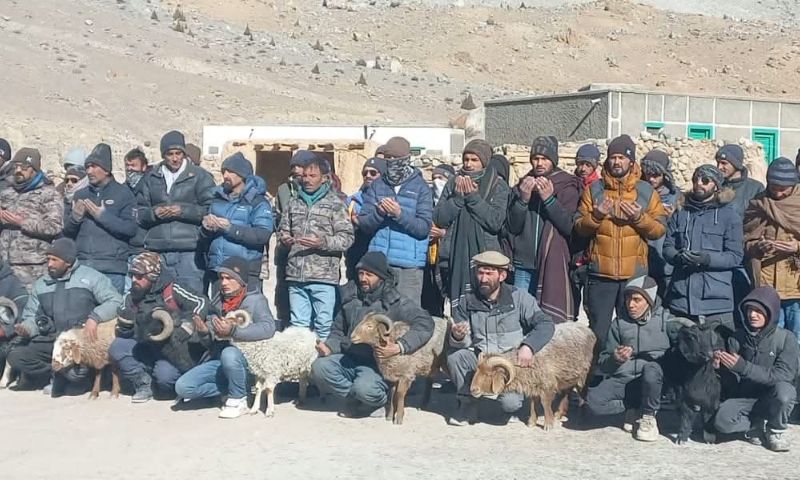
Children in the valley have gradually returned to school despite ongoing challenges, providing a rare degree of normalcy for families still living in tents.
However, most relocated families remain in Gojal and have not returned permanently, citing safety concerns and the absence of full rehabilitation measures.
Mental health concerns persist three months on, with women and children continuing to bear the heaviest psychological burden.
While local authorities and NGOs have conducted psychosocial support activities, sustained interventions are still needed.
Many families are still awaiting formal financial compensation and livelihood support — including cash grants and wheat quotas — even as cross-border trade near Sost has remained largely unaffected by the disaster.
“Rehabilitation is the need of the hour,” emphasises a local activist, Azhar, 33, voicing the collective desire of Chipurson’s residents to return home, restore their livelihoods, and rebuild their lives with dignity.