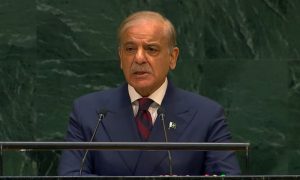
ISLAMABAD: Pakistan on Thursday called on the United Nations Security Council (UNSC) to address the dispute over the Indus Waters Treaty (IWT), cautioning that India’s continued unilateral suspension of the agreement could have “grave implications for peace, security, and humanitarian conditions” in South Asia.
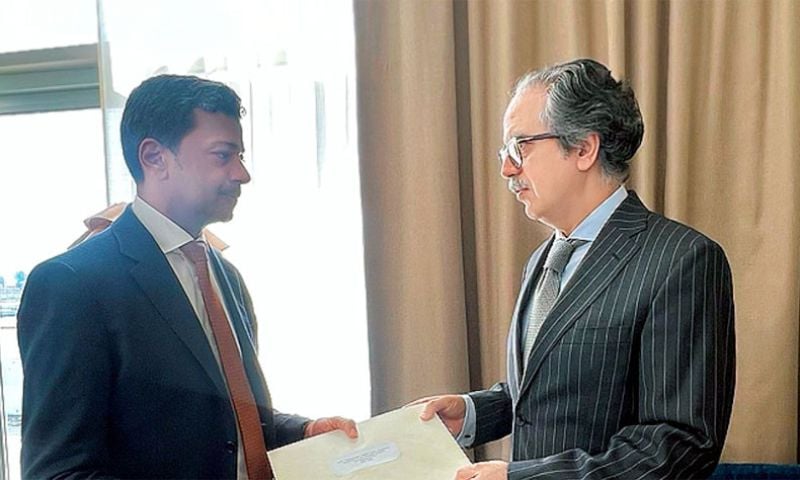
Pakistan’s Permanent Representative to the United Nations, Asim Iftikhar Ahmad, handed over a letter to the President of the UN Security Council, Ambassador Jamal Fares Alrowaiei, Pakistan’s Mission said in a statement.
The letter has called on the UNSC to take note of the worsening situation and urge India to fully restore the implementation of the Indus Waters Treaty, resume all treaty-related cooperation and data sharing without delay, refrain from any form of water coercion, and meet its international obligations in good faith, Pakistan’s mission in a post said.
Ambassador Asim Iftikhar Ahmad, Permanent Representative of Pakistan to the UN, today handed over a letter addressed by Deputy Prime Minister/Foreign Minister @MIshaqDar50 to the President of the UN Security Council, Ambassador Jamal Fares Alrowaiei of Bahrain.
The letter draws… pic.twitter.com/JRNhsPpfc6
— Permanent Mission of Pakistan to the UN (@PakistanUN_NY) April 23, 2026
A statement issued by Pakistan’s Mission said the letter drew the UNSC’s attention to the matter “one year after India’s illegal decision to hold the Indus Waters Treaty in abeyance” and highlighted the move’s “grave peace and security, and humanitarian consequences”.
Pakistan urged the Security Council “to take cognisance of the alarming situation and call upon India to restore the full implementation of IWT, resume all Treaty-mandated cooperation and data-sharing without delay, desist from any form of water coercion, and comply fully with its international obligations in good faith”.
The Permanent Representative also briefed the Council’s President on what he described as the repetition of unfounded allegations and propaganda by India, at a time when Pakistan is actively engaged in mediation efforts to support regional and global peace and security.
Ambassador Asim Iftikhar Ahmad further highlighted that the unresolved Jammu and Kashmir dispute—long on the UN Security Council’s agenda—remains the root cause of instability in South Asia, underscoring the need for a just and lasting resolution in line with relevant Council resolutions and the aspirations of the Kashmiri people.
The Indus Waters Treaty, brokered by the World Bank in 1960, governs the sharing of the Indus river system between India and Pakistan. Under the agreement, the eastern rivers—Ravi, Beas, and Sutlej—are allocated to India, while the western rivers—Indus, Jhelum, and Chenab—are primarily assigned to Pakistan.
In January this year, Pakistan secured a procedural victory in the Indus Waters Treaty (IWT) arbitration after the Permanent Court of Arbitration (PCA) in The Hague reaffirmed its jurisdiction, rejected attempts to stall proceedings, and directed New Delhi to comply with treaty obligations.
In April 2025, India unilaterally held the Indus Waters Treaty in abeyance following the Pahalgam incident in the Indian Illegally Occupied Jammu and Kashmir, which claimed 26 lives.
Pakistan termed any attempt to suspend its water share an “act of war”, noting the Indus Waters Treaty had no provision for unilateral suspension.