
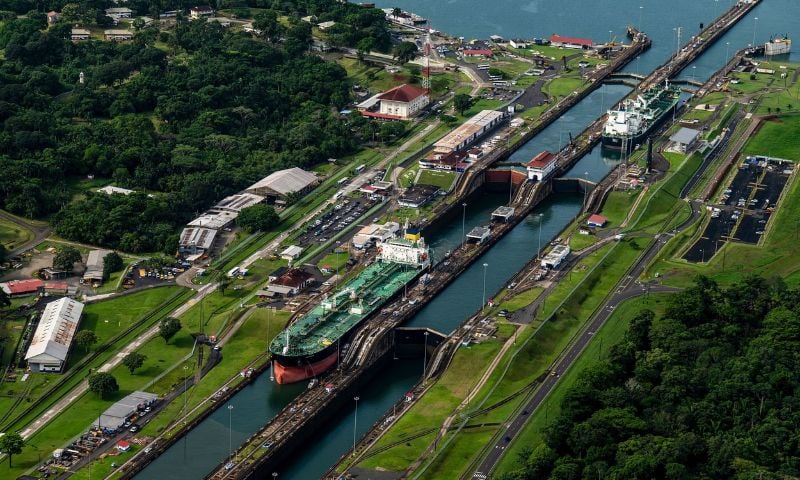
PANAMA CITY: The ongoing Middle East conflict has sharply increased traffic through the Panama Canal, driving up transit costs as global shipping routes adjust to disruptions caused by the Strait of Hormuz blockade.
According to an official report, one liquefied natural gas (LNG) vessel recently paid $4 million to bypass waiting queues at the canal — highlighting the growing urgency among shipping companies to avoid delays that can stretch up to five days.
The surge in demand follows US-Israeli strikes on Iran that began on February 28, which led to restrictions in the Strait of Hormuz — a key route handling around one-fifth of global oil and gas exports. As a result, Asian buyers have increasingly turned to US energy supplies, routing shipments via the Panama Canal instead of relying on Gulf exports.
Changes in global trade patterns
Data from the Panama Canal Authority shows that daily ship traffic has remained robust, rising from an average of 34 vessels in January to 37 in March, with some days exceeding 40 transits.
“The increase reflects changes in global trade patterns and market conditions, including geopolitical factors affecting key routes,” the authority said.
Ships typically reserve canal slots well in advance, but last-minute access can be secured through auctions. These auctions have seen a dramatic rise in bids, with recent LNG and oil tankers paying over $3 million for priority passage.
This marks a sharp jump from average auction prices of around $130,000 between October and February, which climbed to $385,000 in March and April.
The Panama Canal remains a crucial global trade artery, handling around five percent of maritime traffic and connecting major markets such as the United States, China, South Korea and Japan.
In the first half of the 2026 fiscal year, the canal recorded 6,288 vessel transits, reflecting a 3.7 percent increase compared to the same period last year, according to official figures.