
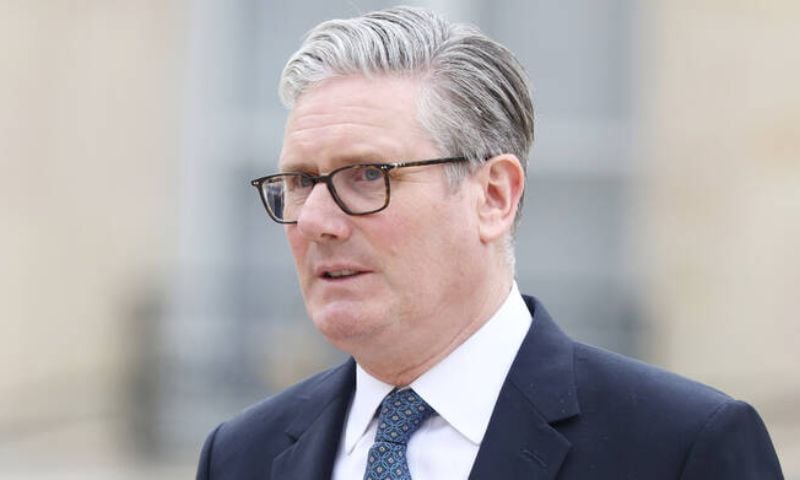
LONDON: British Prime Minister Keir Starmer is set to confront parliament on Monday amid intensifying political pressure over the controversial appointment of senior Labour figure Peter Mandelson as ambassador to the United States, despite his failure to pass a formal security vetting process.
The issue has reignited political tensions just weeks ahead of crucial local elections, with opposition parties demanding accountability and raising questions about the prime minister’s judgement and leadership. Starmer had earlier assured lawmakers that all procedural requirements had been properly observed in Mandelson’s appointment, a claim now under scrutiny following fresh disclosures.
Mandelson, 72, was dismissed from his diplomatic role in September after details emerged regarding his associations with the late convicted sex offender Jeffrey Epstein. The revelations prompted Starmer to apologise publicly for the appointment, acknowledging it as a serious lapse in judgement.
However, the controversy deepened last week when the government disclosed that Mandelson had in fact failed a pre-appointment security vetting process conducted before he assumed office in February 2025. The delayed disclosure has raised concerns about transparency and internal communication within government ranks.
In response, Starmer stated that it was “unforgivable” that he had not been informed of the vetting failure earlier. The fallout led to the dismissal of senior Foreign Office official Olly Robbins, who is now expected to testify before a parliamentary committee on Tuesday regarding the handling of the matter.
According to Reuters, Starmer has pledged to present a full account of the events to parliament, seeking to clarify the sequence of decisions and information gaps that allowed Mandelson’s appointment to proceed. Despite the growing controversy, no senior figures within the Labour Party have publicly called for his resignation.
Nevertheless, political opponents have sharply criticised the prime minister, accusing him of either misleading parliament or demonstrating serious administrative failings. Ed Davey described the episode as a case of “catastrophic misjudgement,” while Conservative leader Kemi Badenoch argued that Starmer had, at best, shown reckless negligence.
In a strongly worded open letter, Badenoch said the affair had damaged Britain’s relationship with the United States and undermined national security by appointing an individual flagged as a “high concern” by security services. She also criticised the perceived insensitivity towards victims associated with Epstein.
The controversy comes at a politically sensitive moment, with Labour expected to face electoral challenges in the upcoming local polls. Starmer’s personal approval ratings have also declined since his decisive general election victory in 2024, adding to concerns within the party about maintaining public confidence.
Despite the criticism, senior government figures have rallied in support of the prime minister. Scotland Minister Douglas Alexander expressed confidence that Starmer would continue to lead the party into the next general election, though he acknowledged that legitimate questions required clear answers.
Meanwhile, Deputy Prime Minister David Lammy and Technology Secretary Liz Kendall both indicated that Mandelson’s appointment would not have gone ahead had the vetting concerns been properly communicated at the time.
As parliament prepares for a tense session, the unfolding controversy continues to test Starmer’s leadership, with political stakes rising ahead of key electoral contests and ongoing scrutiny over governance standards.