
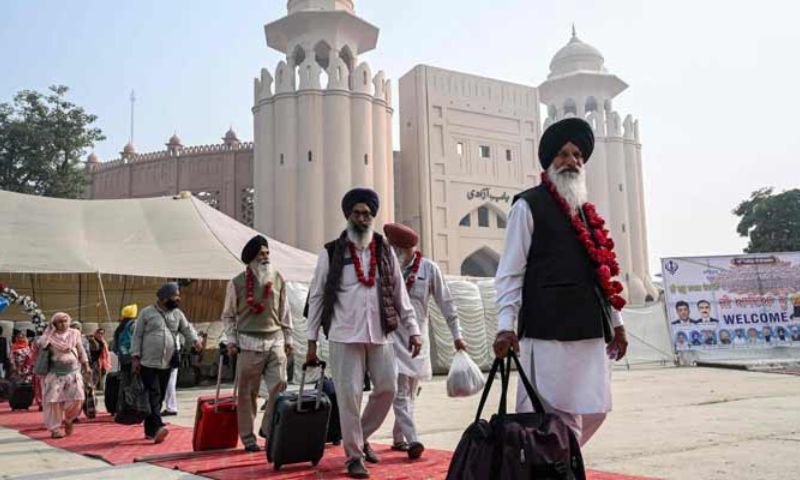



LAHORE: Thousands of Sikh pilgrims from India arrived in Pakistan on Friday to take part in the 327th International Vaisakhi Festival, marking a spiritually significant gathering that celebrates faith, heritage, and the birth of the Khalsa.
The pilgrims were accorded a warm welcome by the Provincial Minister for Minority Affairs and Pardhan of the Pakistan Sikh Gurdwara Parbandhak Committee (PSGPC), Ramesh Singh Arora, at the Wagah Border, according to an official statement.
The occasion commemorates the historic founding of the Khalsa by Guru Gobind Singh in 1699, a defining moment in Sikh history that symbolizes faith, unity, and courage.
The Pakistan High Commission in New Delhi had issued over 2,800 visas to Sikh pilgrims from India for the event. The festival will run from April 10 to 19, with over 26,000 pilgrims expected from around the world.
Under the special directives of Chief Minister Maryam Nawaz Sharif, the Government of Punjab has set up comprehensive facilitation centers for Sikh pilgrims. These include quality accommodation, dedicated transport, 24/7 medical services, and strict security arrangements by the Punjab Police and Rangers.
Pilgrims arriving from Indian states such as Amritsar, Haryana, and Delhi were transported in three convoys to Gurdwara Janam Asthan in Nankana Sahib. During their ten-day stay, they will visit several holy sites, including Gurdwara Panja Sahib, where the main Vaisakhi ceremony will be held on April 14.
Speaking at the Wagah Border, Ramesh Singh Arora warmly welcomed the pilgrims to the land of Guru Nanak.
He said Pakistan remains committed to peace and interfaith harmony, noting that the issuance of over 2,800 visas reflects this commitment. He added that Pakistan holds deep spiritual importance for Sikhs worldwide as the birthplace of Sikhism.
The minister further stated that minorities in Pakistan enjoy religious freedom and constitutional protection. He also urged India to fully operationalise the Kartarpur Corridor to strengthen regional ties and facilitate Sikh pilgrims.