Key Points
- KSE-100 posts historic surge following ceasefire announcement
- Investor sentiment rebounds sharply after weeks of geopolitical stress
- Falling oil prices and reduced risk premiums drive buying activity
- Pakistan’s mediation role strengthens market confidence
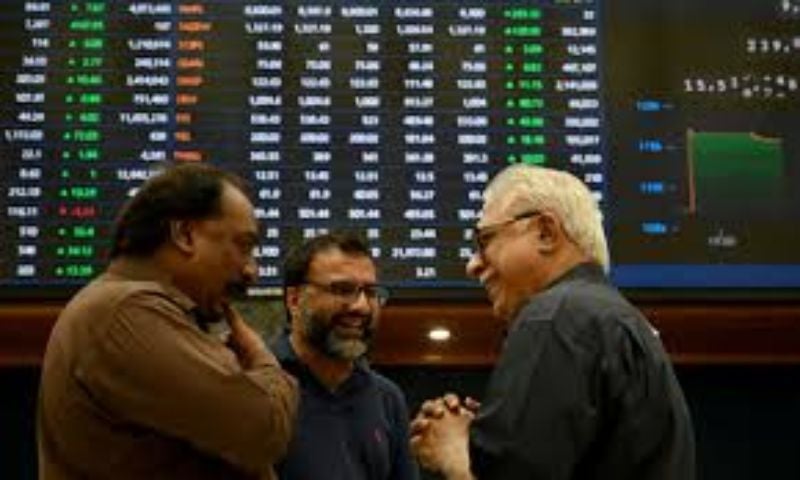
ISLAMABAD: Pakistan’s stock market staged a historic rally on Wednesday, with the benchmark KSE-100 index surging sharply after a US-Iran ceasefire brokered with Pakistan’s mediation eased geopolitical tensions and triggered a wave of investor optimism.
The Pakistan Stock Exchange (PSX) witnessed aggressive buying across sectors as the announcement of a two-week truce between Washington and Tehran lifted uncertainty that had weighed heavily on equities in recent weeks.
Within minutes of opening, the KSE-100 index jumped by more than 12,000 points, or over 8 per cent, prompting a temporary market halt under exchange regulations designed to manage extreme volatility.
The rally marks a dramatic reversal from the previous session, when escalating fears of conflict had triggered a sharp sell-off, reflecting how closely Pakistan’s equity market is tied to global geopolitical developments and energy price movements.
Market participants attributed the surge primarily to the easing of geopolitical risk following the ceasefire, which has reduced fears of disruption in the Strait of Hormuz — a critical artery for global oil supplies.
The truce has also led to a sharp decline in international oil prices, significantly improving the outlook for energy-importing economies such as Pakistan.
Global markets mirrored this optimism, with equities across Asia, Europe, and the United States posting strong gains as investors responded to falling oil prices and reduced conflict risk.
The synchronised rally reinforced confidence among domestic investors, who returned to the market after remaining cautious during the height of tensions.
Analysts noted that lower oil prices are particularly positive for Pakistan’s macroeconomic outlook, as they ease pressure on the current account deficit, reduce inflationary risks, and improve corporate profitability across key sectors, including cement, textiles, and manufacturing.
Banking stocks also attracted interest amid expectations of improved economic stability. The scale of the rally was further amplified by Pakistan’s leading role in facilitating the ceasefire.
Investors viewed Islamabad’s mediation efforts as a stabilising factor that not only contributed to the de-escalation but also enhanced the country’s geopolitical standing.
This shift in perception helped reduce the risk premium associated with Pakistani assets, encouraging both institutional and retail participation.
The bullish momentum extended across major sectors, with index-heavy stocks leading the advance.
Earlier gains in anticipation of easing tensions had already signalled a potential recovery trend, but the formal ceasefire announcement acted as a decisive trigger for a broad-based surge.
Despite the strong rebound, analysts cautioned that market volatility could persist.
The ceasefire remains temporary, and any deterioration in negotiations between the United States and Iran could quickly reverse investor sentiment.
Global energy markets remain sensitive to developments in the region, meaning that oil price fluctuations will continue to influence market direction.
Nevertheless, the current rally underscores the extent to which geopolitical developments can shape financial markets, particularly in emerging economies.
For Pakistan, the episode highlights how external shocks can rapidly shift market dynamics, from sharp declines driven by uncertainty to record gains fuelled by optimism and diplomatic breakthroughs.
In the near term, investors are expected to monitor closely the progress in ceasefire negotiations scheduled for April 10 and potential follow-up talks.
Sustained stability could support further gains in equities, whereas renewed tensions may reintroduce volatility.
For now, the Pakistan Stock Exchange’s sharp rebound reflects renewed confidence, driven by a combination of easing global risks, improving energy outlook, and Pakistan’s emerging role in supporting regional peace efforts.