JERUSALEM: Repeated Iranian missile strikes on a major petrochemical complex in southern Israel have raised concerns over a potential chemical leak as the conflict between Tehran and Tel Aviv intensifies.
Three strikes targeted the Ramat Hovav Industrial Zone within a week, underlining the strategic significance of the site and the growing risks to surrounding areas.
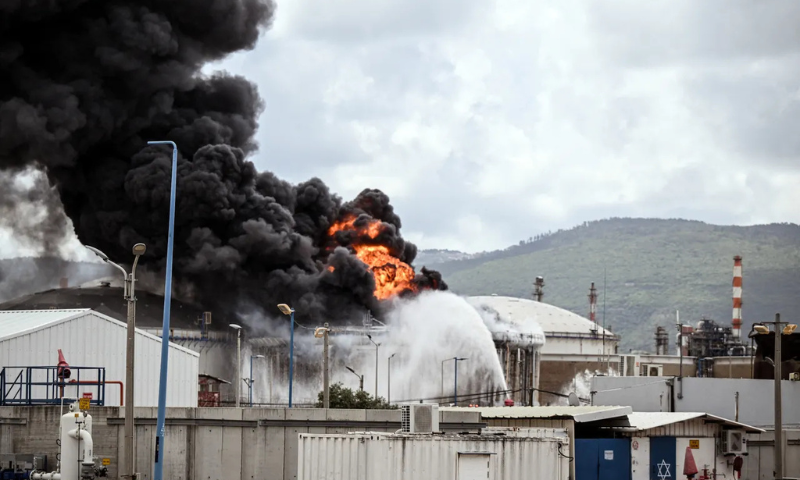
According to Israel Hayom newspaper, an Iranian missile hit the Adama Makhachem plant on March 29, triggering a fire and prompting heightened alert over possible hazardous chemical leakage.
Israel’s defence minister confirmed an attack on the South Pars gas complex, targeting Iran’s biggest petrochemical plant.
It comes less than three weeks since Trump told Israel to not attack the site again, after Iran retaliated with strikes on energy sites across the Gulf. pic.twitter.com/kqplZh3A2T
— Al Jazeera English (@AJEnglish) April 7, 2026
A second strike on April 2 damaged the same facility and caused another fire.
A third missile landed near the site on Sunday, though no damage was reported.
The newspaper said the repeated strikes “were not coincidental,” describing Ramat Hovav as one of Israel’s largest concentrations of chemical and petrochemical industries and a target of strategic importance.
It warned that even without catastrophic damage, missile strikes on the site pose environmental risks, alongside psychological pressure on nearby communities.
According to the Turkish news agency, Anadolu, the facility’s proximity to the southern city of Beersheba and surrounding residential areas has further heightened concerns that any major incident or toxic leak could impact a large civilian population.
The strikes are seen as part of Iran’s retaliation for Israeli attacks on petrochemical facilities within its own territory.
Regional tensions have escalated sharply since the United States and Israel launched a joint offensive on Iran on February 28.
The conflict has since expanded, with Iran responding through missile and drone attacks targeting Israel as well as locations in Jordan, Iraq, and Gulf states hosting US military assets.
Tehran has also imposed restrictions on shipping through the Strait of Hormuz, adding to global economic and security concerns.