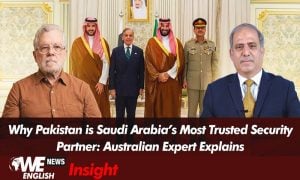
Bound by faith, anchored in history, and tested through crises, the relationship between Pakistan and Saudi Arabia has never been a fleeting alignment of convenience. It is a rare continuum—one that has survived wars, economic shocks, political transitions, and shifting regional dynamics.
The Strategic Mutual Defence Agreement (SMDA), therefore, is not the beginning of this story. It is its latest, and perhaps most formal, expression.
To understand the weight of this moment, one must step back. Long before policy frameworks and defence agreements, the connection between the people of the subcontinent and the Jazirat Al-ʿArab was shaped by centuries of religious pilgrimage, trade routes, and intellectual exchange.
When Pakistan emerged in 1947 as a state rooted in Islamic identity, and Saudi Arabia stood as the custodian of Islam’s holiest sites, the foundation for a natural alliance was already in place.
But this relationship did not remain symbolic—it translated into action, repeatedly.
In the early years of Pakistan’s statehood, when institutions were still fragile and economic resources were limited, Saudi Arabia extended political support and economic assistance.
The 1951 Treaty of Friendship formalised this goodwill, but the real substance of the relationship emerged in the decades that followed.
During periods of regional tension and war, Pakistan extended strategic and military cooperation to the Kingdom. Pakistani military personnel have, at various points in history, been deployed in Saudi Arabia for training, advisory roles, and the strengthening of the Kingdom’s defence infrastructure.
This was not merely technical cooperation—it was a signal of trust at the highest level of national security.
During times of sanctions and financial isolation, Riyadh’s backing provided Islamabad with critical breathing space.
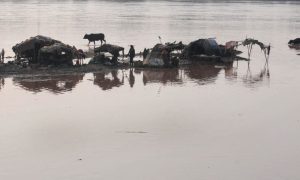
The relationship has perhaps been most visible in moments of humanitarian crisis. When devastating floods struck Pakistan, Saudi Arabia mobilised one of the largest international relief efforts—airlifting supplies, dispatching medical teams, and contributing hundreds of millions of dollars in aid. These were not routine diplomatic gestures; they were responses rooted in a sense of brotherhood.
In addition to its broader support, Saudi Arabia allocated US$100 million in humanitarian assistance for internally displaced persons in the Malakand region. During Pakistan’s devastating floods, the Kingdom pledged a further US$105 million—accounting for a significant share of the total international aid—and emerged as one of the leading contributors to relief efforts.
Saudi support was not limited to the state alone. The Custodian of the Two Holy Mosques, King Abdullah, along with senior members of the royal family, made substantial personal contributions.
King Abdullah donated SR 300 million, while Crown Prince Sultan bin Abdulaziz and Interior Minister Prince Naif bin Abdulaziz contributed SR 10 million and SR 5 million, respectively.
Prince Alwaleed bin Talal also donated SR 25 million and personally visited Pakistan to assess the scale of the devastation.
Equally compelling is the human dimension of this partnership. Nearly two million Pakistanis living and working in Saudi Arabia are not just an expatriate workforce—they are a living bridge between the two nations. From engineers who helped build modern Saudi infrastructure to doctors, bankers, and educators who strengthened its institutions, Pakistanis have played a formative role in the Kingdom’s development.
In return, Saudi Arabia has provided livelihoods to millions of Pakistani families, sustaining entire communities back home.
Even the physical landscapes of Pakistan reflect this bond. The Faisal Mosque in Islamabad, an architectural symbol of national identity, stands as a gift from Saudi Arabia.
The International Islamic University and the renaming of Faisalabad are not mere commemorations—they are enduring imprints of a relationship that extends beyond policy into national consciousness.
And then there is diplomacy—steady, consistent, and deeply personal. From King Abdullah’s historic visit to Pakistan to Crown Prince Mohammed bin Salman’s high-profile engagements in Islamabad, leadership on both sides has maintained a rhythm of interaction that reflects more than protocol. It reflects alignment.
Against this backdrop, the Strategic Mutual Defence Agreement must be seen with clarity. It does not create a new axis; it formalises an existing one.
For decades, Pakistan and Saudi Arabia have operated on an understanding—often unspoken—that their security interests are intertwined. The SMDA seeks to bring structure, predictability, and institutional depth to that understanding.
This matters, particularly in a region where uncertainty is the only constant. From shifting alliances to emerging security threats, the strategic environment around both countries is becoming increasingly complex. In such a landscape, informal arrangements are no longer sufficient.
Formal frameworks like the SMDA are necessary to ensure coordination, preparedness, and strategic coherence.
But beyond strategy lies symbolism—and this is where the agreement carries broader significance. At a time when the Muslim world is often portrayed through the lens of division, the strengthening of Pakistan–Saudi ties offers a counter-narrative.
It suggests that unity, when grounded in shared interests and mutual respect, is not only possible but sustainable.
Yet, it would be naïve to assume that agreements alone can carry the weight of expectations. The true strength of Pakistan–Saudi relations has never resided in documents, but in actions—timely, decisive, and often quiet.
The success of the SMDA will depend not on its text, but on the political will that drives it forward.
What makes this relationship unique is precisely this consistency. It has not been shaped by a single event or agreement, but by a pattern of behaviour—a willingness to stand together when it matters most.
And that is why the central argument must be stated plainly:
The Strategic Mutual Defence Agreement is not the foundation of Pakistan–Saudi relations—it is the result of them.
It is a recognition of a partnership that has already proven its depth, its resilience, and its relevance. And as both countries navigate an increasingly uncertain world, it may well serve as the framework through which this historic bond enters its next phase—not as a matter of necessity, but as a matter of strategic choice.