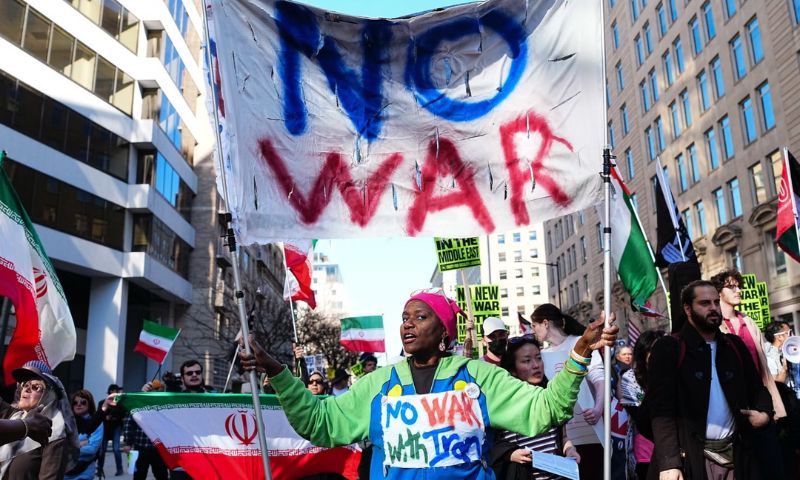



Key Points
- American Democrats demand stronger oversight of war powers
- Administration without exit (of the Iran War) strategy, says American opposition
- They link war to rising oil prices, inflationary pressure, and economic strain on US households
ISLAMABAD: Democrats in the United States are increasingly shaping their political opposition to the ongoing military confrontation with Iran, turning the issue into a central pillar of their early positioning for the 2026 election cycle.
Party leaders argue that the US administration’s military engagement has proceeded without clear congressional authorisation and without a clearly defined legal framework, according to the American media.
They are demanding greater legislative oversight, renewed scrutiny of war powers, and formal congressional votes to assert authority over decisions involving the use of force.
Democratic critics also say the White House has not presented a clear strategic end state for the conflict.
They point to the absence of measurable conditions for de-escalation or withdrawal, warning that the lack of an exit plan risks prolonged military involvement and wider regional instability.
Economic concerns are increasingly central to the Democratic narrative, according to an opinion piece in the Washington Post.
Lawmakers are linking the conflict to volatility in global energy markets, rising oil prices, and inflationary pressures. Extended military escalation could intensify domestic cost-of-living challenges for US households, they argued.
Within the party, approaches vary. Progressive members are calling for a more explicit anti-war stance. They want to enforce limits on funding and stricter timelines for disengagement.
Moderate Democrats are focusing on institutional checks, particularly congressional approval and oversight mechanisms, rather than a full break from the current military posture.
Republican leaders, in contrast, defend the administration’s approach. Sustained military pressure is necessary to deter further escalation and protect US strategic interests in the Middle East, the ruling party insists.
The competing positions are deepening partisan divisions over the scope and duration of US involvement in the conflict.
As the election cycle approaches, analysts say the Iran conflict is becoming a key foreign policy issue shaping voter sentiment in the next US elections.
It matters to American voters, even more, particularly in economically sensitive swing states, where energy costs and inflation remain dominant concerns.