
Key Points
- First Saudi satellite dedicated to space weather monitoring
- Operates in highly elliptical orbit up to 70,000 km above Earth
- Payload includes research on solar radiation and magnetic fields
- Developed locally by Saudi engineers under national programmes
- Supports critical sectors like aviation, navigation and communications
- Part of crewed lunar flyby mission after more than 50 years
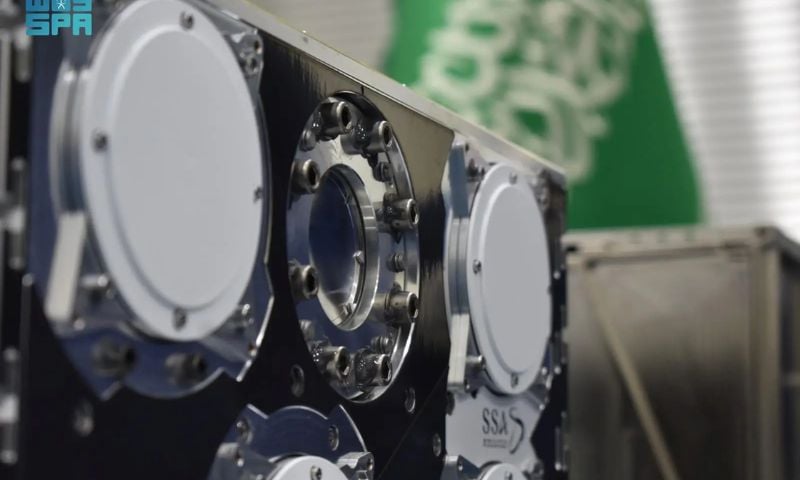
RIYADH: Saudi Arabia has marked a significant milestone in its space ambitions with the successful launch of its “Shams” satellite aboard the Artemis II mission, the Saudi Space Agency announced on Saturday.
The satellite was deployed using the Space Launch System (SLS), as part of the second phase of NASA’s Artemis programme, making the Kingdom the first Arab country to participate in the landmark international initiative aimed at advancing deep space exploration.
Led by NASA, Artemis II is designed to carry four astronauts on a crewed lunar flyby — the first mission of its kind in more than 50 years, according to Saudi Press Agency.
The mission is a critical step towards future human landings on the Moon and eventual exploration of Mars. The “Shams” satellite forms part of its scientific payload.
Operating in a highly elliptical orbit ranging from approximately 500 kilometres to 70,000 kilometres above Earth, “Shams” is designed to monitor solar and radiation activity. This unique orbit enables wide-ranging observation of space weather, contributing to a better understanding of its effects on Earth and space-based infrastructure.
The mission represents multiple firsts for Saudi Arabia. It is not only the country’s debut participation in the Artemis programme but also its first dedicated national mission focused on space weather monitoring. Developed domestically by Saudi engineers, the satellite reflects growing local capabilities in advanced space technologies.
The initiative is supported by the National Industrial Development and Logistics Program, a cornerstone of the Kingdom’s broader Saudi Vision 2030, which aims to diversify the economy and promote technological innovation.
“Shams” will conduct scientific research across four key domains: space radiation, solar X-rays, Earth’s magnetic field, and high-energy solar particles. The data gathered is expected to enhance the reliability of critical sectors such as communications, aviation, and navigation, which are increasingly dependent on space-based systems.
Officials say the project underlines Saudi Arabia’s commitment to building national expertise and strengthening international partnerships in the space sector. The Saudi Space Agency described the launch as a reflection of the Kingdom’s ambition to play a leading role in shaping the future of space exploration while contributing to global scientific advancement.