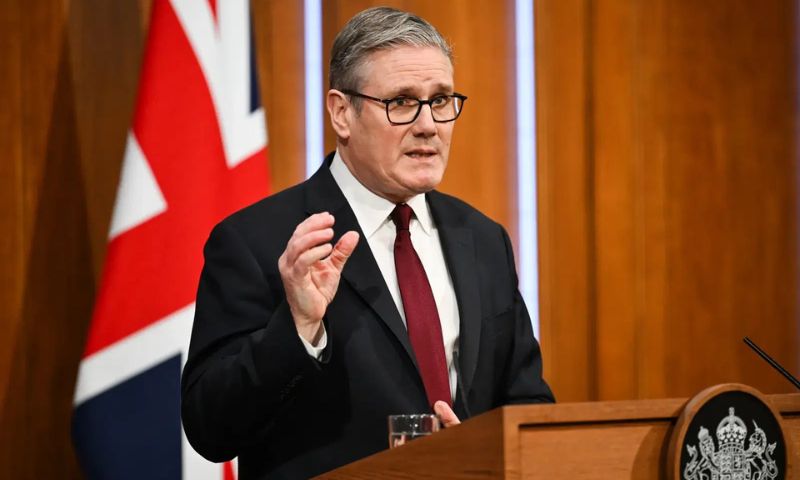



LONDON: Britain will host a virtual meeting of around 35 countries on Thursday to explore ways to restore shipping through the strategically vital Strait of Hormuz, which has been severely disrupted by the ongoing Iran war, Prime Minister Keir Starmer said on Wednesday.
Speaking at a press conference in Downing Street, Starmer said the talks would assess “all viable diplomatic and political measures” to restore freedom of navigation, ensure the safety of stranded ships and crews, and resume the movement of critical commodities.
The meeting will be led by Foreign Secretary Yvette Cooper and will bring together countries that have backed a recent joint statement pledging support for efforts to safeguard shipping through the waterway.
Starmer said the discussions would focus on coordinated international action to reopen the strait, which handles a significant share of global energy supplies.
“Following that meeting, we will also convene our military planners to look at how we can marshal our capabilities and make the strait accessible and safe after the fighting has stopped,” he added.
A UK official, cited by Politico, said the meeting would take place virtually and described it as the first time such a broad group of nations has convened to develop a plan for reopening the waterway.
The meeting will convene the countries who signed a joint statement last month. Several more have joined since.
They include the UK, France, Germany, Italy and the Netherlands, as well as Japan, Canada, South Korea, New Zealand, the United Arab Emirates and Nigeria. It commits the countries to a “readiness to contribute to appropriate efforts to ensure safe passage through the strait”.
The United States has not been invited to the talks, with the focus instead on nations that endorsed the joint statement and other key maritime stakeholders.
The Strait of Hormuz, a narrow passage, is one of the world’s most critical shipping routes. In peacetime, roughly a fifth of global oil and liquefied natural gas supplies pass through it.
Iran has effectively restricted access to the strait following US and Israeli strikes that triggered the current conflict on February 28. The disruption has sent global energy prices sharply higher.
According to officials and industry estimates cited in the discussions, around 1,000 vessels are currently stranded due to the partial blockade.
Only about 130 ships have transited the strait since the conflict began, compared with roughly the same number that would typically pass through each day.
Starmer said the challenge was not limited to insurance or commercial considerations but centred on safety.
“The primary challenge they face is not one of insurance, but one of safety and security of passage,” he said after meeting energy and shipping executives earlier this week.