DUBAI/TEHRAN: Oil prices surged on Monday as Israel and Iran exchanged fresh missile fire, and fears mounted that the United States could escalate the conflict with possible ground operations against Iranian targets.
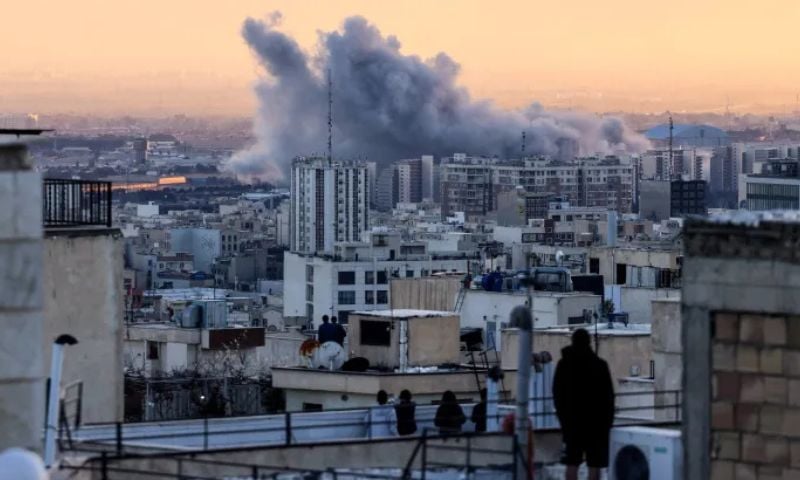
Iran launched new strikes on a water desalination facility in Kuwait, while Saudi Arabia said it intercepted five ballistic missiles. The attacks followed Israeli strikes on Iranian infrastructure that caused power outages in parts of Tehran.
Global markets reacted sharply, with US benchmark crude rising above $100 a barrel and Brent climbing close to $117, as concerns grew over disruptions to energy supplies.
Oil price surge
Analysts warned that further escalation — particularly any US ground intervention or Iranian retaliation targeting energy infrastructure — could drive prices to unprecedented levels.
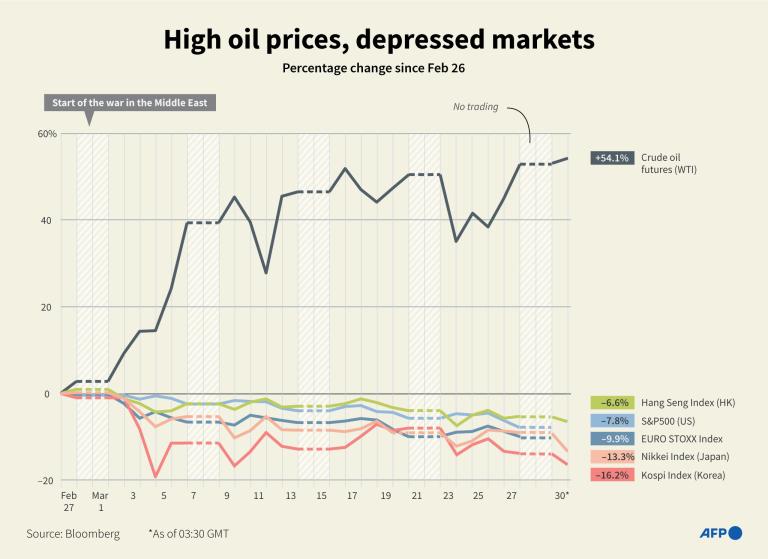
“If the US were to launch a ground invasion of Iran… projections of $200 per barrel oil will not be unrealistic,” said Tamas Varga of PVM Energy.
US President Donald Trump has suggested the United States could seize Iran’s key oil export hub at Kharg Island, raising fears of a major escalation in the conflict.
Despite the rhetoric, Trump also said he expected a negotiated end to the war, even as military operations continued.
Diplomatic efforts
Pakistan has stepped up mediation efforts, hosting foreign ministers from Saudi Arabia, Türkiye, and Egypt in Islamabad to discuss de-escalation.
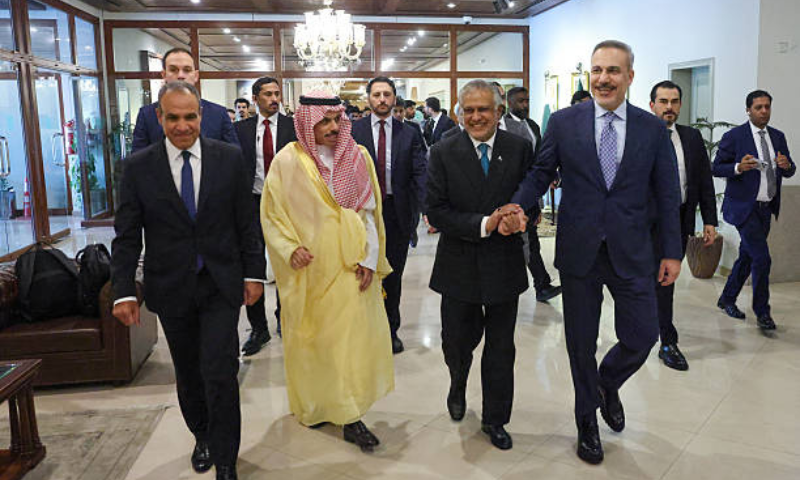
Deputy Prime Minister and Foreign Minister Ishaq Dar said both Iran and the United States had expressed confidence in Pakistan’s role as a facilitator, adding that talks could take place in the coming days.
He said China and the United Nations have also backed the initiative.
However, Iran’s parliament speaker Mohammad Bagher Ghalibaf accused Washington of using diplomacy as a cover for military action.
Conflict widens
Fighting has spread across the region, with Israel continuing strikes against Iran-backed Hezbollah in southern Lebanon.
A UN peacekeeper was killed and another critically injured after a projectile hit a UN position, while Israel said one of its soldiers had also been killed in combat.
On Monday, Israel said it was striking military infrastructure across Tehran and intercepting incoming missiles from Iran.
Human toll rises
Iran confirmed that an Israeli strike killed Revolutionary Guards naval commander Alireza Tangsiri, a key figure in operations linked to the Strait of Hormuz.
Civilians continue to bear the brunt of the conflict, with residents describing relentless overnight bombardment and widespread disruption.
“I miss a peaceful night’s sleep,” one Tehran resident said, describing the intensity of the attacks.
With Iran effectively restricting access to the Strait of Hormuz — a critical artery for global energy supplies — and the United States weighing further military action, the conflict risks triggering a broader regional and economic crisis.
Diplomatic efforts led by Pakistan offer a potential pathway to de-escalation, but continued strikes and rising tensions suggest the situation remains highly volatile.