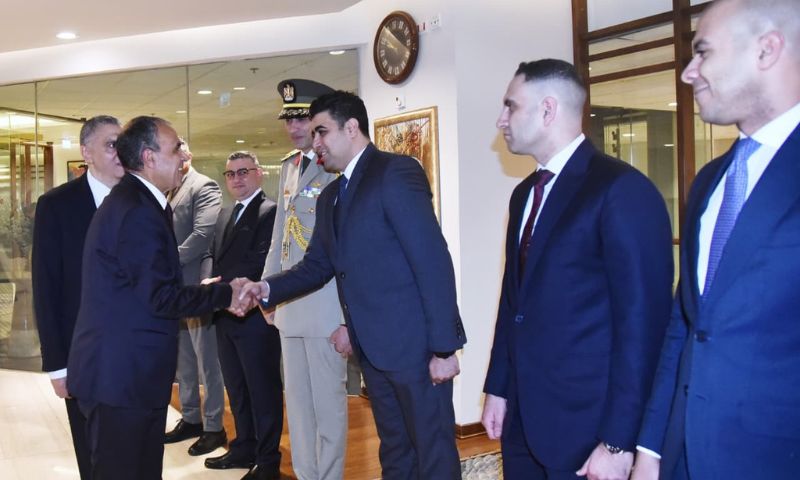
ISLAMABAD: Egyptian Foreign Minister Dr. Badr Abdelatty arrived in Islamabad on Saturday on an official visit, as Pakistan steps up diplomatic efforts to de-escalate the Middle East conflict through meaningful negotiations.
The Egyptian top diplomat is visiting Pakistan at the invitation of Deputy Prime Minister and Foreign Minister Ishaq Dar.
During the visit, Dr. Badr Abdelatty will hold consultations on regional developments and call on the Prime Minister Shehbaz Sharif.
The visit reflects the close and brotherly relations between Pakistan and Egypt and their continued coordination on regional and international issues, according to the Foreign Office.
Egyptian Foreign Minister Dr. Badr Abdelatty arrived in Islamabad on an official visit at the invitation of Deputy Prime Minister/Minister for Foreign Affairs Senator Mohammad Ishaq Dar. During the visit, he will hold consultations on regional developments and call on the Prime… pic.twitter.com/yy3kgvIpT9
— Ministry of Foreign Affairs – Pakistan (@ForeignOfficePk) March 28, 2026
Pakistan will host high-level talks starting Sunday with Saudi Arabia, Turkiye, and Egypt as part of intensifying diplomatic efforts to address the ongoing war in the Middle East, according to the Ministry of Foreign Affairs.
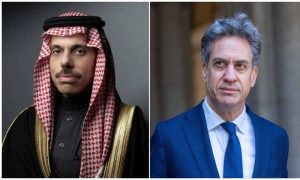
The foreign ministers of Saudi Arabia, Prince Faisal bin Farhan Al Saud; Turkiye’s Hakan Fidan are scheduled to visit Islamabad from March 29 to 30.
During the visit, the ministers will hold in-depth consultations on a range of regional and international issues, with a particular focus on efforts to de-escalate tensions in the Middle East.
The visiting dignitaries will also meet with Prime Minister Shehbaz Sharif.
The Foreign Office said Pakistan attaches high importance to its relations with the three countries, describing them as “brotherly nations,” and noted that the visit would help strengthen cooperation and coordination on matters of mutual interest.
🔊PR No.7️⃣7️⃣/2️⃣0️⃣2️⃣6️⃣
Foreign Ministers of Saudi Arabia, Türkiye, and Egypt to Visit Islamabad for Consultations
🔗⬇️https://t.co/ehLoO2Av8I pic.twitter.com/3UIAKm2zwm
— Ministry of Foreign Affairs – Pakistan (@ForeignOfficePk) March 28, 2026
Pakistan has increasingly positioned itself as a key diplomatic facilitator amid the ongoing conflict, maintaining channels with both Iran and the United States.
Islamabad has played a role in relaying messages between the two sides as tensions continue, leveraging its ties with Tehran and its close relationships with Gulf states.
Iran thanks Pakistan for peace efforts
Earlier today, Pakistan’s Prime Minister Shehbaz Sharif and Iranian President Masoud Pezeshkian held an hour-long telephone conversation, focusing on the escalating conflict in the region and ongoing efforts to find a diplomatic resolution.
Shehbaz Sharif briefed the Iranian president on Pakistan’s diplomatic outreach, including contacts with the United States and key Gulf and Islamic countries, aimed at creating momentum for peace talks.
He said these efforts have received broad support and expressed hope that a viable path to ending hostilities could be achieved through coordinated international engagement.
President Pezeshkian, while sharing Iran’s perspective on the conflict, stressed the importance of trust-building measures to facilitate dialogue and mediation. He also acknowledged Pakistan’s efforts and its role in promoting a diplomatic solution.
Held a detailed telephone conversation with my brother President Masoud Pezeshkian of Iran earlier today, lasting over one hour.
I reiterated Pakistan’s strong condemnation of the continued Israeli attacks on Iran, including recent strikes on civilian infrastructure, and…
— Shehbaz Sharif (@CMShehbaz) March 28, 2026
The prime minister reaffirmed that Pakistan would continue to play a constructive role in efforts to restore peace and stability in the region.
Qatar appreciates Pakistan’s efforts for regional peace
Qatar on Saturday appreciated Pakistan’s diplomatic efforts for promoting regional peace and stability, as the two countries discussed the evolving security situation amid the Iran war and stressed the need for urgent de-escalation.
Pakistan’s Deputy Prime Minister and Foreign Minister Ishaq Dar held a telephone conversation with Qatar’s Prime Minister and Foreign Minister Sheikh Mohammed bin Abdulrahman bin Jassim Al Thani, during which the two sides reviewed regional and international developments and emphasised the importance of urgent de-escalation, Pakistan’s Foreign Office said.
The Qatari leadership appreciated Pakistan’s ongoing efforts to promote peace and stability through dialogue and diplomacy, Pakistan’s Foreign Office said in a statement.
Deputy Prime Minister/Foreign Minister Senator Mohammad Ishaq Dar @MIshaqDar50 spoke with Prime Minister and Minister of Foreign Affairs of the State of Qatar, Sheikh Mohammed bin Abdulrahman bin Jassim Al Thani @PM_AlThani_.
The two leaders discussed prevailing regional and… pic.twitter.com/GzQsYSRjyf
— Ministry of Foreign Affairs – Pakistan (@ForeignOfficePk) March 28, 2026
The conflict began on February 28, 2026, when the United States and Israel launched coordinated strikes on Iran, triggering a wider regional conflict.
Iran responded with missile and drone attacks on Israel and various Gulf countries, raising fears of a broader war.
Islamabad has played a role in relaying messages between the two sides as tensions continue, leveraging its ties with Tehran and its close relationships with Gulf states.