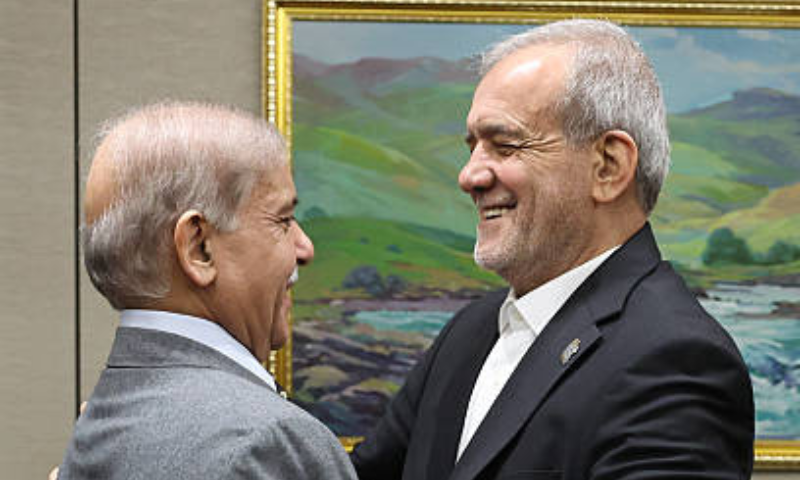
ISLAMABAD: Pakistan’s Prime Minister Shehbaz Sharif and Iranian President Masoud Pezeshkian held an hour-long telephone conversation on Saturday, focusing on the escalating conflict in the region and ongoing efforts to find a diplomatic resolution, according to an official statement.
Pakistan Prime Minister’s office said Shehbaz Sharif reiterated Pakistan’s strong condemnation of the continued Israeli attacks on Iran, including the latest attacks on civilian infrastructure this week.
The prime minister reaffirmed Pakistan’s support for Iran.
“Pakistan stands in solidarity with the people of Iran in these challenging times,” the prime minister said, offering condolences over the loss of more than 1,900 lives and wishing a swift recovery for the injured and displaced.
Held a detailed telephone conversation with my brother President Masoud Pezeshkian of Iran earlier today, lasting over one hour.
I reiterated Pakistan’s strong condemnation of the continued Israeli attacks on Iran, including recent strikes on civilian infrastructure, and…
— Shehbaz Sharif (@CMShehbaz) March 28, 2026
Shehbaz Sharif also briefed the Iranian president on Pakistan’s diplomatic outreach, including contacts with the United States and key Gulf and Islamic countries, aimed at creating momentum for peace talks.
He said these efforts have received broad support and expressed hope that a viable path to ending hostilities could be achieved through coordinated international engagement.
President Pezeshkian, while sharing Iran’s perspective on the conflict, stressed the importance of trust-building measures to facilitate dialogue and mediation. He also acknowledged Pakistan’s efforts and its role in promoting a diplomatic solution.
The prime minister reaffirmed that Pakistan would continue to play a constructive role in efforts to restore peace and stability in the region.
The conflict began on February 28, 2026, when the United States and Israel launched coordinated strikes on Iranian military, nuclear, and leadership targets, triggering a wider regional confrontation.
Iran responded with missile and drone attacks on Israel and US-linked targets across the Middle East, raising fears of a broader war.
Since then, the conflict has intensified, with continued airstrikes, retaliatory attacks, and growing civilian casualties, while diplomatic efforts — often conducted indirectly through intermediaries — have struggled to gain traction.
Pakistan has increasingly positioned itself as a key diplomatic facilitator amid the ongoing conflict, maintaining channels with both Iran and the United States.
Islamabad has played a role in relaying messages between the two sides as tensions continue, leveraging its ties with Tehran and its close relationships with Gulf states.
While Iran has not publicly acknowledged direct negotiations with Washington, diplomatic sources indicate that Tehran has conveyed responses to proposals from US President Donald Trump through intermediaries, including Pakistan, highlighting Islamabad’s growing role in regional diplomacy.