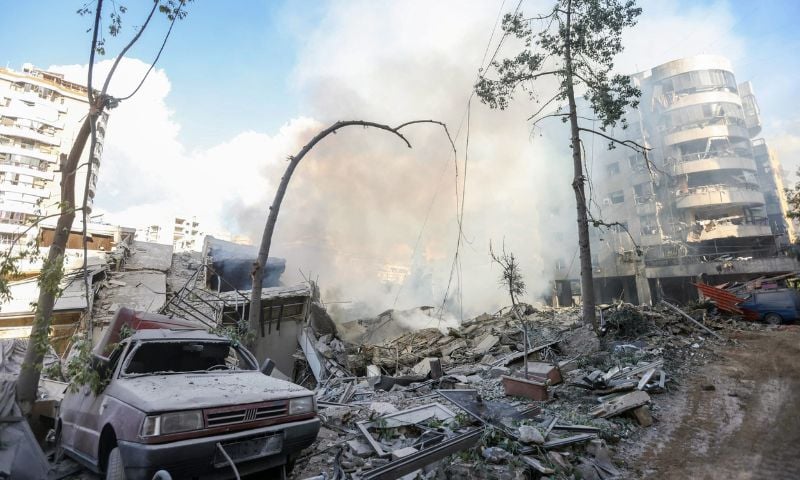
BEIRUT: At least 121 children have been killed and 399 others wounded in Lebanon since Israel launched its military operations, according to a representative of UNICEF.
The violence has also triggered widespread displacement, with around 20 percent of Lebanon’s population forced to flee their homes. Among those displaced are more than 370,000 children, many of whom are now living in precarious conditions after being uprooted from their communities.
The large-scale disruption started following Israel’s strikes in southern Lebanon, which set off a chain of escalating hostilities. The current phase of the conflict intensified on March 2, when Hezbollah launched a wave of rockets and drones into Israel. The group said the attack was in retaliation for the killing of Iran’s Supreme Leader, Ayatollah Ali Khamenei in joint US-Israeli strikes on February 28.
Hezbollah, had reportedly refrained from attacking Israel for nearly 15 months following a ceasefire agreement in November 2024. During that period, Lebanese authorities accused Israel of carrying out frequent violations of the truce, heightening tensions along the border.
Israel launched a series of strikes earlier this month that have killed at least 1,000 people, including 116 children and 40 healthcare workers, according to Lebanon’s Public Health Ministry. An additional 2,432 people have been reported injured, further compounding the humanitarian crisis unfolding across the country.
The ongoing escalation has raised alarm among international organisations, as the impact on civilians—particularly children—continues to worsen amid the intensifying conflict.
Widespread evacuation orders across southern and eastern Lebanon, combined with ground incursions into border villages and sustained airstrikes, have forced more than one million people to flee their homes in less than two weeks. The sudden surge in displacement has overwhelmed shelters and left many communities struggling without access to basic services such as food, water, and healthcare.
According to UNICEF, its rapid response mechanism has already reached over 167,000 displaced individuals. The agency has been providing critical assistance, including essential non-food supplies and winter kits, to help affected families cope with the harsh conditions and ongoing crisis.
But the representative said more needed to be done stating: “We urgently call for humanitarian access to all those in need.”