
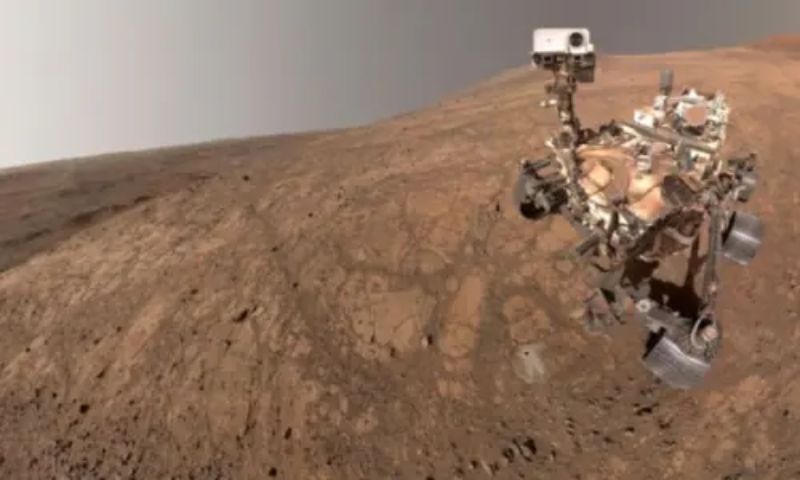
WASHINGTON: NASA’s Perseverance rover has revealed striking new evidence that water once flowed extensively across Mars, uncovering what scientists believe to be one of the planet’s oldest buried river deltas
Using its ground-penetrating radar system, the rover detected hidden geological formations as deep as 35 meters beneath the surface while traveling across Jezero Crater — a region long suspected to have hosted a lake billions of years ago.
According to Reuters, the radar data shows layered sediments and eroded structures characteristic of a delta, where a river once emptied into a larger body of water.
Researchers estimate the newly discovered delta formed between 3.7 and 4.2 billion years ago, placing it among the earliest known signs of liquid water activity on Mars.
This makes it older than the nearby Western Delta, a previously studied surface feature believed to have formed later.
The discovery adds weight to the idea that Mars once had a warmer climate and thicker atmosphere capable of sustaining liquid water — conditions that may have been favorable for life.
Scientists say such delta environments are particularly promising because they can trap and preserve organic material and other potential biosignatures.
Perseverance’s radar instrument, known as RIMFAX, works by sending signals beneath the surface and analyzing the reflections to build a 3D image of subsurface layers.
The latest findings are based on its most extensive and deepest scans so far, collected over several months between late 2023 and early 2024.
According to researchers involved in the study, the buried delta suggests that Jezero Crater hosted a water-rich environment even before the formation of visible surface features. This indicates a longer and more complex history of water activity than previously understood.
The rover has already collected rock samples from the region that show possible signs of ancient microbial life, although scientists caution that similar chemical signatures can also form without biological processes. Still, the presence of water-rich environments strengthens the case for past habitability.
These findings align with a growing body of evidence from multiple missions. Data from China’s Zhurong rover has also pointed to possible ancient shorelines, hinting that large bodies of water may once have existed across Mars’ northern plains.
As Perseverance continues its mission, scientists hope to further unravel Mars’ early history and determine whether life ever emerged on the planet.
Each new discovery brings researchers closer to understanding how Mars evolved from a potentially habitable world into the cold, dry planet seen today.