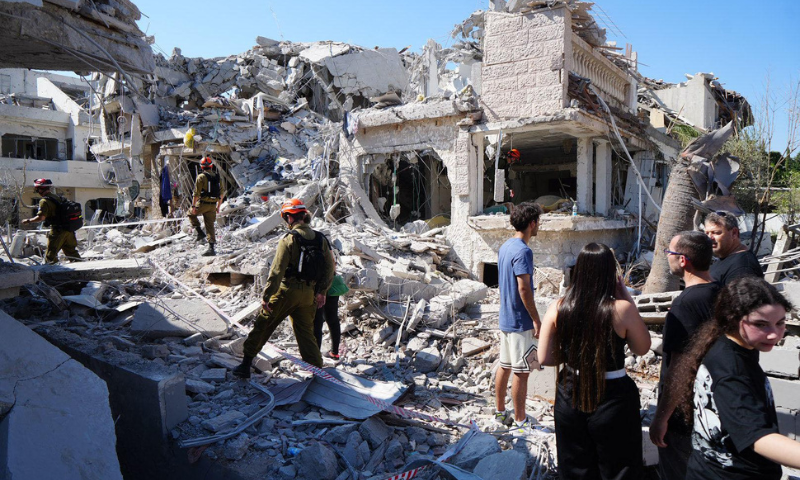
JERUSALEM/DUBAI/TEHRAN: The war in the Middle East entered its 24th day on Monday with no signs of de-escalation, as Israel launched fresh large-scale strikes on Iran, Tehran carried out retaliatory missile and drone attacks on Israel, Gulf countries faced renewed threats, and the conflict continued to expand across multiple fronts, raising fears of a prolonged regional crisis with far-reaching economic and security implications.
Energy crisis fears grow
International Energy Agency chief Fatih Birol warned that the unfolding conflict poses a serious threat to the global economy, drawing comparisons to the oil shocks of the 1970s and the disruption caused by Russia’s 2022 invasion of Ukraine.
“The global economy is facing a major, major threat,” Birol said, adding that the current situation resembles “two oil crises and one gas crash put all together,” with no country likely to remain unaffected.
Gulf nations under attack
Saudi Arabia and the United Arab Emirates reported fresh attacks on Monday morning, while air raid sirens sounded in Bahrain, signalling the widening geographic scope of the conflict.
Authorities in Abu Dhabi said an Indian national was injured by falling debris from an intercepted ballistic missile, underscoring the risks posed even by successful air defence operations.
Israel strikes Tehran
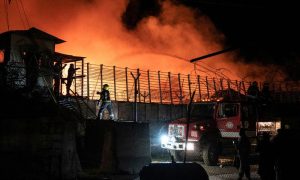
Israel’s military said it carried out a “wide-scale wave of strikes” on Tehran early Monday.
Iranian media reported explosions across the capital while an AFP journalist observed thick black smoke rising over the city more than an hour after the strikes, indicating sustained bombardment.
France backs Saudi Arabia
French President Emmanuel Macron said he had spoken with Saudi Crown Prince Mohammed bin Salman to express solidarity with the kingdom.
In a post on X, Macron reaffirmed France’s commitment to supporting Saudi Arabia’s air defences against Iranian missile and drone attacks.
Fatal strike on Iranian broadcaster
Iranian state television reported that one person was killed in an overnight US-Israeli strike targeting a broadcasting facility in the coastal city of Bandar Abbas.
The attack highlights the expanding range of targets as the conflict deepens.
Iraqi armed group pauses attacks
Kataeb Hezbollah, an Iran-aligned armed group in Iraq, said it would extend a previously announced five-day pause on attacks against the US embassy in Baghdad.
Since the outbreak of the war, pro-Iran groups have claimed near-daily attacks on US interests in Iraq and across the region, even as they themselves have come under repeated strikes.
Lebanon tensions rise
Lebanese Prime Minister Nawaf Salam accused Iran’s Revolutionary Guards of directly overseeing Hezbollah’s operations against Israel.
In an interview, Salam criticised Hezbollah for drawing Lebanon deeper into the conflict through cross-border rocket fire.
Israel to expand Lebanon operations
Israel’s military signalled a further escalation, with army chief Lieutenant General Eyal Zamir saying ground operations against Hezbollah in Lebanon would be expanded.
“The offensive has only just begun,” he said, adding that forces were preparing to advance operations according to an organised plan.
Weeks of fighting expected
Israeli military spokesman Brigadier General Effie Defrin said the country should expect “weeks” more fighting against both Iran and Hezbollah, indicating no immediate end to hostilities.
Strikes in Iraq
Iraqi authorities said three strikes targeted positions linked to the Popular Mobilisation Forces (PMF), a state-affiliated coalition that includes pro-Iran factions, in areas south of Baghdad.
The strikes followed an earlier attack on a US diplomatic and logistics facility at Baghdad International Airport, highlighting the cycle of retaliation.
Israel probes civilian death
Israel’s military said it is investigating whether its own fire may have killed a civilian near the Lebanese border.
Earlier, emergency services reported that a man was killed in a direct rocket strike on his vehicle, initially attributed to Hezbollah. The military later said it was examining the possibility that Israeli fire was involved.
West Bank violence
In the occupied West Bank, Palestinian residents reported that Israeli settlers had set fire to homes and vehicles in several villages.
The incidents mark the latest in a series of attacks amid rising violence in the territory since the start of the war.
Lebanon condemns Israeli strikes
Lebanon’s President Joseph Aoun condemned Israeli strikes on bridges and infrastructure in the south, describing them as a “prelude to a ground invasion”.
Israel’s defence minister said the strikes targeted infrastructure allegedly used by Hezbollah.