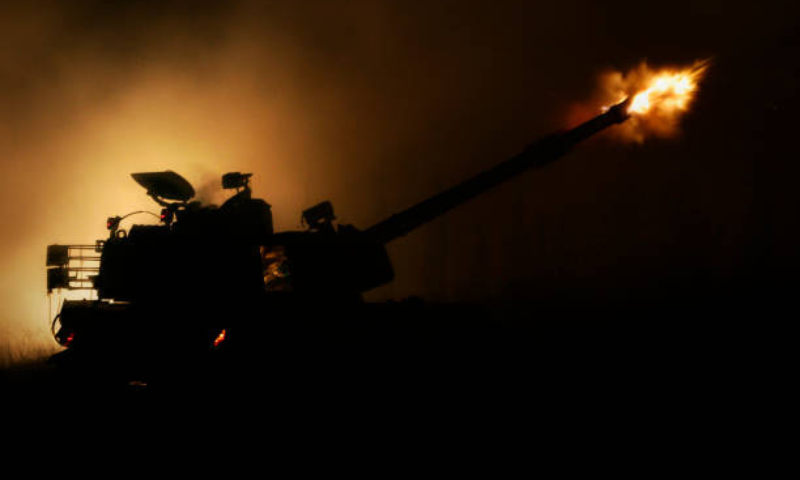
TEHRAN: Iran launched defiant new strikes across the region early Wednesday, including drone attacks targeting a Gulf oil field, as global powers scrambled to contain the economic fallout of the widening conflict.
The war, triggered by joint U.S.–Israeli strikes on Iran, has spread across the Middle East and sent energy prices sharply higher, forcing fuel rationing, price increases, and even school closures in several countries.
Leaders of the Group of Seven (G7) are set to hold a video conference later Wednesday to discuss the economic impact of the conflict, particularly the global energy situation, the French presidency said.
At the same time, the International Energy Agency is expected to consider what could be its largest-ever coordinated release of strategic oil reserves to calm markets, according to a report by the Wall Street Journal.
The United States said Tuesday it had struck Iranian vessels capable of laying mines in the Strait of Hormuz, the vital shipping route through which roughly one-fifth of the world’s oil supply passes.
Israel also launched new waves of strikes in Beirut and Tehran, where residents took shelter after Israeli bombing of fuel depots blanketed parts of the capital with thick black smoke.
The U.S. military released video footage showing Iranian boats destroyed by missiles and other projectiles, saying it had eliminated 16 minelayers near the Strait of Hormuz.
U.S. forces eliminated multiple Iranian naval vessels, March 10, including 16 minelayers near the Strait of Hormuz. pic.twitter.com/371unKYiJs
— U.S. Central Command (@CENTCOM) March 10, 2026
“If for any reason mines were placed, and they are not removed forthwith, the military consequences to Iran will be at a level never seen before,” U.S. President Donald Trump wrote on social media.
Trump faces mounting political pressure over rising oil prices just months ahead of the U.S. elections. Crude prices surged about five percent late Tuesday, though they eased somewhat on Wednesday after reports of a potential reserve release.
Trump has also offered for the U.S. military to escort oil tankers through the Strait of Hormuz, though officials acknowledged that a social media post by the energy secretary claiming a first such escort had taken place was inaccurate.
Seeking to calm markets, Trump said earlier this week that the war would be short, although Defense Secretary Pete Hegseth warned that Tehran would face unprecedented military force.
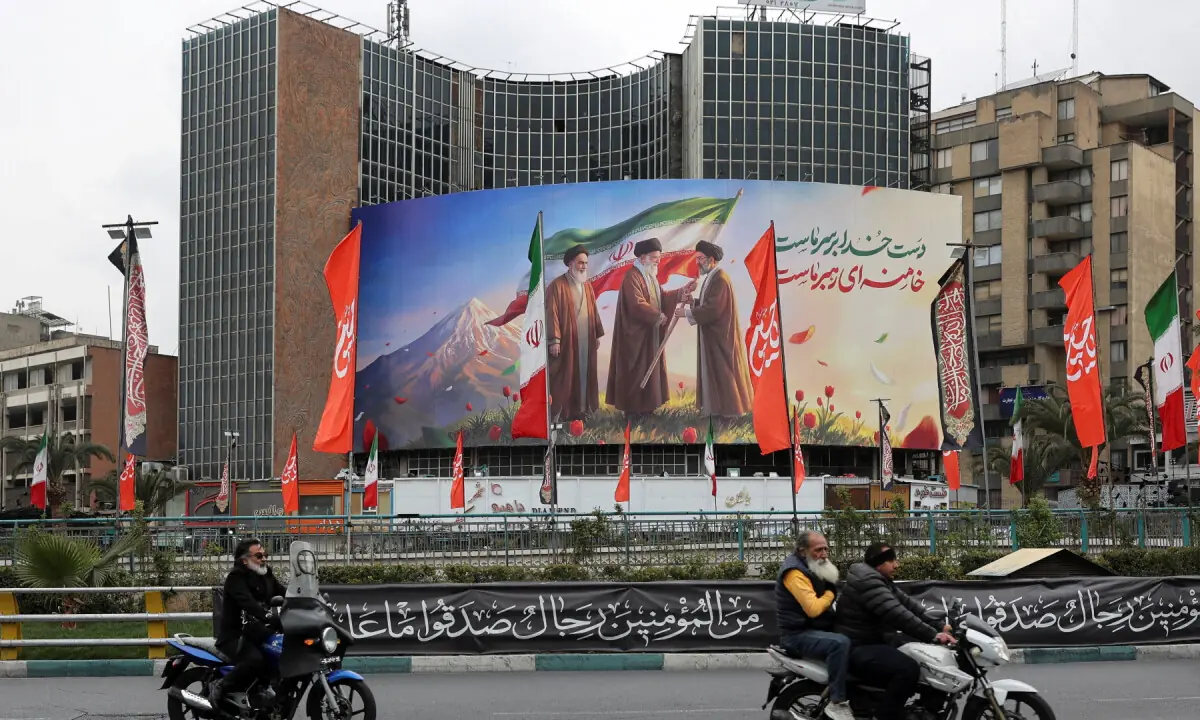
Iran’s leadership has responded defiantly.
The government said it launched its “most intense and heaviest” wave of strikes early Wednesday, firing missiles for nearly three hours at Israeli cities.
Air raid sirens and explosions were reported in Jerusalem, while Israeli media said several people were injured in Tel Aviv.
Iran’s Revolutionary Guards also said they targeted Bahrain and Iraqi Kurdistan, both areas hosting significant U.S. military presence.
Across the Gulf, several countries reported intercepting Iranian drones and ballistic missiles, including two drones heading toward an oil field in Saudi Arabia, according to the kingdom’s defense ministry.
Iranian parliament speaker Mohammad Bagher Ghalibaf said Tehran was not seeking a ceasefire.
“We believe the aggressor must be punished and taught a lesson that will deter them from attacking Iran again,” he wrote on social media.
According to the Pentagon, seven U.S. military personnel have been killed and about 140 injured since the conflict began.

The war started on February 28 when the United States and Israel launched strikes that killed Iran’s longtime leader, Ayatollah Ali Khamenei. His son Mojtaba Khamenei was later named his successor.
The attacks came weeks after Iranian authorities suppressed mass protests, although Washington and Tel Aviv say their goal is not necessarily to overthrow the Islamic Republic.
In Tehran, many residents remain fearful as the bombing continues.
One woman in her 40s said she believed most strikes did not target ordinary residential buildings, but added that the constant sound of explosions was deeply unsettling.
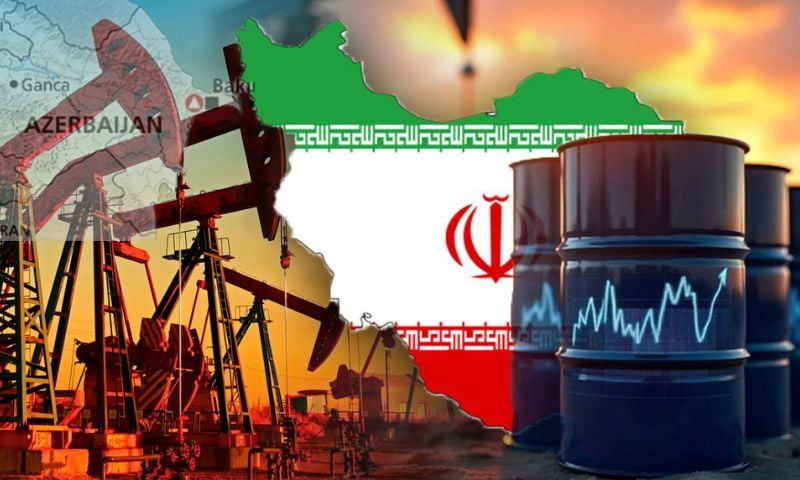
Iran has also attempted to impose economic costs by targeting energy infrastructure and major Gulf cities.
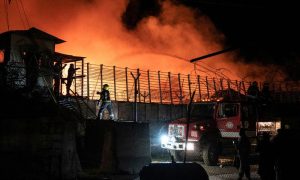
The United Arab Emirates’ largest oil refinery at Ruwais was closed as a precaution after a drone strike triggered a fire at the industrial complex, according to a source familiar with the situation.
Explosions were also reported in Qatar, where a suspension of liquefied natural gas exports has pushed European energy prices sharply higher.
Saudi Aramco CEO Amin H. Nasser warned that prolonged disruption in the Strait of Hormuz could have severe consequences for global energy markets.
“The longer the disruption continues, the more catastrophic the consequences for oil markets and the global economy,” he said.
Meanwhile, the conflict is spreading through regional proxy fronts.
In Iraq, Iran-linked groups said five of their fighters were killed in suspected U.S. strikes.
Protesters attempted to storm the U.S. embassy in Baghdad, while several drones struck a military installation at Baghdad International Airport that hosts a U.S. diplomatic facility.
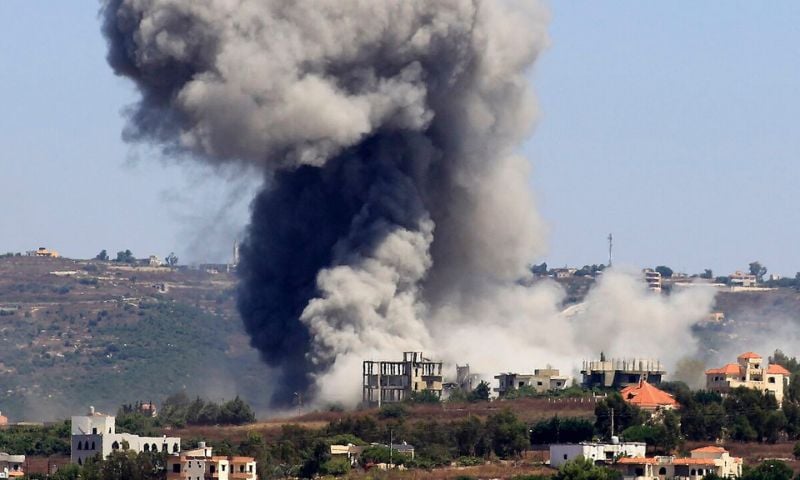
In Lebanon, authorities said Israeli attacks killed at least 486 people and wounded more than 1,300 between March 2 and Monday, with additional strikes reported in Beirut’s southern suburbs early Wednesday.
Iran also told the United Nations that four of its diplomats were killed in a strike on a seaside hotel in Beirut on Sunday that Israel said had targeted senior Revolutionary Guards commanders.
The global impact of the war is already being felt far beyond the region.
The United Nations trade and development agency warned that disruption in the Strait of Hormuz could push up the cost of essential goods, including fuel and food, for the world’s most vulnerable populations.
In Egypt, where fuel prices have increased by as much as 30 percent, many residents say the situation is becoming increasingly difficult.
“We were barely getting by as it is,” said Om Mohamed, a mother of six shopping at a Cairo market. “I don’t know how people will manage.”