WASHINGTON: The ongoing conflict between the United States–Israel alliance and Iran intensified this week as Tehran said it would keep oil exports from the Middle East blocked if military attacks on its territory continue.
In response, US President Donald Trump warned that any attempt to disrupt oil flows through the Strait of Hormuz would trigger a far more devastating American retaliation.
Iran’s Islamic Revolutionary Guard Corps (IRGC) declared that it would not allow “even one litre of oil” to leave the region if strikes against the country persist. The statement came as the war entered its second week, with both sides showing little willingness to de-escalate.
President Trump, speaking to US media, said the military campaign against Iran was progressing much faster than expected. He claimed that Iranian military capabilities had been severely weakened, arguing that the country had effectively lost its navy, communications systems and air force.
“If Iran does anything that stops the flow of Oil within the Strait of Hormuz, they will be hit by the United States of America TWENTY TIMES HARDER than they have been hit thus far.” – @POTUS pic.twitter.com/EfJm0xQ9Jz
— Karoline Leavitt (@PressSec) March 10, 2026
“I think the war is very complete, pretty much,” Trump said, adding that the conflict was advancing well ahead of the four-to-five-week timeline he had initially predicted, according to Reuters.
Hormuz strait at the center of global concerns
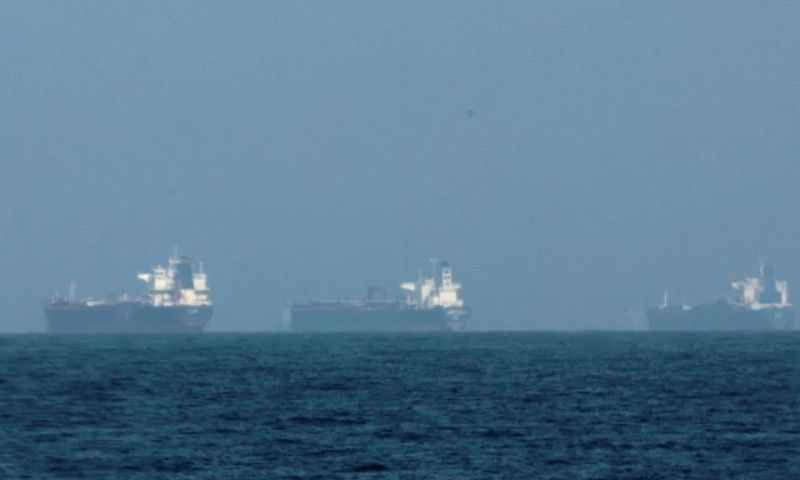
The Strait of Hormuz—one of the world’s most critical oil transit routes—remains at the center of the crisis. Roughly 20 percent of global oil supplies pass through the narrow waterway.
Trump warned that if Iran attempts to block tanker traffic there, the United States would respond with overwhelming force. In a statement, he said the US would strike Iran “twenty times harder” if the flow of oil through the strait is disrupted.
Iranian officials, however, insisted that Tehran—not Washington—would decide when the conflict ends.
Heavy casualties and regional escalation
According to Iran’s ambassador to the United Nations, at least 1,332 civilians have been killed and thousands injured since the US and Israel launched a wave of air and missile strikes across Iran in late February.
The fighting has also spread beyond Iran’s borders. Israel has carried out strikes in central Iran and expanded operations into Lebanon after Hezbollah launched attacks across the border.
Meanwhile, Turkiye reported that NATO air defense systems intercepted a ballistic missile fired from Iran that briefly entered Turkish airspace, marking the second such incident since the conflict began.
Oil markets swing amid war developments
Global financial markets reacted sharply to the developments. Oil prices surged dramatically before falling again on Tuesday after Trump suggested the war could end sooner than expected.
Brent crude had jumped as much as 29 percent earlier in the week—its highest level since 2022—but later dropped more than 10 percent as traders reacted to signs that additional oil supply could be released to stabilize markets.
Trump also said the US might ease certain oil-related sanctions, particularly on Russian energy, after discussions with Russian President Vladimir Putin. Other options under consideration include releasing oil from strategic reserves or limiting US exports to control price spikes.
Political pressure in the United States
Rising energy prices have become a sensitive political issue in the United States ahead of upcoming midterm elections. A recent Reuters/Ipsos poll found that 67 percent of Americans expect gasoline prices to rise in the coming months, while only 29 percent support the war.
With tanker shipments halted for more than a week and storage facilities filling up across the region, analysts warn that prolonged disruption could trigger a broader global energy crisis if the Strait of Hormuz remains closed.