

WASHINGTON: American farmers are once again facing mounting economic pressure after a turbulent year marked by trade disruptions and weak crop prices.
The ongoing war involving the United States and Israel against Iran has now pushed fertiliser costs higher, adding to farmers’ concerns as the planting season begins.
Jim Martin, a farmer from the US state of Illinois who grows soybeans, corn, and other crops, said rising input costs have become a major challenge for farmers.
“Fertiliser and input costs are everybody’s nightmare right now,” Martin said.
Although he considers himself fortunate to have already purchased the fertiliser required for the current planting season, he said prices remain extremely high.
“They’re still the highest that they’ve been in years,” he told AFP.
One of the major reasons behind the price surge is the disruption to shipping routes in the Strait of Hormuz, a key global transit point for fertilisers. According to analytics firm Kpler, about 33 percent of the world’s fertilisers pass through the narrow waterway.
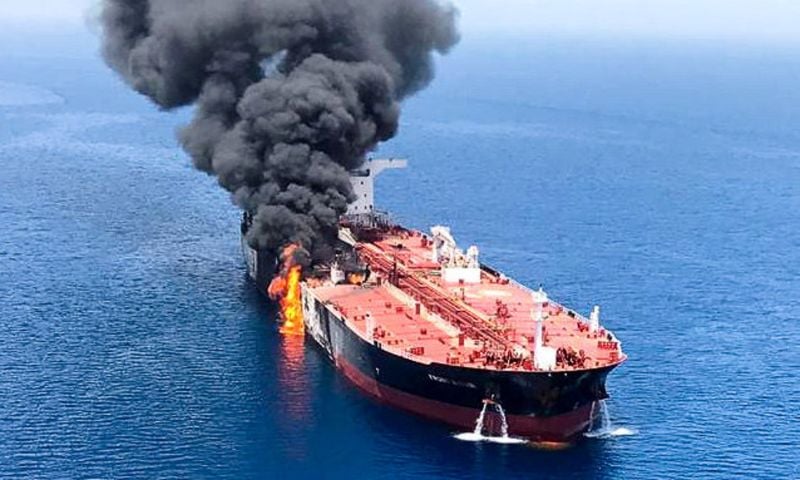
Since the conflict began following US-Israeli strikes on Iran on February 28, maritime traffic through the strait has been severely disrupted, with missile exchanges across the region further complicating shipping operations.
The United States depends significantly on imported fertilisers. Veronica Nigh, chief economist at The Fertilizer Institute, said around 35 percent of fertiliser used in the US comes from overseas.
This includes nitrogen and phosphorus products sourced from the Middle East.
Prices of urea, a widely used nitrogen-based fertiliser, have surged sharply. According to Nigh, the cost of urea increased by nearly 30 percent per short ton between the week of February 27 and the week of March 6.
Farm industry leaders warn that the situation could have serious consequences for US agriculture.
“Without strategically prioritizing the delivery of critical farm inputs such as urea, ammonia, nitrogen, phosphate, and sulfur-based products, the US risks a shortfall in crops,” American Farm Bureau Federation President Zippy Duvall said in a letter sent Monday to US President Donald Trump.
Duvall also warned that a decline in agricultural output could contribute to rising inflation across the broader US economy.
Economic pressure on farmers
Economists say many farmers had already secured most of their fertiliser supplies earlier in the year. Jacquie Holland, an economist with the American Soybean Association, said the majority of producers typically purchase inputs ahead of planting.

However, she noted that unusually high prices this year caused many farmers to delay their purchases.
“Because prices have been so high, we saw a lot of producers this year wait till the last minute to book those supplies,” Holland said.
Farmers who postponed their purchases are now facing the sharpest price increases.
Others are already worried about the impact on the next planting season. Aaron Lehman, a farmer based in Iowa who grows corn, soybeans and oats, said the fertiliser crisis adds to several other financial pressures.
Costs for pesticides, seeds and healthcare have also increased, making farming more expensive overall.
“Farmers are under a tremendous amount of economic stress,” Lehman said.
He added that farm bankruptcies have been rising and that farmers are increasingly relying on loans to sustain their operations.
Although US President Donald Trump last year announced a $12 billion aid package to support farmers affected by low crop prices and trade uncertainties, Lehman said the support has not been enough to offset the growing pressures.
Uncertainty and planning challenges
Farmers say the biggest concern now is uncertainty about how long the conflict in the Middle East will continue.
“People are extremely worried just because there’s so much uncertainty,” Lehman said.
“To be honest, it’s not something that we feel adequately prepared for.”
Experts note that fertilisers play a crucial role in agricultural productivity. Nigh estimates that about 50 percent of global agricultural output depends on fertiliser use.
If farmers reduce fertiliser application due to rising prices, crop yields could fall, reducing farm income and food supplies.
Some farmers may also switch to crops that require less fertiliser.
Martin said that while his plans for the current year are already set, changes could occur in the future.
“My planning is already done for the year, but there might be a change to more soybean acres,” he said.
At the same time, crop prices have remained near multi-year lows, making the financial outlook even more difficult for farmers.
“It’s kind of a double-whammy,” Martin added.