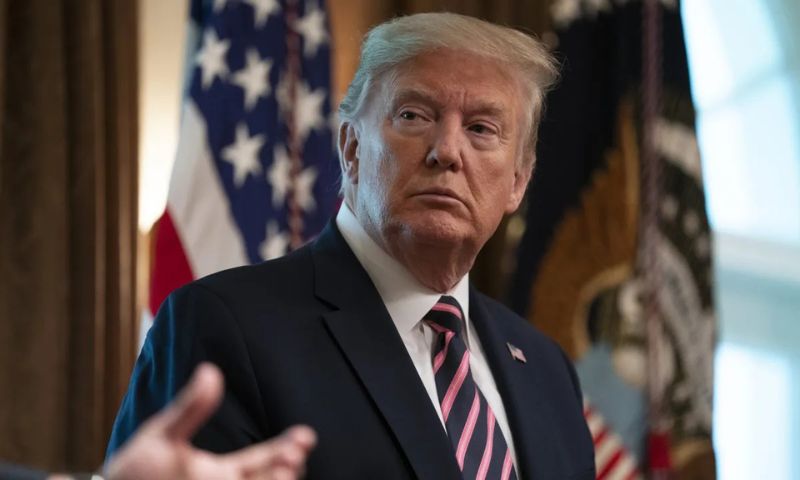



WASHINGTON: US President Donald Trump said on Tuesday that Washington hoped to reach a “good deal” with Iran and expressed confidence that any potential agreement would benefit both the American and Iranian people, while also praising Pakistan’s role in facilitating dialogue between the two countries.
“We’re going to see what happens. We’re only making a good deal,” Trump told reporters while discussing ongoing communication with Tehran through Pakistan.
“I believe that one way or the other, it’s going to be very good for the American people and I think, actually, very good for the Iranian people,” he added.
Asked about Pakistan’s role as a mediator, Trump said Islamabad had played an important and constructive part in the negotiations between the US and Iran.
“They’re great. I think the Pakistanis have been great. The Field Marshal (Syed Asim Munir) and the Prime Minister (Shehbaz Sharif) of Pakistan have been absolutely great,” Trump said.
.@POTUS on Iran negotiations: "We're going to see what happens. We're only making a good deal… I believe that one way or the other, it's going to be very good for the American people—and I think actually, very good for the Iranian people." pic.twitter.com/t6y8bCjpk5
— Rapid Response 47 (@RapidResponse47) May 12, 2026
Trump also said he will hold detailed discussions with Chinese President Xi Jinping regarding the Iran conflict during his upcoming visit to China.
However, the US President added that he did not believe Washington required Beijing’s assistance in handling the negotiations with Tehran.
On Monday, Trump said he believed Iran would eventually “surrender” and reiterated that Tehran must never be allowed to obtain a nuclear weapon.
“Iran cannot have a nuclear weapon,” he said, adding that Tehran had been “defeated militarily, totally”.
Trump also said last week that a peace agreement between the United States and Iran could potentially be reached soon through Pakistan-led diplomatic efforts.
Blockade of Iranian ports ‘effective’
Trump said that the naval blockade has been completely effective, but has skirted a question from a reporter about whether he has a “red line” that would end the ceasefire with Iran.
“Well, we’re going to see, and we’ll be thinking about it on the flight, and we’ll be thinking about it for the next little while,” the US president has said ahead of his departure from Washington, DC.
He has reiterated his claim that the US has defeated Iran’s military “very soundly”, adding that the blockade of Iranian ports has been “100 per cent effective”.
“One way or another, it’s going to work out very well,” he adds.
China backs Pakistan’s mediation efforts
China on Tuesday reiterated support for Pakistan’s diplomatic engagement aimed at ending the conflict between Washington and Tehran.
Chinese Foreign Minister Wang Yi expressed Beijing’s appreciation for Pakistan’s “constructive mediation role” during a telephone conversation with Pakistan’s Deputy Prime Minister and Foreign Minister Ishaq Dar, according to a statement issued by Pakistan’s Foreign Office.
“The two leaders exchanged in-depth views on recent regional developments and Pakistan’s ongoing efforts to facilitate engagement between Iran and the United States, aimed at promoting sustained peace and stability in the region and beyond,” the Foreign Office said.
Deputy Prime Minister/Foreign Minister Senator Mohammad Ishaq Dar @MIshaqDar50 spoke today with Foreign Minister of the People’s Republic of China, Wang Yi.
The two leaders exchanged in-depth views on recent regional developments and Pakistan’s ongoing efforts to facilitate… pic.twitter.com/MUXVisOIY2
— Ministry of Foreign Affairs – Pakistan (@ForeignOfficePk) May 12, 2026
Both sides also stressed the importance of maintaining a durable ceasefire and ensuring normal maritime passage through the Strait of Hormuz.
Meanwhile, Austria’s Foreign Minister Beate Meinl-Reisinger also appreciated Pakistan’s mediation efforts during a telephone conversation with Dar, according to the Foreign Office.
Deputy Prime Minister/Foreign Minister Senator Mohammad Ishaq Dar @MIshaqDar50 spoke today with Foreign Minister of Austria, Beate Meinl-Reisinger @BMeinl, and exchanged views on the evolving regional situation.
The Austrian Foreign Minister appreciated Pakistan’s constructive… pic.twitter.com/MJsI8M0Oac
— Ministry of Foreign Affairs – Pakistan (@ForeignOfficePk) May 12, 2026
Qatar and Turkiye support Pakistan’s diplomatic efforts
Meanwhile on Tuesday, Qatar and Turkiye reiterated strong support for Pakistan’s mediation efforts during a joint press conference in Doha.
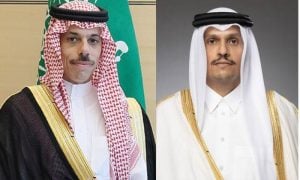
Qatari Prime Minister and Foreign Minister Mohammed bin Abdulrahman Al Thani said his recent visit to Washington had focused on supporting Pakistan’s diplomatic efforts to end the US-Iran conflict.
“The visit focused primarily on supporting the Pakistani diplomatic efforts and ensuring a positive response to these efforts to reach a solution as quickly as possible,” Sheikh Mohammed said.
Turkish Foreign Minister Hakan Fidan reiterated Ankara’s support for Pakistan-led diplomacy and efforts aimed at reopening the Strait of Hormuz.
Pakistan intensifies diplomatic outreach
Pakistan has continued diplomatic engagement with various countries in recent weeks amid efforts to reduce tensions between Washington and Tehran.
Prime Minister Shehbaz Sharif held a telephone conversation on Tuesday with Azerbaijani President Ilham Aliyev, during which both leaders discussed ongoing peace efforts in the Middle East.
Aliyev appreciated Pakistan’s “remarkably successful initiatives” aimed at securing a ceasefire between Iran and the United States, according to an official statement.
Prime Minister Muhammad Shehbaz Sharif held a telephone call today with H.E. Mr. Ilham Aliyev, President of the Republic of Azerbaijan.
During their most warm and cordial conversation, the two leaders exchanged greetings and reaffirmed the strong fraternal bonds of friendship… pic.twitter.com/R5cRmzyT6e
— Prime Minister's Office (@PakPMO) May 12, 2026
On Monday, Ishaq Dar met US Chargé d’Affaires Natalie A. Baker in Islamabad, where the two sides discussed the evolving regional situation and broader bilateral relations.
Dar expressed hope that continued diplomacy would contribute to regional peace and stability and appreciated US support in facilitating the repatriation of Pakistani and Iranian seafarers through Singapore.
Pakistan’s mediation role
Pakistan has played a central diplomatic role since helping broker a ceasefire between Washington and Tehran on April 8 following weeks of conflict involving Iran, Israel and the United States.
Islamabad later hosted direct talks between senior US and Iranian negotiators on April 11 and 12.
Although the negotiations concluded without a final agreement, diplomatic contacts have continued, with both sides exchanging proposals through Pakistan.
On Sunday, Prime Minister Sharif confirmed that Pakistan had received Iran’s response to the latest US peace proposal.
Pakistan has repeatedly emphasised that dialogue and diplomacy remain the only viable path towards de-escalation and long-term regional stability.