Key Points
- Trump says only Iran’s unconditional surrender can end the conflict
- Heavy US-Israeli strikes rock Tehran in one of the most intense bombardments yet
- Fighting spreads to Lebanon, Iraq and Gulf states amid rising humanitarian concerns
- Oil prices surge and shipping routes face disruption in the Strait of Hormuz
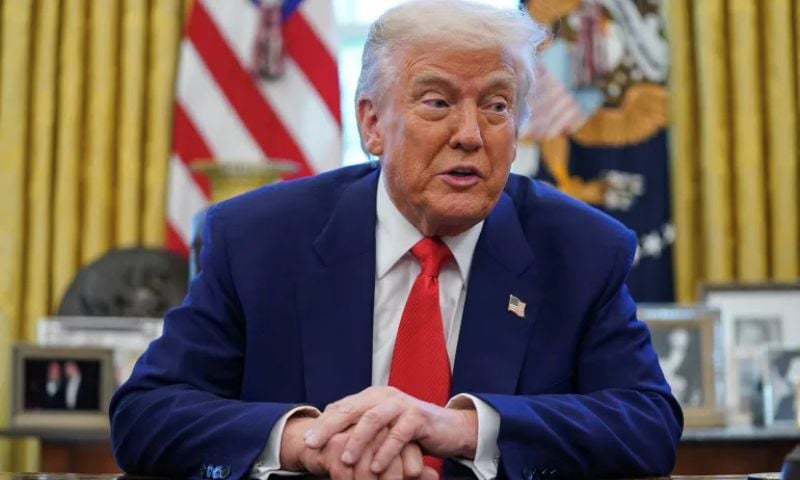
WASHINGTON: US President Donald Trump said on Friday that only Iran’s “unconditional surrender” would bring an end to the rapidly expanding Middle East war, as Tehran came under one of the heaviest US-Israeli strikes since the conflict erupted a week ago.
The war, now in its seventh day, has widened beyond the immediate theatre of fighting, drawing in neighbouring countries, disrupting global energy and transport routes and raising concerns of a broader regional crisis.
In a message posted on his Truth Social platform, Trump declared that there would be “no deal with Iran except unconditional surrender,” and suggested that Washington could assist Iran in rebuilding its economy if a new leadership acceptable to the international community emerged in Tehran.
The conflict intensified on Friday with several powerful explosions reported across the Iranian capital. Journalists on the ground described the strikes as among the heaviest bombardments since hostilities began. Thick plumes of smoke were seen rising over parts of the city as air defences were activated.
Large crowds dressed in black gathered for Friday prayers in Tehran, marking the first such gathering since the outbreak of the war that followed the killing of Iran’s Supreme Leader Ayatollah Ali Khamenei last weekend.
Israel signalled further escalation, with its military chief, Lieutenant General Eyal Zamir, warning that additional operations were planned.
Iran’s health ministry said that US and Israeli strikes had killed 926 people across the country. Government spokeswoman Fatemeh Mohajerani said around 30 per cent of the victims were children. Independent verification of the casualty figures has not been possible.
Iran has responded with missile and drone attacks targeting Israel and several Gulf states. Explosions were heard in Tel Aviv on Friday as air defence systems intercepted incoming projectiles.
Israeli authorities reported at least 10 fatalities since the start of the war. The US military confirmed that six American soldiers had been killed.
The fighting has also spread to Lebanon after Hezbollah, the Iran-backed armed group, launched missiles toward Israel. Israeli air strikes targeted several locations in southern and eastern Lebanon as well as suburbs in southern Beirut.
The densely populated southern suburbs of Beirut, widely regarded as a Hezbollah stronghold, have suffered extensive damage. Thousands of residents fled after Israeli forces issued evacuation warnings. Families were seen gathering along Beirut’s coastline amid limited shelter options.
Lebanese Prime Minister Nawaf Salam warned that the large-scale displacement could trigger a humanitarian disaster. According to Lebanon’s health ministry, at least 217 people have been killed in the country since the escalation began.
Israel’s military said more than 70 Hezbollah militants had been killed during its operations, although these claims could not be independently verified.
The conflict has also spilt into Iraq, where drones struck an airport and two oil facilities in the country’s south on Friday, according to a security official. Kurdish authorities earlier reported that crude production had been halted following a previous attack, contributing to a sharp rise in global oil prices.
International concern has grown over the humanitarian impact of the Iran war. The United Nations refugee agency declared the situation a major emergency, urging urgent global assistance.
The UN human rights chief also urged impartial investigations after Iranian authorities said a strike on a school killed more than 150 people. Washington said the Pentagon was examining the circumstances of the incident.
The war has triggered diplomatic criticism in Europe. Spain’s Prime Minister Pedro Sanchez described the US-Israeli strikes as an “extraordinary mistake” that he said did not align with international law. European Union leaders are expected to discuss the crisis in the coming days.
Gulf countries have also been drawn into the conflict. Qatar reported intercepting a drone targeting a US air base early Friday, and Saudi Arabia said it shot down three drones east of Riyadh.
At least 13 people have been killed in Gulf states since the war began, including several civilians. Explosions were also reported in Kuwait City on Friday.
Beyond the region, tensions have affected global shipping and aviation networks. Oil prices have surged sharply since the outbreak of hostilities, with maritime traffic through the strategically vital Strait of Hormuz facing growing disruption.
Iranian state media reported that a fire broke out on a vessel struck in the strait on Friday, highlighting the mounting risks to international trade routes as the conflict continues to expand.