


ISLAMABAD: Afghanistan’s senior political leaders and researchers have accepted the fact that the Durand line is an internationally recognised border and urged political and influential figures of the country to accept ground realities and avoid emotional rhetoric on sensitive issues.
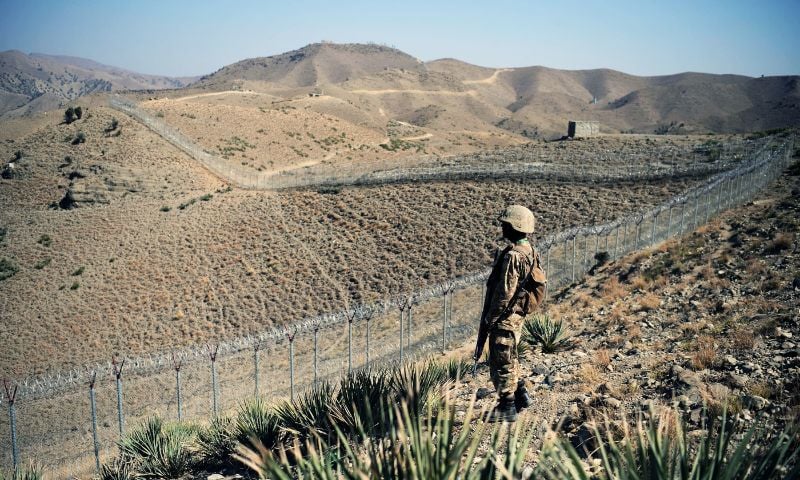
The Durand Line is a 2,640 km border between Afghanistan and Pakistan, established in 1893 by British diplomat Sir Mortimer Durand and Afghan Amir Abdur Rahman Khan.
Nilofar Ibrahimi, a former Member of Parliament from Badakhshan, stated that the Durand debate must be separated from emotions and ethnic rivalries.
“In historical reality and within the framework of international law, this line is established as an official frontier, and that’s it; it cannot be denied,” she noted.
History researcher Aziz Arianfar, in his recent remarks on the Durand line, said that the current borders of Afghanistan and Pakistan are recognised by the international community, and any territorial dispute not only offers no benefit to Afghanistan but could weaken the country’s position.
He noted that in international law, recognising a state means accepting its territorial integrity, national sovereignty, and official borders, and these principles are not subject to bargaining or negotiation.
Addressing Afghanistan’s internal dynamics, Arianfar noted that deep divisions, fragmentation, and ongoing challenges limit the country’s ability to function as an independent and effective actor on the global stage.
According to the researcher, efforts to create large ethnic states — such as a “Greater Tajikistan,” “Greater Turkmenistan,” or “Pashtunistan” — could seriously disrupt regional order and security and even lead to bloody conflicts.
The Afghanistan Republic Front, in its statement, said Afghanistan, having gone through decades of complex historical and political transformations, possesses clearly defined and established borders within the framework of international law and principles.
It noted these borders have been determined during different historical periods and have been officially recognised by the governments of the time and the relevant parties. “Accordingly, the Durand Line, as the legal and international border between Afghanistan and the Islamic Republic of Pakistan, is an undeniable legal and political reality,” it said.
Afghanistan Republic Front urged all elites, political leaders, and influential figures of the country to refrain from emotional, ethnic, and regional approaches in such vital matters and to prioritise the supreme national interests.
Abdul Manan Shivay Shargh, the former deputy of the Ministry of Information and Culture of Afghanistan, said the Durand border has been recognised and everyone is in agreement.
Mujib-ur-Rahman Rahimi, spokesperson for the former Chief Executive of Afghanistan, Abdullah Abdullah, said he recognises Pakistan with its current borders and that there should be no border dispute with this country.
Criticising calls for the annexation of parts of Pakistan to Afghanistan, he said this is not a national demand but is being pursued by a limited group.
“We recognise Pakistan with its current borders, and we have no border or territorial disputes with any country. We consider dialogue and cooperation, not disintegration and proxy wars, to be the solution to problems between countries,” he wrote.
Mohammad Mohaqiq, a senior political figure, said in an interview with Amu TV that he recognises the Durand Line as the border between Afghanistan and Pakistan.