BAKU: Iranian Arash-class suicide drones struck civilian targets in Azerbaijan’s Nakhchivan region on Thursday, injuring two people, in what appears to be a significant escalation as the ongoing war in the Middle East expands beyond the region.
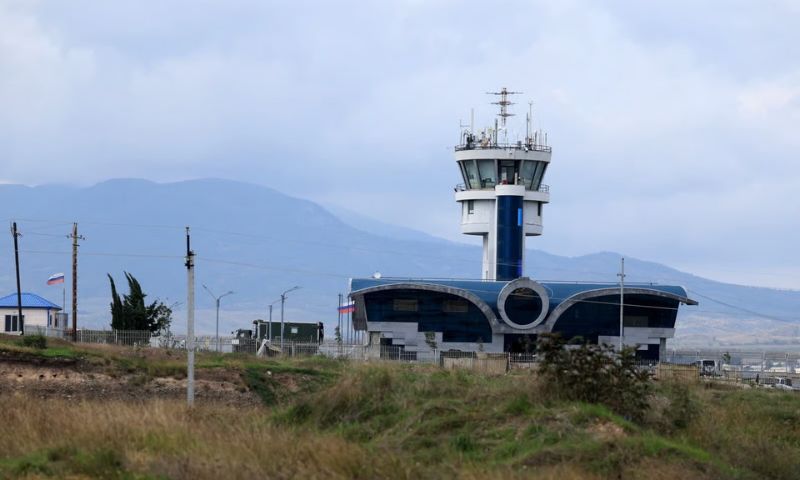
A drone hit the terminal building of Nakhchivan International Airport and a second exploded near a school in the village of Shekerabad, Azerbaijan officials said.
Azerbaijan’s Ministry of Foreign Affairs said in a statement that the incident occurred at about 12 noon (08:00 GMT) on Thursday.
Violation of international law
Condemning the strike as a violation of international law, Azerbaijan‘s Foreign Ministry has summoned Iran’s ambassador and explicitly reserved the right to take retaliatory measures.
Nakhchivan, which borders both Iran and Türkiye, was included in a historic U.S.-brokered peace agreement signed last year between longtime rivals Armenia and Azerbaijan.
Trump Route for International Peace and Prosperity
The proposed land corridor—dubbed the “Trump Route for International Peace and Prosperity” (TRIPP)—granted the United States development rights for a transit route linking mainland Azerbaijan to its Nakhchivan exclave while creating a passage through Armenian territory between the two countries.
Iran has long opposed the project, also known as the Zangezur corridor, warning that it could effectively cut Tehran off from Armenia and much of the South Caucasus while bringing potentially hostile foreign influence and security presence closer to its borders.
Breaking: Iran just struck Azerbaijan.
An Arash-class suicide drone hit Nakhchivan International Airport. A second landed near a school in Shekerabad village. Two civilians injured. Azerbaijan’s Foreign Ministry confirmed it and immediately reserved the right to respond.
Sit… pic.twitter.com/QVLVyNkDxV
— Shanaka Anslem Perera ⚡ (@shanaka86) March 5, 2026
Azerbaijan becomes eighth country Iran has struck
With this attack, Azerbaijan becomes the eighth country Iran has struck since February 28. The list now includes Israel, Saudi Arabia, the United Arab Emirates, Bahrain, Kuwait, Qatar, Turkey—via a ballistic missile—and Azerbaijan.
Experts say Nakhchivan is no longer a list defined by American military installations or direct battlefield opponents. The pattern suggests a shift from targeted retaliation to something closer to regional saturation—a strategy aimed at overwhelming air defenses across multiple states simultaneously.
In just the first five days of the war, the United Arab Emirates reported detecting 186 ballistic missiles and 812 drones. Of those, 172 missiles and 755 drones were intercepted, yet 57 drones still managed to strike UAE territory.
Experts believe that for Azerbaijan, the strike presents a particularly difficult strategic dilemma.
The country maintains a close military relationship with Israel, which has supplied Baku with drone technology and satellite intelligence. At the same time, Azerbaijan shares a land border with Iran and has a large Shia Muslim population with deep cultural and religious ties to Tehran.