
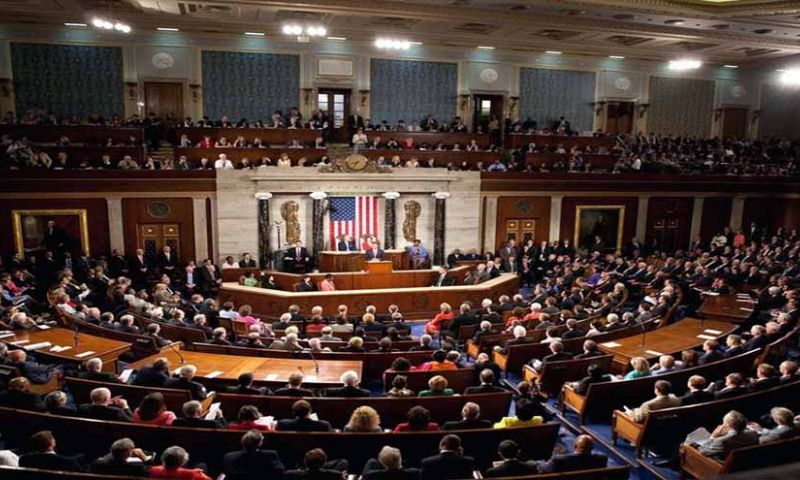



WASHINGTON: The United States Senate on Wednesday voted to block a bipartisan effort aimed at limiting Donald Trump’s authority to conduct military strikes against Iran without explicit approval from Congress.
Lawmakers voted 53–47 against advancing a war powers resolution that sought to halt ongoing US military operations and require congressional authorization for further hostilities. The vote largely followed party lines, with nearly all Republicans opposing the measure and most Democrats supporting it.
The resolution, introduced by Democratic Senator Tim Kaine of Virginia and supported by Senate Democratic leader Chuck Schumer, aimed to reassert Congress’s constitutional authority to declare war. Supporters argued that the US president should not be able to escalate military actions abroad without legislative approval.
However, opponents insisted that the president was acting within his legal authority as commander-in-chief to protect US national interests. Republican Senator Jim Risch, chairman of the Senate Foreign Relations Committee, defended the administration’s actions, saying the military campaign would be limited in scope, according to Reuters.
“This is not a forever war – not even close,” Risch told lawmakers during the debate. “This conflict is expected to end very quickly.” The measure was widely expected to fail, as Republicans currently hold narrow majorities in both chambers of Congress. Previous attempts to limit Trump’s military powers have also been blocked by Republican lawmakers.
Despite the setback, supporters of the resolution indicated they would continue pressing for greater congressional oversight of US military operations in the Middle East.
Some Republican lawmakers who voted against the measure also suggested they may seek testimony from administration officials regarding the long-term strategy toward Iran, particularly if the conflict continues.
The debate comes amid concerns in Washington that the United States could be drawn into a prolonged conflict in the region similar to the wars in Iraq and Afghanistan. Critics warn that escalating military action against Iran could lead to a broader regional war.
Schumer argued that lawmakers faced a critical decision over whether to support the president’s military strategy or reflect public concerns about another Middle East conflict.
A recent Reuters/Ipsos survey showed that only about one-quarter of Americans approve of US strikes against Iran, while nearly half believe Trump is too willing to use military force.
Meanwhile, the United States House of Representatives is expected to vote on a similar war powers resolution. Republican Speaker Mike Johnson has indicated that he believes there are enough votes to defeat the measure in the House as well.
Even if the resolution were approved by both chambers of Congress, it would still require a two-thirds majority to override an expected presidential veto.
Separately, tensions flared during a congressional hearing when a US Marine veteran, Brian McGinnis, was forcibly removed after staging a protest against the military operation in Iran. McGinnis, who is running for a Senate seat as a Green Party candidate, interrupted the proceedings before being escorted out by Capitol Police.
Senator Sheehy joined Capitol Police in lifting up and ejecting anti war protestor Brian McGinnis from a SASC subcommittee hearing. McGinnis is a Green Party candidate running for Senate in N.C. An antiwar activist filmed the video below: pic.twitter.com/0dVA0ORWXQ
— Alan He (@alanhe) March 4, 2026
Video footage circulating online showed Republican Senator Tim Sheehy assisting security officers in removing the protester from the hearing room. Sheehy later said he stepped in to help de-escalate the situation.
The developments highlight the deep political divisions in Washington over the US military campaign against Iran and the broader question of presidential war powers.