Key Points
- Pentagon policy chief calls for NATO to emphasise partnerships, not dependency
- Member states urged to increase defence contributions and share operational responsibilities
- Remarks come amid concerns over overreliance on US military capabilities
- Emphasis on collective readiness, burden-sharing, and multinational cooperation
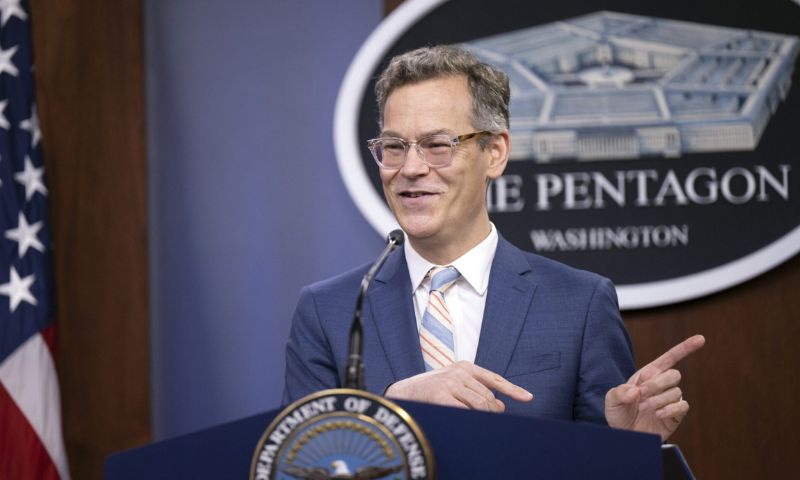
ISLAMABAD: NATO (the North Atlantic Treaty Organisation) should operate more based on partnership rather than dependency among its members, Pentagon policy chief Colin Kahl said on Thursday, stressing the need for a collaborative approach to alliance operations, according to Reuters.
Kahl noted that while NATO remains central to transatlantic security, overreliance on US military capabilities can undermine collective effectiveness.
He urged member states to increase their own defence contributions and take shared responsibility in operational planning, logistics, and strategic decision-making.
The Pentagon official emphasised that the evolving security threats, including cyber attacks, emerging technologies, and hybrid warfare, require NATO members to work jointly rather than depend primarily on US support.
He emphasised that equitable burden-sharing is essential to maintain alliance credibility, readiness, and rapid response capabilities.
Since its founding in 1949, NATO has relied on the U.S. for both strategic leadership and substantial military resources, creating an asymmetry in capabilities that can strain alliance cohesion.
In recent years, NATO has faced challenges from Russian aggression in Europe, tensions in the Indo-Pacific, and the growing influence of China, all of which underscore the need for a more balanced and collaborative Alliance.
Analysts note that Kahl’s remarks reflect Washington’s broader strategy to encourage equitable burden-sharing within NATO, foster a more sustainable alliance structure, and ensure that all members actively contribute to collective defence.
Strengthening partnerships and operational cooperation, they argue, will enhance NATO’s capacity to address both traditional and non-traditional security threats.