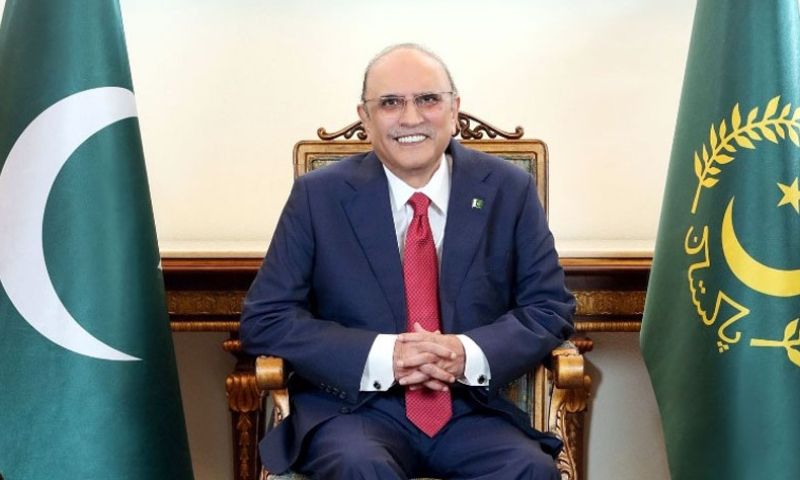



ISLAMABAD: Pakistan President Asif Ali Zardari will undertake an official four-day visit to the United Arab Emirates from Monday to strengthen bilateral ties.
According to a statement issued by the Foreign Office, he will lead a high-level delegation to the UAE from January 26-29, during which he will hold high-level meetings with UAE officials on regional and international issues of mutual interest.
“During the visit, the President will hold high-level meetings with the UAE’s leadership to review the full spectrum of bilateral ties, especially in the domains of trade and economic partnership, defence and security, and people-to-people ties,” it added. The discussions will also focus on regional and international issues of mutual interest.
🔊PR No.2️⃣6️⃣/2️⃣0️⃣2️⃣6️⃣
Curtain Raiser: Visit of the President of Pakistan to the UAEhttps://t.co/9fBgQWuZH1
🔗⬇️ pic.twitter.com/W0o1AEh4Su— Ministry of Foreign Affairs – Pakistan (@ForeignOfficePk) January 26, 2026
The visit of the President reflects the deep brotherly ties between the two nations and reaffirms the commitment to transforming the strong friendship between Pakistan and the UAE into a mutually rewarding partnership.
President Zardari’s visit follows the arrival of UAE President Sheikh Mohamed bin Zayed Al Nahyan in Pakistan on his first official visit late last month.
The UAE is Pakistan’s third-largest trading partner after China and the United States, and a major source of foreign investment, valued at over $10 billion in the last 20 years, according to the UAE foreign ministry.
It is also home to more than a million Pakistani expatriates who send back more than $5 billion in remittances to the South Asian country annually.
The two countries regularly engage in high-level diplomatic and economic dialogues to strengthen their strategic partnership and regional stability.
The relationship emphasises mutual support, economic growth, and shared development goals, reflecting a commitment to long-term collaboration.
In January 2024, Pakistan and the UAE signed multiple agreements worth more than $3 billion for cooperation in railways, economic zones, and infrastructure sectors.