ISLAMABAD: Decades of sustained protest in Iran, from student movements to women-led uprisings, demonstrate that even deeply entrenched authoritarian regimes can be persistently challenged from within.
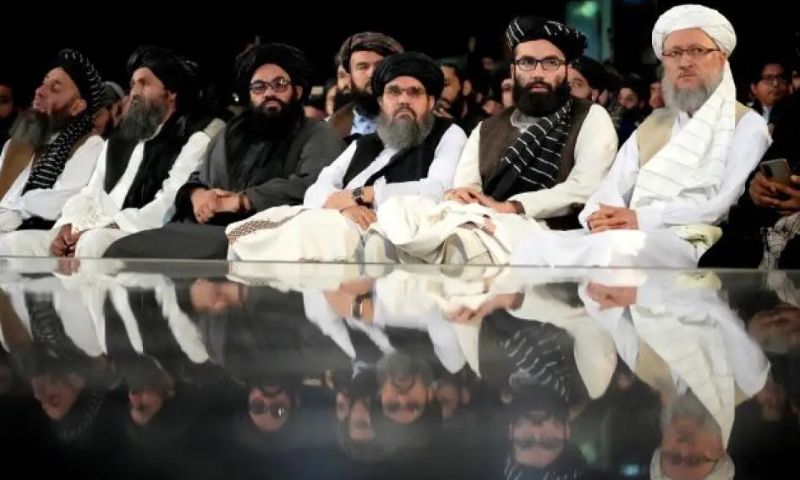
Analysts say the Taliban, whose rule in Afghanistan lacks institutional legitimacy and broad social support, closely monitor Iran’s unrest and actively censor news about it, reflecting anxiety that grassroots resistance could inspire similar defiance under their own regime.
According to a report in the international online news magazine The Diplomat, while the Islamic Republic remains in power, its legitimacy has been steadily undermined by sustained civil resistance, labor strikes, student activism, and women’s defiance of compulsory veiling laws, as documented by Human Rights Watch.
For authoritarian regimes, legitimacy is not a symbolic concern; it is a structural necessity. As political theorist Hannah Arendt argued in On Violence, systems that rely primarily on violence ultimately reveal weakness rather than strength.
According to a report, Iran’s experience demonstrates that even a regime with decades of institutional consolidation, an extensive security apparatus, and regional influence can be persistently challenged from within. This reality deeply unsettles the Taliban.
That’s why the regime is tightly censoring news about Iranian protests. According to reports by the United Nations Assistance Mission in Afghanistan (UNAMA) and Afghan media watchdogs, Taliban authorities have restricted coverage of regional protest movements, particularly those involving women. The message is clear: visibility itself is dangerous.
Two Regimes, One Authoritarian Logic
The Taliban and the Islamic Republic of Iran emerged through different historical routes, yet both represent contemporary forms of authoritarian rule rooted in the politicization of religion. The Taliban originated as an armed Islamist movement during Afghanistan’s civil war in the 1990s, took control of the country in 1996, were ousted in 2001 by U.S.-led international forces, and returned to power in 2021 following the collapse of the internationally backed Afghan government.
Their authority is derived not from popular consent or constitutional legitimacy, but from coercion, ideological absolutism, and exclusionary rule.
Iran’s political system, by contrast, was born out of the 1979 revolution, which initially mobilized broad segments of society against the monarchy.
Over time, revolutionary pluralism gave way to clerical dominance. Power became centralized in unelected institutions, dissent was criminalized, and religion was institutionalized as a mechanism of political control rather than moral guidance, an evolution analyzed extensively by scholars such as Asef Bayat.
Despite their different origins, both regimes are authoritarian in substance. They suppress political pluralism, subordinate law to ideology, restrict women’s rights as a matter of state policy, and rely on fear rather than accountability. It is precisely this shared authoritarian structure that explains why the Taliban are closely following and actively censoring news about protest in Iran.
A critical source of Taliban anxiety lies in the nature of Iran’s resistance
Iran’s civil resistance is believed to be cumulative, socially embedded, and long-term. It draws on decades of civic activism, women’s movements, labor organizing, and student politics.
For the Taliban, this model is especially threatening. Afghanistan, like Iran, has a young population, deep social grievances, and a long history of resistance. Iran’s experience demonstrates that authoritarian regimes can be weakened incrementally without immediate collapse, foreign invasion, or armed rebellion.
A comparative assessment reveals a crucial asymmetry. Despite its legitimacy crisis, the Islamic Republic of Iran still possesses functioning state institutions, diversified revenue streams, and diplomatic relations, however strained. The Taliban have none of these advantages.
After nearly five years in power, the Taliban have failed to secure meaningful international recognition beyond Russia. This failure reflects fundamental deficiencies in governance.
As documented by the U.N. Human Rights Council, the Taliban have not established a constitutional framework, inclusive political institutions, or a credible legal system.
Economically, Afghanistan remains internally paralyzed. The Taliban lack a coherent economic strategy aligned with international norms.
The country survives largely due to humanitarian assistance from the United Nations, international NGOs, and foreign donors.
Without this external support, Afghanistan’s economy would struggle to function even at a minimal level, according to assessments cited by UNAMA and the World Bank.
This dependency undermines the Taliban’s claims to sovereignty and exposes their structural fragility.
Centrality of Gender Repression
One of the clearest parallels between Iran and Taliban-ruled Afghanistan is the centrality of gender repression. In Iran, compulsory veiling and morality policing have become flashpoints for nationwide resistance.
In Afghanistan, the Taliban have imposed the most comprehensive restrictions on women’s education, employment, and public life anywhere in the world today.
U.N. experts have characterized these policies as institutionalized gender apartheid, systematically excluding half the population from social, economic, and political participation. No other contemporary state enforces such sweeping gender-based exclusion.
Rather than stabilizing Taliban rule, these policies intensify social alienation and international isolation. Iran’s experience demonstrates that controlling women’s bodies and lives does not suppress resistance in the long term.
In addition, higher education in Afghanistan has also entered free fall. Universities have ceased to function as spaces of aspiration even for many male students, while women have been entirely excluded.
This collapse mirrors early warning signs seen in other authoritarian systems: when regimes undermine education, they undermine their own future.
Iran’s student movements have historically played a central role in challenging authoritarian power. The Taliban understand this well. Their restrictions on education are not only ideological; they are preemptive measures against future dissent.
Yet such measures come at a cost. A generation deprived of education and opportunity represents a long-term liability that no amount of repression can neutralize.
The Politics of Silence and Regional Isolation
The Taliban’s refusal to acknowledge internal conflict further exposes their insecurity. Despite ongoing clashes with armed opposition groups such as the National Resistance Front and the Afghanistan Freedom Front, Taliban officials routinely deny the existence of organized resistance, portraying Afghanistan as uniformly stable.
Stable governments acknowledge conflict and seek political solutions. Insecure regimes erase reality. This pattern mirrors the Iranian state’s long-standing denial of social unrest – a strategy that has repeatedly failed.
Meanwhile, Taliban relations with neighboring countries are marked by recurring tensions over borders, water rights, refugees, and security concerns.
Far from becoming a stabilizing regional actor, the Taliban have emerged as a source of uncertainty. Iran’s strained regional relationships offer a cautionary parallel: ideological rigidity undermines pragmatic diplomacy.
For the Taliban, watching Iran struggle to contain domestic resistance while navigating international isolation reinforces a sobering lesson: authoritarian rule narrows strategic options over time.
If Resistance Turns Violent: Implications for Taliban Stability
If popular resistance in the region were to escalate into widespread violence or civil war, the Taliban’s position would further deteriorate.
Unlike the Iranian state, the Taliban lack institutional resilience, economic buffers, and broad social legitimacy. Prolonged instability would expose internal divisions, intensify economic collapse, and deepen reliance on external aid.
In such a scenario, the Taliban would face an accelerated erosion of authority.
All authoritarian regimes share a common trajectory: consolidation through fear, erosion through resistance, and eventual collapse when repression can no longer compensate for lost legitimacy.
The Taliban’s efforts to suppress news of Iranian resistance reflect the regime’s fear of comparison and contagion.
Iran’s popular resistance has not yet overthrown the Islamic Republic. But it has demonstrated something far more destabilizing for authoritarian regimes: that even deeply entrenched systems can be persistently challenged by ordinary people demanding ordinary rights, dignity, freedom, and life.
For Afghans living under Taliban rule, and for the region as a whole, this lesson resonates powerfully. No regime built on exclusion, denial, and coercion can endure indefinitely.