
Key Points:
- Scientists say warmer seas and heavier rainfall linked to climate change helped fuel catastrophic floods in Indonesia and Sri Lanka
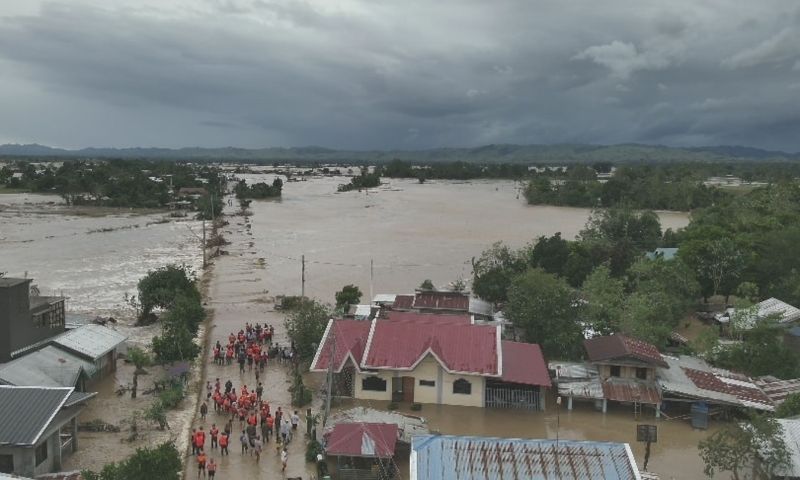
- Two tropical storms triggered landslides and flooding that killed over 1,500 people across both countries
- Attribution study shows heavy rainfall events have intensified: 9–50% in the Malacca Strait region and 28–160% in Sri Lanka
- Natural factors—including La Niña, the Indian Ocean Dipole, and local geography—also worsened the disaster
- Deforestation and dense populations in flood-prone areas increased vulnerability
BANGKOK: Warmer seas and heavier rains linked to climate change, along with Indonesia and Sri Lanka’s unique geographies and vulnerabilities, combined to produce deadly flooding that killed hundreds, scientists said Thursday.
Two tropical storms dumped massive amounts of rain on the countries last month, prompting landslides and flooding that killed more than 600 people in Sri Lanka and nearly 1,000 in Indonesia.
A rapid analysis of the two weather systems carried out by an international group of scientists found a confluence of factors drove the disaster.
They include heavier rainfall and warmer seas linked to climate change, as well as weather patterns such as La Nina and the Indian Ocean Dipole.
The research could not quantify the precise influence of climate change because models do not fully capture some of the seasonal and regional weather patterns, the scientists said, according to AFP.
Still, they found climate change has made heavy rain events in both regions more intense in recent decades, and that sea surface temperatures are also higher due to climate change.
Warmer oceans can strengthen weather systems and increase the amount of moisture in them.
“Climate change is at least one contributing driver of the observed increase in extreme rainfall,” said Mariam Zachariah, one of the study’s authors and a research associate at Imperial College London.
The analysis, known as an attribution study, uses peer-reviewed methodologies to assess how a warmer climate may impact different weather events.
The scientists found extreme rainfall events in the Malacca Strait region between Malaysia and Indonesia had “increased by an estimated 9-50 percent as a result of rising global temperatures,” said Zachariah.
“Over Sri Lanka, the trends are even stronger, with heavy rainfall events now about 28-160 percent more intense due to the warming we have already experienced,” she told reporters.
While the datasets “showed a wide range,” Zachariah added, “they all point in the same direction, that extreme rainfall events are becoming more intense in both study regions.”
The scientists said other factors were also at play, including deforestation and natural geography that channelled heavy rain into populated flood plains.
The two tropical storms coincided with the monsoon rains across much of Asia, which often brings some flooding.
But the scale of the disaster in the two countries is virtually unprecedented.
“Monsoon rains are normal in this part of the world,” said Sarah Kew, climate researcher at the Royal Netherlands Meteorological Institute, and study lead author.
“What is not normal is the growing intensity of these storms and how they are affecting millions of people and claiming hundreds of lives.”