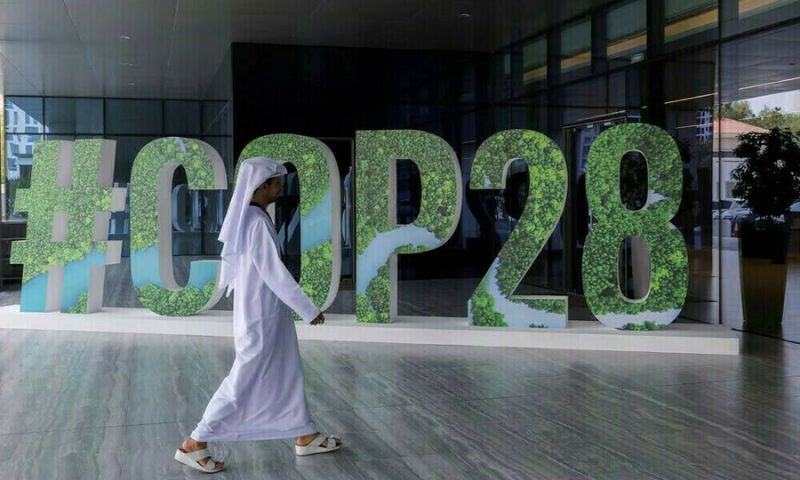
DUBAI: A pledge to triple the world’s installed renewable energy by 2030 is set to win support from over 110 countries at the COP28 climate summit here Saturday, with some nations pushing to make the deal global by the end of the UN conference.
The European Union, United States and United Arab Emirates, the COP28 host, have been rallying support for the pledge as a means to the sharp drop in planet-warming emissions needed this decade to avoid unleashing more severe climate change.
“More than 110 countries have joined already,” Ursula von der Leyen, European Commission President, told the COP28 summit on Thursday of the renewables pledge. “I call now on all of us to include these targets in the final COP decision.”
Whether governments and companies will rally the huge investments needed to hit the goal is an open question. While deployment of renewables like solar and wind has been increasing globally for years, rising costs, labour constraints and supply chain issues have forced project delays and cancellations in recent months, costing developers like Orsted and BP billions of dollars in writedowns.
Getting the agreement into the final decision of the UN climate summit would also require agreement among the nearly 200 countries present. While China and India have signaled support for a tripling of global renewable energy by 2030, neither has confirmed they will back the overall commitment – which links clean energy increases with fossil fuel cuts.
South Africa, Canada, Vietnam, Australia, Japan, Chile and Barbados are among the nations already on board, according to the officials.
The renewables pledge will be among several other energy-related announcements at the COP28 today, including new measures and funding to combat methane emissions, promotion of nuclear energy and agreements to cut coal use.
Phase out?
A central decision facing countries at COP28 is whether to agree, for the first time, to gradually “phase out” global consumption of fossil fuels. Burning gas, coal and oil to produce energy is the main cause of climate change.
Draft of the renewable energy pledge has called for “the phase down of unabated coal power” and ending the financing of new coal-fired power plants.
Africa receives just 2% of global investments in renewable energy. Somalia has the highest onshore wind power potential of any African nation, yet one of the lowest electrification rates in the continent, according to the International Energy Agency.