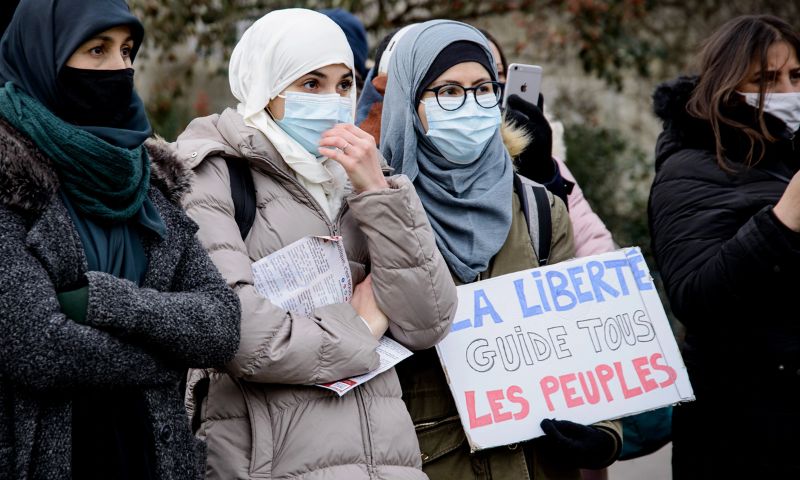
PARIS: In preparation for hosting its first Olympics in a century, France has stirred international outrage with its decision to prohibit athletes from wearing the hijab. Approximately 10 percent of France’s 67 million residents identify as Muslim, making this ban particularly controversial. The ban on Islamic veils will be effective from July 26, 2024, coinciding with the lighting of the Olympic flame.
French Minister of Sports, Amelie Oudea-Castera, made the announcement during a television program, stating that sportswomen in the French delegation will not be allowed to wear the hijab during the Olympic Games. This decision has sparked strong reactions and reignited the ongoing debate about human rights violations.
On October 2, the Islamic Solidarity Sports Federation, a coalition of countries within the Organisation of Islamic Cooperation (OIC), expressed deep concerns regarding the French government’s recent decision. The federation emphasized that this ban contradicts the Olympic principles of equality, inclusivity, and respect for cultural diversity.
IOC position on hijab
The International Olympic Committee (IOC) stated on September 29 that there are no restrictions on wearing the hijab or any other religious or cultural attire during the Olympic Games. This position was commended by former Moroccan Prime Minister Saad Eddine el Othmani.
Marta Hurtado, spokeswoman for the United Nations rights office, echoed similar sentiments, emphasizing that no one should impose what a woman should wear or not wear. She pointed out that discriminatory practices against a particular group can have harmful consequences.
In indirect criticism of France’s stance, Ali al Qaradaghi, Secretary-General of the International Union of Muslim Scholars, drew attention to the acceptance of the hijab in major cities of the United Kingdom. He emphasized that reasonable individuals understand and respect the diverse fabric of society and the right to privacy of identity.
Idris al Wahabi, Secretary-General of the Delegation of the Spanish Federation of Islamic Religious Bodies in the Moroccan city of Ceuta, condemned France’s decisions, stating they were intended to provoke Muslims, particularly Moroccans, who constitute a significant Muslim population in France. He underlined efforts to coordinate with Islamic bodies in France to oppose such decisions collectively. The ban on the hijab during the Olympics continues to be a topic of fervent debate both within France and on the international stage.