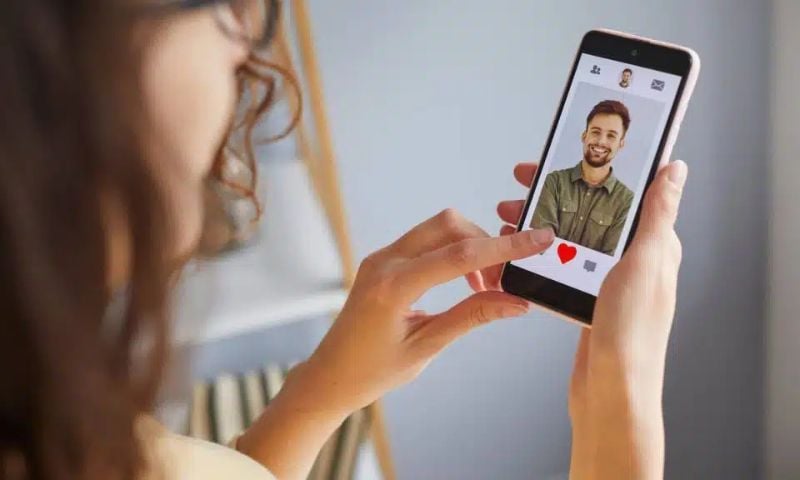
NEW DELHI, India: In a country where arranged marriages still account for over 90% of unions and extramarital relationships remain a social taboo punishable by ostracism, an unsettling contradiction is quietly flourishing. Over 4.5 crore Indians, a number nearly equivalent to the entire population of Argentina, have joined or explored “secret” dating apps in the past five years. More than 1.6 crore signed up in the last year alone.
This is not a fringe phenomenon. It is a parallel universe of desire, hidden behind faceless profiles, anonymous usernames, and paywalls. And at its core lies a disturbing reality: a significant share of these users are married individuals seeking extramarital relationships, open marriages, or discreet hookups, often while their spouses remain unaware.
The India Today OSINT team scanned nearly 30 such apps, including PURE, 3Way, and Nymph, and created test accounts to understand who uses them, how platforms monetise intimacy, and what happens once users enter this shadow economy.
What they found was a carefully engineered ecosystem where vulnerability is commodified, loneliness is monetised, and anonymity is sold as a premium feature.
Negative Impact: A crisis of trust, marriage, and exploitation
The rise of secret dating apps carries profound negative consequences that extend far beyond individual users.
Erosion of Marital Trust: The most immediate casualty is the institution of marriage itself. Test accounts created by India Today revealed hundreds of profiles openly identifying as married, with some users expressing frustration within their marriages and actively seeking emotional or physical connections outside them.
The anonymity these platforms provide effectively lowers the moral barrier to infidelity, normalising behaviour that would otherwise carry significant social and emotional consequences.
Monetisation without accountability: These apps are not charities for the lonely – they are businesses designed to extract maximum revenue from human desire. Most offer limited free access, locking meaningful interaction behind tiered subscription plans.
Users are notified that profiles have liked them, but viewing or responding requires payment. Worse, review analysis of platforms like Nymph revealed growing dissatisfaction: successful payments without subscription activation, non-existent customer support, and constant prompts to upgrade filters instead of delivering matches. Users pay for connection but receive frustration.
Vulnerability to exploitation: The same anonymity that protects users also enables bad actors. Fake profiles, financial scams, and blackmail risks are rampant in spaces where identity verification is minimal.
Unlike mainstream apps like Tinder, which require facial verification, secret dating apps allow accounts with minimal disclosure, creating a haven for those with malicious intent.
Normalisation of secrecy: Perhaps the most insidious impact is cultural. By framing extramarital and discreet relationships as “open-minded” or “progressive,” these platforms rebrand deception as liberation.
The long-term consequence could be a generation that views marriage not as a commitment but as a temporary arrangement to be supplemented by secret digital encounters.
Married and anonymous: What 4.5 crore+ Indians seek on ‘secret’ dating apps https://t.co/FpAqo6wpSY
— News89 India (@news89com) June 9, 2026
Positive impact: Honesty, exploration, and alternative models
However, to dismiss the phenomenon entirely is to ignore the complex realities it represents.
A space for honest non-monogamy: For a small minority of users who practice ethical non-monogamy or open relationships with mutual consent, these platforms provide a necessary space to connect with like-minded individuals. In a society where such conversations are impossible to have openly, secret dating apps offer a rare outlet for consensual, transparent exploration.
Recognition of unhappy marriages: The sheer scale of married users on these platforms, many openly expressing frustration, points to a deeper societal failure. Rather than simply condemning the symptom, there is value in recognising that millions of Indians feel trapped in unfulfilling marriages with no socially acceptable escape route. These apps, for all their flaws, at least confirm that the problem exists.
Economic opportunity: From a purely commercial perspective, the rising revenue of platforms like PURE, even as downloads decline, suggests a successful monetisation model that taps into a high-spending user base. This has created jobs, tax revenue, and a legitimate (if controversial) digital economy segment.
How the ecosystem works: Mainstream vs. Secret
The divergence between mainstream and secret dating apps is striking. Tinder and Bumble have recorded a decline in downloads over the past year, while platforms like 3Fun and 3Way have seen steady upward trajectories.
In testing, an anonymous female account with a faceless picture on PURE attracted over 500 likes within the first hour. Profiles appeared real, with personal photos, job details, locations, and marital status voluntarily shared.
Several users directly expressed frustration within their marriages. In contrast, Tinder’s facial verification requirement created a barrier, blocking our test account entirely.
The message is clear: the market is shifting away from traditional dating toward anonymity, discretion, and intent-driven interactions. And platforms are strategically tapping into user vulnerability with calculated precision.
What next?
For Users: The coming years will likely see increased regulation as the government and courts grapple with the legal and ethical implications of anonymous dating platforms. Users should expect stricter identity verification mandates, similar to those already implemented on mainstream apps. Those currently using these platforms for extramarital affairs should be aware that anonymity is never absolute – data leaks, payment trails, and metadata can and have exposed users in the past.
For Platforms: The current monetisation-heavy model is unsustainable. Growing user dissatisfaction with paid subscriptions that deliver no matches will eventually drive users away. Platforms that prioritise genuine connection over predatory paywalls will win long-term loyalty. Those that continue to exploit vulnerability will face regulatory crackdowns and reputational collapse.
For Society: India cannot afford to ignore what 4.5 crore people are doing in digital shadows. Whether the response is moral condemnation, legal restriction, or open conversation about marital dissatisfaction and alternative relationship models, silence is no longer an option. The apps exist. The users are real. The question now is whether society will engage with the reality, or continue to pretend that 4.5 crore Indians are not there.
The bottom line: Secret dating apps are not a passing trend. They are a mirror held up to a society struggling to reconcile tradition with desire, commitment with frustration, and public morality with private need. What happens next depends on whether we choose to look or continue to look away.