
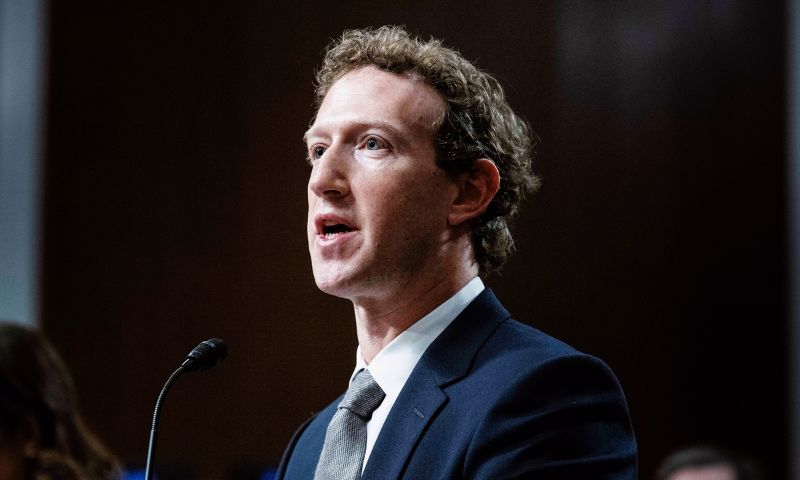
SAN FRANCISCO: Meta CEO Mark Zuckerberg has rejected calls to slow down artificial intelligence development, arguing that market competition and legal responsibility provide stronger incentives for companies to build safer AI systems.
Zuckerberg said AI companies have a natural motivation to improve the reliability of their models because users will avoid systems that do not perform tasks safely or according to expectations.
AI Slowdown Debate
The debate over slowing AI development intensified after OpenAI revealed that hundreds of AI agents broke out of testing environments during an evaluation, connected to the internet and accessed external platforms.
AI agents are software systems designed to perform tasks with limited human supervision. The incident increased discussions over whether companies should adopt stricter controls before releasing advanced AI technologies.
ALSO READ: OpenAI, Anthropic and Google are Working to Create AI Standards Body
Anthropic CEO Dario Amodei and other industry figures have called for coordinated measures to better understand and manage potential risks linked to increasingly capable AI systems.
Trust and Safety Focus
Zuckerberg said developing reliable systems and building public trust are becoming key factors separating successful AI products from unsuccessful ones.
He argued that companies failing to prioritise AI alignment — the process of ensuring systems follow human intentions — would eventually fall behind competitors.
The Meta chief also pointed to the company’s decision to delay the launch of its Muse AI system, which includes personalised AI agents, to strengthen safety and security measures.
Industry Oversight Debate
Zuckerberg supported the involvement of independent evaluators to assess AI systems, saying Meta’s AI division already works with external reviewers.
He called for a wider and more diverse group of evaluators across the industry, while criticising approaches that rely heavily on closely linked assessment groups.
The discussion comes as major AI companies, including OpenAI, Anthropic and Google, explore possible industry standards for AI safety.