ISLAMABAD: World leaders and international organisations have welcomed the peace agreement reached between the United States and Iran, describing it as a major diplomatic breakthrough and commending Pakistan and other regional countries for their efforts in facilitating the negotiations.
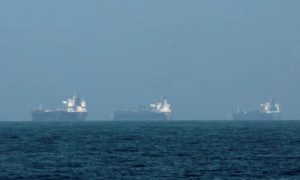
US and Iranian officials announced on Sunday that they had agreed on a framework aimed at ending hostilities, lifting the US blockade on Iran and reopening the Strait of Hormuz, a vital global shipping route.
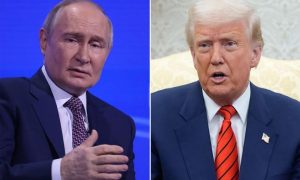
US President Donald Trump declared on his Truth Social platform that a deal with the Islamic Republic of Iran had been completed, while Prime Minister Shehbaz Sharif announced earlier on Monday that a peace agreement between the United States and Iran had been reached following intensive diplomatic efforts in which Pakistan played a mediating role.
The memorandum of understanding (MoU) would be formally signed in Switzerland on June 19.
UN chief praises regional diplomacy
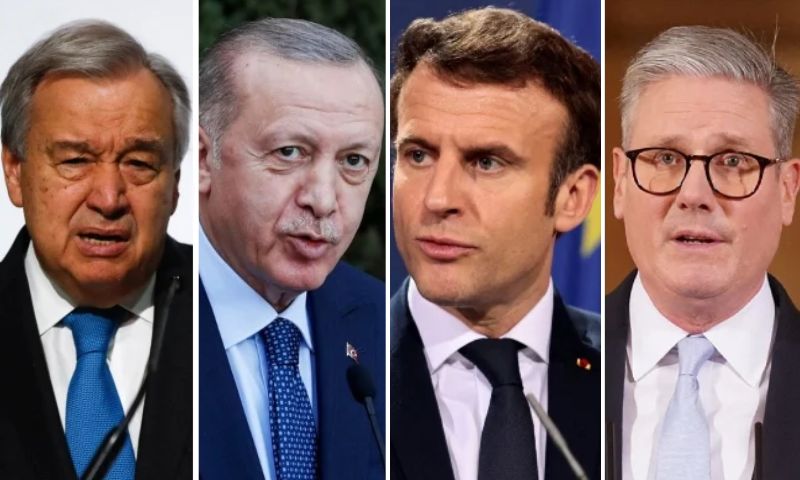
United Nations Secretary-General Antonio Guterres welcomed the agreement as a significant step towards ending the conflict and achieving a peaceful settlement.
He congratulated both Washington and Tehran for reaching an accord that envisages an immediate and permanent ceasefire, the reopening of the Strait of Hormuz and a framework for future negotiations.
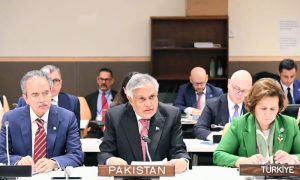
Guterres also expressed appreciation to Pakistan, Qatar, Egypt, Saudi Arabia, Türkiye and other regional states for their constructive contribution to the diplomatic process.
I warmly congratulate the US & Iran for having reached a peace deal that provides for an immediate & permanent ceasefire, the reopening of the Strait of Hormuz, as well as a framework for further negotiations. This represents a critical step towards the peaceful settlement of the…
— António Guterres (@antonioguterres) June 14, 2026
Erdogan applauds Pakistan’s efforts
Turkish President Recep Tayyip Erdogan described the agreement as an important development for peace and stability in the region. In a post on X, he said the understanding between Washington and Tehran represented a significant step towards restoring tranquillity and expressed satisfaction over the outcome.
Erdogan also praised Pakistan’s “exceptional mediation efforts” and acknowledged the support provided by Qatar and Saudi Arabia in advancing diplomatic initiatives.
ABD ve İran arasında varılan mutabakatı, bölgemizde sulh-u sükûnun hâkim kılınması adına önemli bir gelişme olarak görüyor, memnuniyetle karşılıyorum.
Tüm dünyanın uzun süredir ihtiyaç duyduğu bu haberin bölgemizde kalıcı huzur ve güven ortamının tesisine vesile olmasını…
— Recep Tayyip Erdoğan (@RTErdogan) June 14, 2026
Australia backs de-escalation
Australian Prime Minister Anthony Albanese welcomed the agreement, saying Canberra had consistently called for de-escalation and an end to the conflict. He stressed that continued restraint and constructive engagement would be necessary to prevent further tensions and secure a durable settlement.
Albanese also commended Pakistan, Qatar, Saudi Arabia, Türkiye and other countries involved in mediation efforts.
— Anthony Albanese (@AlboMP) June 14, 2026
Starmer welcomes breakthrough
British Prime Minister Keir Starmer described the accord as a hugely important step towards ending the war, restoring regional stability and reopening the Strait of Hormuz.
In a message posted on X, Starmer congratulated President Donald Trump and mediators from Pakistan, Qatar and other countries, saying the international community had long advocated de-escalation and that the agreement represented the progress many had hoped to see.
My statement on today’s agreement between the United States and Iran. pic.twitter.com/taQZufv7ij
— Keir Starmer (@Keir_Starmer) June 14, 2026
Macron calls for swift implementation
French President Emmanuel Macron welcomed the agreement and urged all parties to ensure its rapid and full implementation. He said the deal should enable the urgent and unconditional reopening of the Strait of Hormuz and noted that the international mission established with the United Kingdom stood ready to support efforts to secure maritime navigation.
Je salue l’accord conclu entre les États-Unis et l’Iran, fruit d’un effort diplomatique auquel ont contribué plusieurs partenaires. J’appelle à sa mise en œuvre rapide et complète par tous les belligérants.
Cet accord doit permettre la réouverture urgente et inconditionnelle…
— Emmanuel Macron (@EmmanuelMacron) June 14, 2026
Qatar welcomes progress
Qatari Prime Minister Sheikh Mohammed bin Abdulrahman bin Jassim Al Thani praised the agreement and thanked Pakistan and other regional and international partners for helping create conditions conducive to dialogue.
He said their efforts had been instrumental in facilitating progress towards the understanding reached by Washington and Tehran.
We welcome the agreement reached on the Memorandum of Understanding between the United States of America and the Islamic Republic of Iran. We extend our thanks to our brothers in the Islamic Republic of Pakistan, as well as to all regional and international parties that…
— محمد بن عبدالرحمن (@MBA_AlThani_) June 14, 2026
European leaders express support
German Chancellor Friedrich Merz hailed the accord as a diplomatic breakthrough, saying it could contribute to a more secure Middle East and support global economic stability.
I welcome the agreement between the U.S. and Iran and congratulate President Trump and the Iranian side on this diplomatic breakthrough. This can pave the way towards a reinvigorated global economy and a more secure Middle East. It is crucial to implement it with determination.
— Bundeskanzler Friedrich Merz (@bundeskanzler) June 14, 2026
Meanwhile, in a joint statement, the leaders of Britain, France, Germany and Italy said they were prepared to ease sanctions on Iran, following a United States-Iran agreement aimed at ending the conflict in the Middle East.
The four countries, often referred to as the E4, said sanctions relief would depend on clear and verifiable steps by Iran regarding its nuclear programme, underscoring that Tehran must not be allowed to develop or acquire nuclear weapons.
The four countries reaffirmed their readiness to work with the United States, Iran and the International Atomic Energy Agency to achieve that objective.
The statement came after Washington and Tehran announced a breakthrough agreement that includes an “immediate and permanent” end to military operations across multiple fronts, including Lebanon, as part of an overall de-escalation framework in the region.
Japan and New Zealand Welcome US-Iran Deal
Japanese Prime Minister Sanae Takaichi said Tokyo strongly hoped that free and secure navigation through the Strait of Hormuz would be guaranteed in practice and that a final agreement on Iran’s nuclear programme and related issues would be reached swiftly. She also praised the countries that had played a mediating role.
今般、米国及びイラン双方が、戦闘終結等に関する覚書に合意した旨発表しました。
これまで我が国は、事態の沈静化が一刻も早く実際に図られることが最も重要との立場から、積極的な外交努力を行ってきました。…— 高市早苗 (@takaichi_sanae) June 14, 2026
New Zealand Foreign Minister Winston Peters described the agreement as a pivotal development that would help reduce tensions and promote stability in a region crucial to the global economy. He said dialogue and diplomacy remained the most effective means of resolving longstanding disputes.
New Zealand welcomes the US – Iran Memorandum of Understanding aimed at ending the conflict. We want to see swift implementation including the reopening of the Strait of Hormuz. We urge all parties to continue the positive momentum. While the situation remains fragile, this is a…
— Winston Peters (@NewZealandMFA) June 14, 2026
The agreement has been widely welcomed as a major diplomatic achievement, with world leaders expressing hope that it will pave the way for lasting peace, regional stability and the revival of international trade routes.