
DELAWARE: Scientists in the United States are turning to an unlikely ally — sharks — in an effort to improve predictions of how powerful hurricanes could become before reaching land.
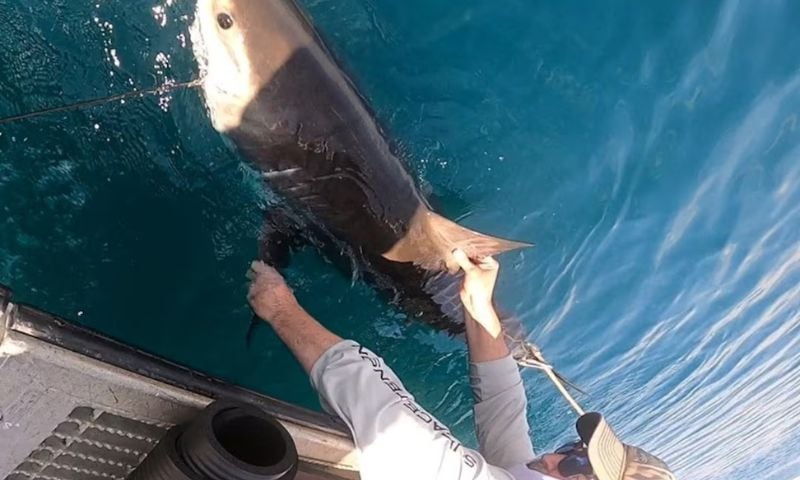
Researchers at the University of Delaware are attaching electronic sensors to sharks swimming along the US East Coast, effectively turning the animals into mobile ocean-data collectors.
The devices, known as CTD tags, measure water temperature, depth and electrical conductivity, which is closely related to salinity. The information can then be used in oceanographic, atmospheric and climate models.
Scientists are particularly interested in measuring heat stored in the ocean’s upper layer because warm water provides energy that can strengthen hurricanes.
“The warmer mixed layer equals stronger hurricane,” said Aaron Carlisle, a professor at the university’s School of Marine Science and Policy.
How sharks collect data
Researchers favour shark species that frequently swim near the surface, allowing their tags to transmit collected information to satellites.
Shortfin mako sharks, blue sharks, smooth hammerheads and juvenile great white sharks have been identified as promising candidates for the North Atlantic project.
ALSO READ: Typhoon Dolphin Heads for China’s East Coast
Scientists travel around 50 to 65 kilometres offshore to catch and tag the animals. Sensors are attached to their dorsal fins in a process that usually takes less than five minutes.
The tags are designed to eventually corrode and fall off, while each shark undergoes a health check before being released.
Animal-mounted sensors have previously been used on species such as elephant seals to gather information from areas where conventional ocean observations are difficult.
If successful, researchers say shark-collected data could improve forecasts of hurricane intensity along the US East Coast and provide communities with more reliable information as potentially dangerous storms approach.
The project could also help challenge sharks’ fearsome popular image by demonstrating how the predators can contribute to scientific research and public safety.