


Key points:
- Fifteen people were killed when a father and son allegedly opened fire at a Hanukkah festival at Sydney’s Bondi Beach on December 14.
- Police shot dead the father at the scene; the son survived and has been charged with terrorism, murder and multiple attempted murder offences.
- The attack has prompted a nationwide security review and plans for Australia’s biggest gun buyback since 1996.
SYDNEY: Australian authorities are investigating one of the deadliest mass shootings in the country’s history after a father and son allegedly opened fire on a Jewish festival at Sydney’s Bondi Beach, killing 15 people and wounding dozens more.
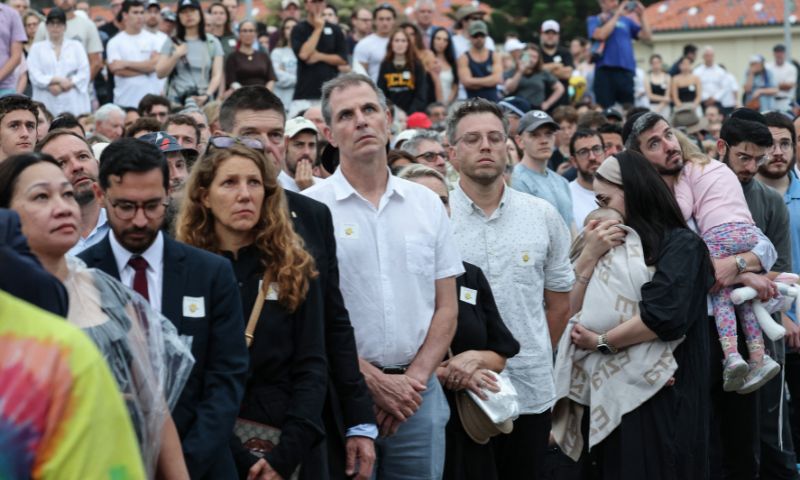
The attack took place on December 14 during a Hanukkah celebration that had drawn around 1,000 people, including families and children.
Timeline of the attack
Police received the first emergency calls reporting gunfire at Bondi Beach at 6:47 pm local time (0747 GMT). Investigators say the suspects used long-barrelled firearms to fire indiscriminately into the crowd gathered for the festival.
Authorities allege the attackers were Sajid Akram, 50, and his 24-year-old son Naveed Akram.
Victims
Fifteen people were killed in the shooting. Among the dead were a 10-year-old girl, a Holocaust survivor, and a married couple who were shot as they attempted to confront one of the gunmen.
Funerals have been held for most of the victims. They include Matilda, a 10-year-old described by her family as a “ray of sunshine”; Alex Kleytman, an 87-year-old retired mechanic and Holocaust survivor; and Boris and Sofia Gurman, longtime Bondi residents who were killed while trying to stop the attack.
Suspects
Police shot and killed Sajid Akram at the scene. He was an Indian national who entered Australia on a visa in 1998.
His son, Naveed Akram, an Australian-born citizen and unemployed bricklayer, was wounded and taken to the hospital under police guard. He emerged from a coma three days later and has since been charged with terrorism offences, 15 counts of murder, 40 counts of grievous bodily harm with intent to murder, and displaying the symbol of a prohibited terrorist organisation.
Investigators say two Islamic State group flags were found in his vehicle.
Investigation and background
Authorities revealed that the father and son had taken a four-week trip to the southern Philippines, returning to Australia just weeks before the shooting. Staff at Davao City’s GV Hotel told AFP the pair stayed mostly inside their room during their 28-day stay, but officials say it remains unclear what they were doing during the trip.
Australia’s domestic intelligence agency, ASIO, investigated Naveed Akram in 2019 over concerns of possible radicalisation but concluded at the time that he did not pose a threat. ASIO also interviewed the father during that review.
Despite the scrutiny, Sajid Akram was later granted a gun licence that allowed him to own up to six rifles. Four firearms were recovered at the scene of the attack, police said.
Government response
Prime Minister Anthony Albanese described the shooting as an act of terrorism and announced a sweeping response aimed at tightening Australia’s gun and counter-extremism laws.
He said the government would introduce a nationwide gun buyback scheme, the largest since reforms enacted after the 1996 Port Arthur massacre, which killed 35 people.
Proposed measures include stricter background checks, a ban on non-nationals owning firearms, and tighter restrictions on the types of weapons that can be legally held.
The federal government also plans new steps to target extremist preachers, impose harsher penalties for terrorism-related offences, and refuse or cancel visas for individuals accused of promoting hate or division.
Albanese has ordered a review of federal police and intelligence agencies to assess whether existing structures and powers are sufficient to prevent similar attacks in the future, stating that the priority is to ensure Australians are kept safe.