
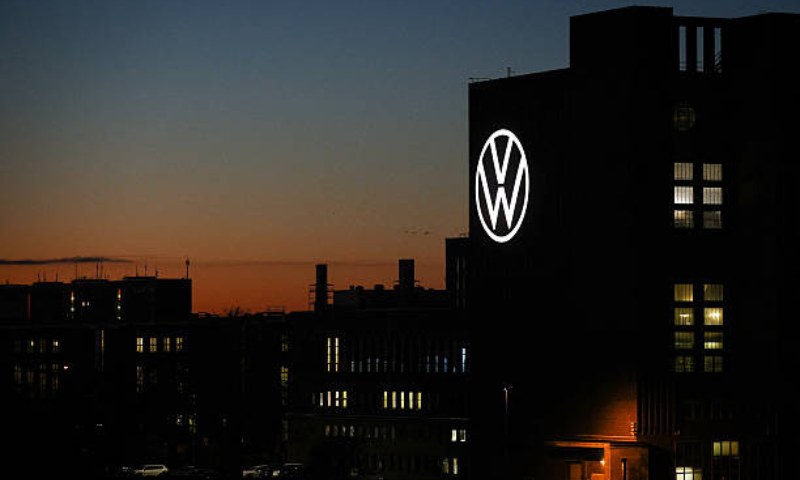
BERLIN: Volkswagen has warned its future could be at risk without further cost reductions, after reporting a sharper-than-expected drop in profits as multiple challenges weigh on the business.
Europe’s largest carmaker is grappling with rising competition from Chinese manufacturers, US tariffs, and uneven demand for electric vehicles, and has already announced plans to cut 50,000 jobs in Germany by 2030.
Chief financial officer Arno Antlitz said existing cost-cutting measures were insufficient following the release of quarterly results showing a steep decline.
“We need to fundamentally change our business model and achieve structural, sustainable improvements,” he said, warning that failure to act could jeopardise the company’s future.
Mounting pressures
Volkswagen, which owns brands including Audi, Seat and Skoda, said it would need to adjust production capacity and further optimise costs across its plants.
Antlitz highlighted intensifying competition from Chinese automakers such as BYD, which are expanding both in China and Europe, eroding Volkswagen’s market share—particularly in electric vehicles.
He also pointed to the impact of tariffs introduced by US President Donald Trump, which are adding an estimated €4bn in annual costs.
Falling sales and profits
From January to March, Volkswagen’s net profit fell 28 percent to €1.56bn ($1.8bn), while revenue declined to €76bn, missing analyst expectations.
The group delivered just over two million vehicles in the period, down four percent year-on-year.
Sales dropped sharply in key markets, with deliveries falling 15 percent in China—where EV sales plunged 64 percent—and 13 percent in North America.
Outlook and strategy
Volkswagen forecasts sales growth of between zero and three percent in 2026, with core profit margins expected to range between four and 5.5 percent.
The company said potential impacts from the Middle East conflict were not included in its outlook due to uncertainty.
Chief executive Oliver Blume said the company is exploring options including defence production and manufacturing Chinese-designed vehicles at German plants to utilise excess capacity.
“We have to pull all the levers of productivity,” Blume said, noting growing pressure from highly efficient Chinese factories entering the European market.
Broader economic strain
Volkswagen’s struggles reflect wider challenges facing Germany’s industrial sector, as traditional manufacturers contend with slowing demand, rising costs and intensifying global competition.
The company’s annual profits fell to their lowest level in nearly a decade in 2025.