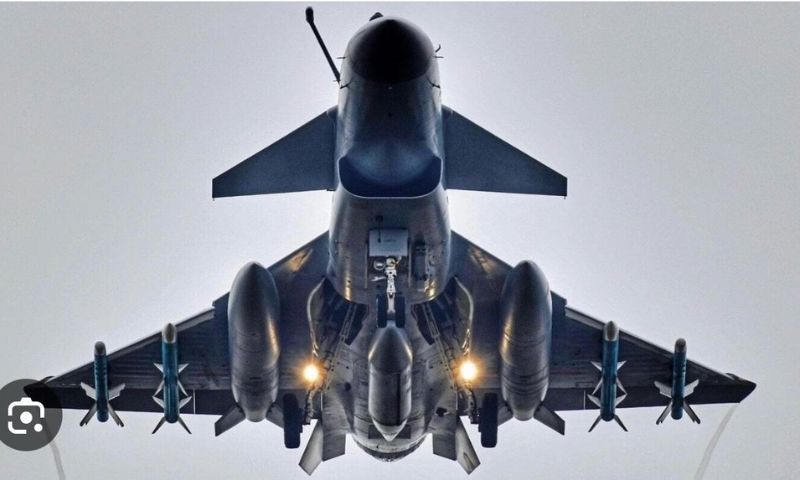
ISLAMABAD: Pakistan’s combat experience with China’s J-10CE fighter is emerging as a powerful catalyst for the aircraft’s international expansion, with Uzbekistan becoming the second foreign country to acquire the fighter and Bangladesh moving towards a potential purchase.
Uzbekistan has officially unveiled at least six Chinese-made J-10CE fighters, confirming its position as the latest international operator of an aircraft whose profile has risen sharply since Pakistan employed it during the May 2025 India-Pakistan conflict.
J-10CE arriving in Uzbekistan. 6 units pic.twitter.com/iy2MiVCFnN
— Ricardo JR (@Aqsunqar1992) August 28, 2026
The development is significant for Pakistan because Islamabad was the first foreign customer for the J-10CE.
Pakistan-based security analyst Syed Muhammad Ali told WE News that Uzbekistan’s acquisition of the Chinese J-10CE reflects growing international confidence in the fighter following Pakistan’s operational use of the aircraft against the Indian Air Force during last year’s conflict.
According to Ali, the fighter’s performance in the conflict helped strengthen its international reputation as an effective air-power platform and contributed to growing interest in its acquisition.
“The J-10CE’s combat performance in Pakistan’s hands has transformed international perceptions of the aircraft. Its effectiveness against India’s frontline fighters has given potential buyers something far more valuable than specifications: a proven combat record,” he said.
The fighter performance during the 2025 conflict has since become an important reference point for countries assessing China’s growing challenge to the established Western and Russian fighter market.
Pakistan Provides The Combat Test
During the May 2025 confrontation, Pakistan deployed J-10CE fighters equipped with active electronically scanned array (AESA) radars and long-range PL-15 air-to-air missiles.
Pakistan said its J-10Es played a key role in engagements with Indian aircraft, including Rafale fighters.
Uzbekistan has officially shown its new Chinese-made J-10CE fighter jets for the first time, airing footage on state TV during Independence Day events.
The footage shows six J-10CEs operating from Karshi-Khanabad Air Base, confirming Uzbekistan as the second foreign operator of… pic.twitter.com/wBEVmnUDDY
— Clash Report (@clashreport) August 30, 2026
For years, Chinese combat aircraft had been judged largely on specifications, demonstrations and export brochures.
Pakistan’s operational employment of the J-10CE provided potential customers with something more tangible: experience of the aircraft being used in an actual confrontation against a technologically sophisticated regional air force.
Chinese military analyst Fu Qianshao has argued that real-world combat experience is changing international perceptions of Chinese military aircraft and could gradually expand their global market.
The shift is already visible.
Uzbekistan Becomes Second Foreign Operator
Uzbekistan officially displayed its J-10CEs during Independence Day celebrations, with footage showing at least six aircraft arriving at an Uzbek air base and receiving a water-cannon salute.
The exact size and value of the Uzbek deal have not been publicly confirmed, although reports have suggested a larger potential acquisition.
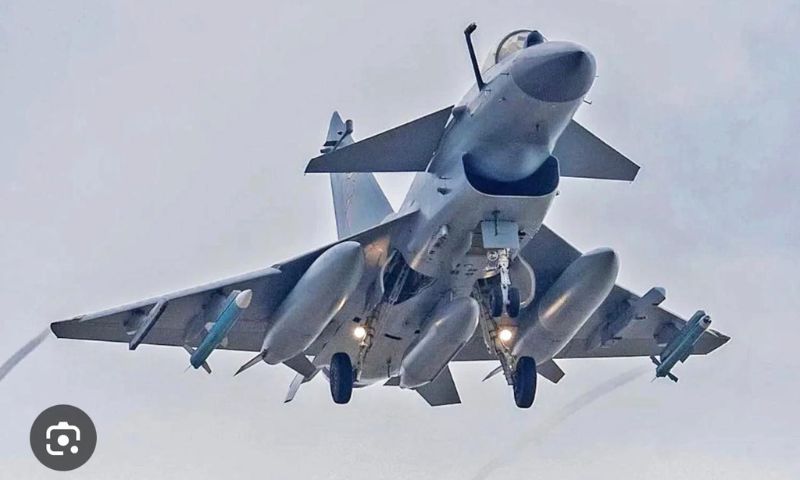
The arrival is particularly notable because Uzbekistan has historically operated Soviet-designed aircraft, including MiG-29s and Su-27s. The J-10CE therefore represents a major shift towards Chinese combat aviation technology in a country traditionally within Russia’s defence orbit.
Why The J-10CE Is Attractive
The J-10CE combines modern avionics and AESA radar technology with beyond-visual-range air-combat capability, including compatibility with advanced Chinese air-to-air missiles.
Its biggest commercial advantage, however, may be the balance between capability and cost.
The aircraft is considerably less expensive than leading Western alternatives such as the Rafale and Eurofighter Typhoon, according to officials and analysts discussing potential purchases.
🇺🇿🇨🇳✈️ Uzbekistan reportedly receives J-10CE fighter jets
Footage from Uzbekistan’s Independence Day celebrations reportedly shows six Chinese J-10CE multirole fighters arriving at Karshi-Khanabad Air Base.
The aircraft carry Uzbek flags, reportedly confirming their entry into… pic.twitter.com/B5Yv8R43NL— The Political Inspector | TPI (@PnPPolitics) August 29, 2026
That combination is increasingly attractive to countries that want to modernise ageing fighter fleets without paying the financial or political price associated with high-end Western aircraft.
Pakistan’s experience has consequently given prospective buyers a real-world operational reference that China itself could not provide before the 2025 conflict.
From Pakistan’s Choice To China’s Export Success
The expanding interest in the J-10CE illustrates a broader change in the international fighter market.
Pakistan took the calculated step of becoming the aircraft’s first foreign customer. After its employment in the 2025 conflict, other countries are now examining the same platform through the lens of operational experience rather than simply advertised specifications.
The significance for Pakistan extends beyond the aircraft itself.
Islamabad’s acquisition helped provide China with its first major international showcase for the J-10CE, while Pakistan’s combat employment has now become part of the conversation surrounding subsequent foreign purchases.
Bangladesh Also Eyes J-10CE
Bangladesh has also confirmed that it is considering the purchase of Chinese J-10CE fighter jets, adding to growing international interest in the aircraft following its combat performance during the May 2025 India-Pakistan conflict.
Zahed Ur Rahman, information and broadcasting adviser to Bangladesh’s prime minister, said a draft proposal for the acquisition had been submitted to the Ministry of Finance and Armed Forces Division for final approval.
Rahman said Bangladesh had closely followed the conflict, during which Pakistan deployed J-10CE fighters equipped with active electronically scanned array (AESA) radars and PL-15 long-range air-to-air missiles.