Key points:
- US Customs has processed about $100 billion in refunds
- Refunds cover 25.1 million import entries
- Government collected about $166 billion under disputed tariffs
WASHINGTON: The United States has processed about $100 billion in refunds for tariffs imposed under President Donald Trump’s emergency economic powers and were struck down by the Supreme Court.
According to a court filing, US Customs and Border Protection (CBP) said about 25.1 million import entries were covered by declarations submitted through its electronic system as of July 31.
The development shows a major reversal of one of the administration’s central trade policies.
According to US Customs, 252,496 declarations had been received, with approximately $100 billion ready for disbursement by the US Treasury Department.
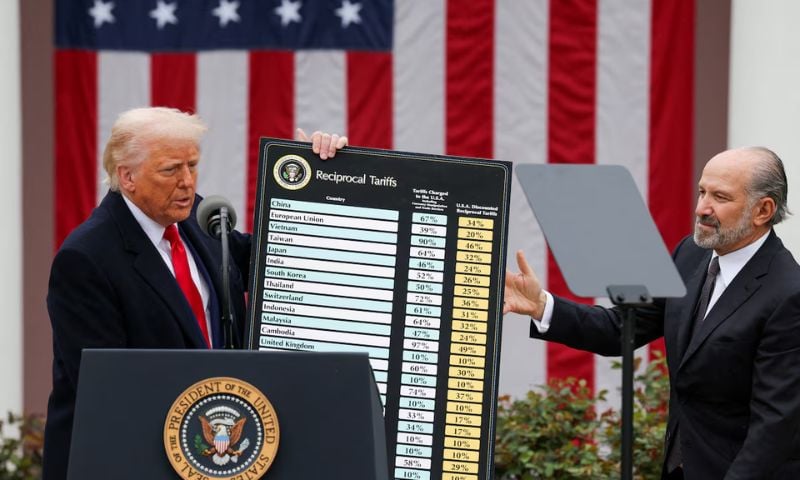
The refunds relate to tariffs imposed under the International Emergency Economic Powers Act (IEEPA), a 1977 law that Trump used to impose sweeping duties on imports.
The Supreme Court ruled in February that IEEPA did not authorise the president to impose tariffs, invalidating the duties and requiring the government to return money collected under them.
The administration collected about $166 billion through the IEEPA tariffs, according to the US Bureau of Economic Analysis (BEA), suggesting that tens of billions of dollars remain to be refunded.
The BEA said the repayment would be treated as capital transfers from the federal government rather than ordinary government expenditure because they resulted from the resolution of a legal dispute.
The repayment process has presented a major administrative challenge for US customs authorities because the disputed tariffs were applied to millions of import transactions.
Businesses that paid the tariffs are entitled to seek refunds through CBP’s Consolidated Administration and Processing of Entries (CAPE) system.
The government has been processing claims in stages because of the enormous number of affected import entries. The latest filing provides one of the clearest indications of the scale of the repayment programme.
The payments also raise questions about who ultimately benefited from the tariffs and who should receive the money.
ALSO READ: New US Tariffs Take Effect Today, Targeting 60 Trading Partners
Importers paid the duties directly to the US government, but many companies passed at least part of the additional costs on to customers through higher prices.
That has generated disputes over whether consumers should receive any benefit from refunds ultimately paid to importing companies.
Refunds: significant reversal
The repayment programme represents a significant financial reversal for the Trump administration, which had portrayed tariffs as an important source of government revenue and a means of protecting US industries and pressuring trading partners.
The administration has nevertheless continued to pursue tariffs through other legal authorities.
Washington has sought to rely on provisions of the Trade Act of 1974 for some of its newer tariff measures, arguing that the authority is separate from the IEEPA powers rejected by the Supreme Court.
The scale of the refunds could have wider economic implications. The return of tens of billions of dollars to importers could improve the cash position of affected businesses. However, the ultimate impact on consumers will depend on how companies treat the refunded amounts.
The BEA has also said interest connected with the repayments is accounted for separately from the principal amounts and treated as property income accruing to businesses for the period during which the government held the money.
The latest figures indicate that the Supreme Court decision has transformed a major source of US government tariff revenue into a substantial fiscal liability.
With roughly $100 billion due for repayment, the government still faces claims involving tens of billions of dollars from the remaining tariff collections.
The process is expected to remain closely watched by importers, businesses and policymakers as the US administration seeks to maintain its broader tariff agenda through alternative legal mechanisms.