
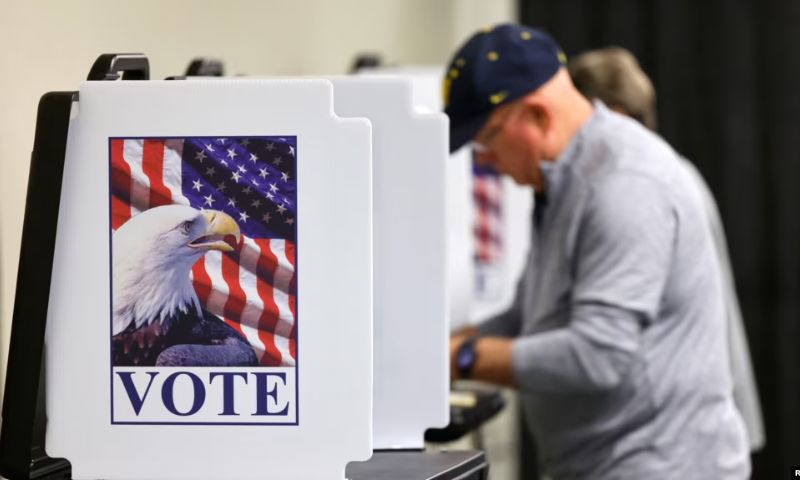
WASHINGTON: Voters across the United States are preparing to cast their ballots in closely watched mid-term elections that could reshape the balance of political power in Washington, with Democrats and Republicans competing for control of Congress.
The elections, scheduled for November 3, are being held halfway through President Donald Trump’s four-year term. Although voting has already begun in several states through early in-person and postal ballots, Tuesday is the official election day.
What are mid-term elections?
In the United States, national elections are held every two years, while presidential elections take place every four years.
Mid-term elections are held halfway through a president’s term and provide voters with an opportunity to elect members of Congress and decide which party will control the legislative branch of government.
What seats are at stake?
All 435 seats in the House of Representatives are up for election, along with 35 of the 100 seats in the Senate. Members of the House serve two-year terms, while senators are elected for six-year terms.
In addition to congressional elections, voters in 36 of the country’s 50 states will also elect governors.
Who currently controls Congress?
Republicans enter the elections with a 53-47 majority in the Senate, while they also hold a narrow advantage in the House of Representatives.
Democrats need a net gain of four seats in the House to secure a majority and regain control of the chamber.
Some of the most closely watched Senate contests are taking place in Alaska, Georgia, Iowa, Kansas, Maine, Michigan, New Hampshire, North Carolina, Ohio and Texas.
Historical trends also suggest a challenging election for the president’s party. Since 1992, all but one US president has seen his party lose enough House seats during the mid-term elections of his first term to surrender its majority.
Why do the elections matter?
The outcome will determine which party controls Congress, influencing the country’s legislative agenda and the balance of political power in Washington.
A Republican majority in both chambers would give President Trump a smoother path to advancing his legislative priorities during the remainder of his presidency.
READ ALSO: US Midterm Elections Take Place Today as Voters Head to Polls
However, if Democrats regain control of either or both chambers, they would gain greater influence over legislation, congressional committees and the confirmation of federal judicial nominees.
A Democratic majority in the Senate could also give the party greater leverage over the confirmation of senior officials appointed by the president.
The lawmakers elected on November 3 will be sworn in on January 3, 2027, when the new session of Congress begins.